





15 Best Free Print on Demand Websites & Companies



Starting a business usually means taking on some level of risk. Print on demand lowers that risk by letting you launch and test products without buying inventory in advance.
Printful and Printify are often the first names people come across, but they are far from the only options available. The best choice for your business will depend on what you plan to sell, where your customers are located, and how much control you want over product quality and branding.
In this guide, we compare 15 free print-on-demand websites so you can see which one makes the most sense for your products, customers, and budget.
Top Print-on-Demand Websites: A Quick Comparison
15 Best Print-on-Demand Sites for Beginners
Each platform has its own strengths, pricing model, and product focus. Below, we break down 15 beginner-friendly print-on-demand sites to help you find the best fit for your business.
1. Tapstitch — Best for Custom Fashion Apparel Brands
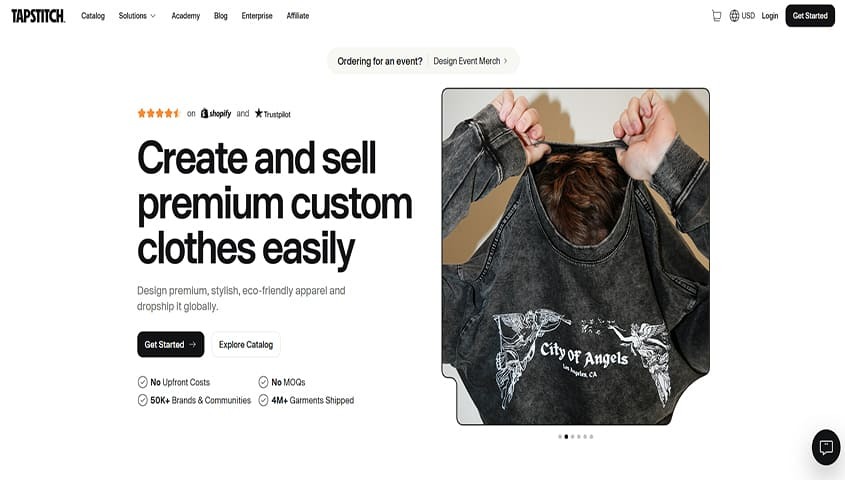
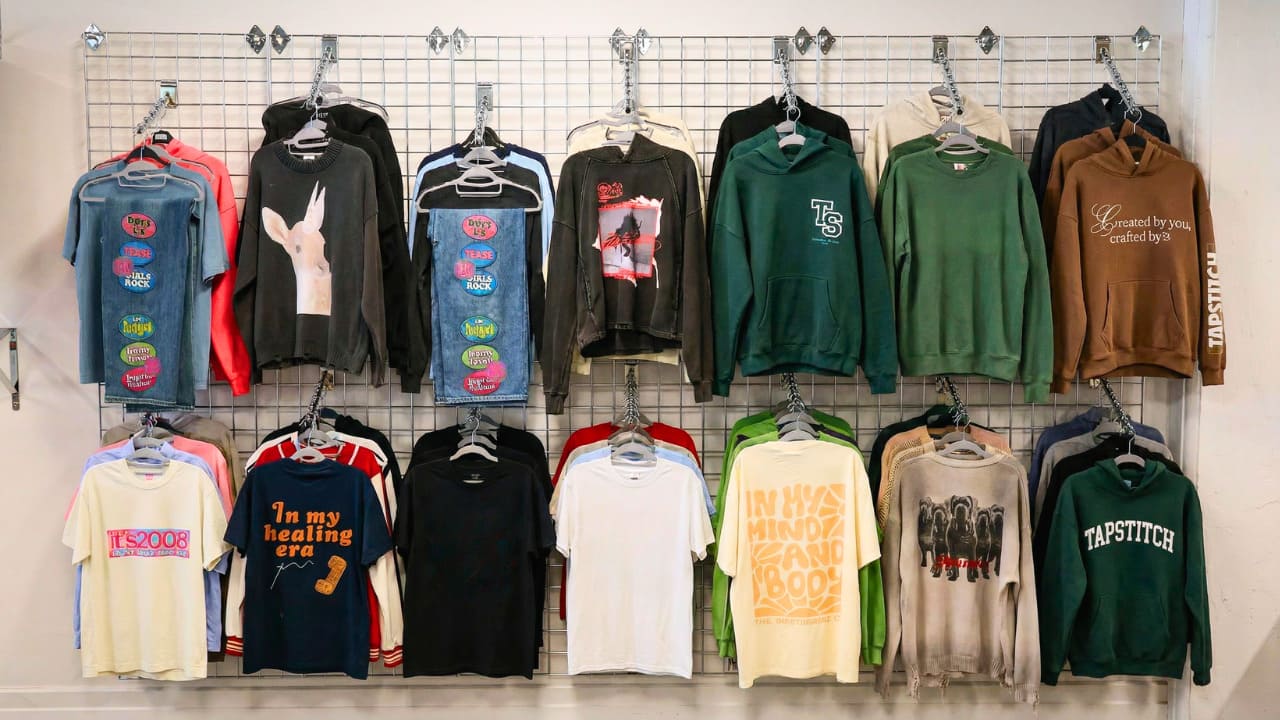
If you want to build a fashion-focused online clothing brand instead of selling generic printed products, Tapstitch is a print-on-demand platform worth considering. Unlike many POD platforms that mainly focus on standard blank apparel, Tapstitch offers a wider range of custom apparel options, including streetwear, athleisure, yoga wear, and denim styles, helping sellers create a more unique product catalog.
Tapstitch is beginner-friendly with no minimum order requirements and free account access. Its custom branding options allow sellers to create a more professional brand experience with personalized apparel and packaging solutions. You can choose products from the Tapstitch catalog, customize designs using its built-in design tools, and connect your store for automated fulfillment. With its own manufacturing facilities, Tapstitch manages the production process in-house, helping maintain quality control from creation to delivery.
Integrations
- Etsy
- Shopify
- Tiktok
- Squarespace
- Bigcommerce
- WIX
- Woocommerce
- Shoplazza
Pros
- No minimum order quantity, making it beginner-friendly.
- Strong focus on fashion-forward custom products.
- Custom branding options help sellers create a more professional brand experience.
- In-house production and automated fulfillment simplify order management.
Cons
- The catalog is more fashion-focused, so it may not suit sellers looking for a wide range of non-apparel products.
2. Printify
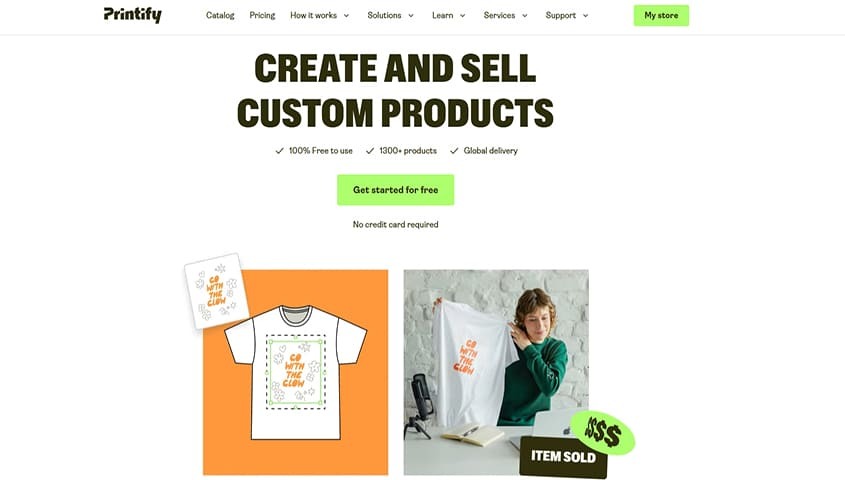
Printify has one of the largest catalogs in the POD space, with more than 1,000 products to choose from. Beyond the usual sweatshirts and posters, you’ll also find stickers, bags, phone cases, and even supplements. You can add these products to your own online store or sell them through marketplaces such as Etsy.
The platform works with over 114 production facilities, which gives sellers plenty of flexibility when choosing where orders are fulfilled. That said, having a nearby print provider does not always guarantee faster delivery. Most orders ship within two to seven business days, and the longer end of that range is slower than what some other platforms offer.
Integrations
- Etsy
- Shopify
- TikTok Shop
- Amazon
- eBay
- PrestaShop and more
Pros
- Automatic order routing during busy periods
- Competitive product pricing
- Large product catalog
Cons
- Product quality may vary by print provider.
- Shipping can be slower than some competitors.
3. Gelato
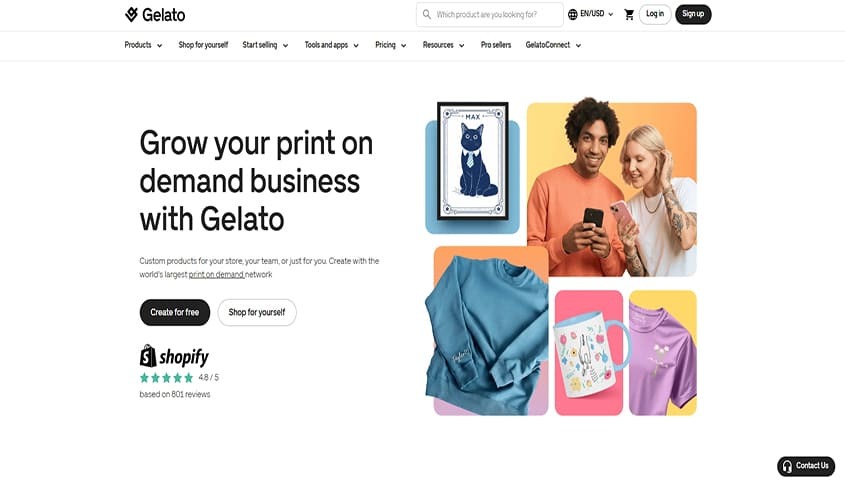
Gelato is a strong option for sellers who want to reach customers in multiple countries. It works with more than 100 local production partners and ships to over 32 countries, so orders can often be produced closer to the customer. That can help reduce shipping costs and shorten delivery times.
The platform also offers white-label branding features for Gelato+ and Platinum users. You can add custom packaging and branded inserts to create a more polished unboxing experience, with each item costing $0.49.
Integrations
- TikTok Shop
- Amazon
- Shopify
- Etsy
- WooCommerce and more
Pros
- Paid plans can reduce product costs by up to 35%.
- Gelato uses local production and offers products made with more sustainable materials.
- Customer support is available 24/7.
Cons
- The premium plans may feel expensive for smaller or newer stores.
- There is no built-in marketplace, so you need to sell through your own store or another platform.
- Print quality and packaging may vary slightly between different manufacturers.
4. CustomCat
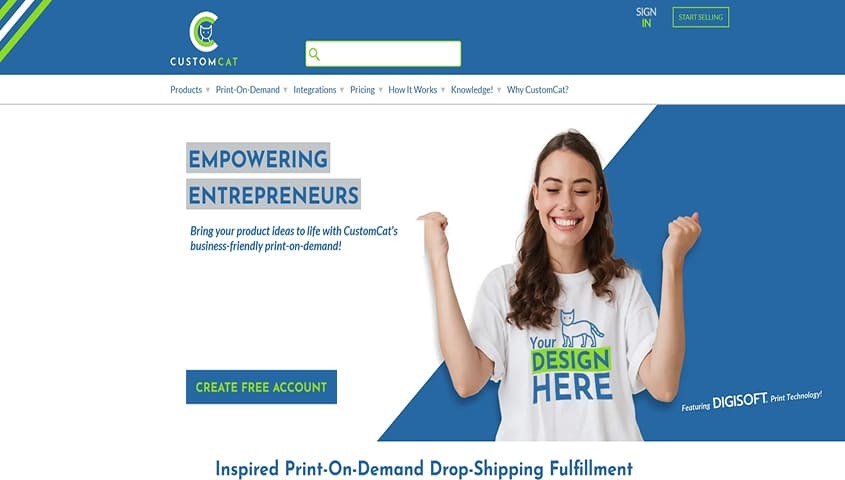
CustomCat has a catalog of more than 450 products, with a strong focus on T-shirts, hoodies, and embroidered apparel. The platform is easy to use, and its fulfillment times are generally competitive. Some sellers also report that the print quality holds up well after repeated washing, which is worth considering if you care about long-term product quality.
For stores with steady sales, the CustomCat PRO plan may be worth a closer look. It costs $30 per month and offers discounts of around 20% to 40% on standard product prices. The plan can be especially useful for Shopify sellers, since products listed there cost an extra $2 without a PRO subscription.
Integrations
- Shopify
- Etsy
- Customcat API
Pros
- Orders are produced in the U.S., which can be helpful for sellers with American customers.
- End-to-end shipment tracking is available in 32 countries.
Cons
- Supports fewer e-commerce integrations than some larger POD platforms.
- The PRO plan may be too expensive for beginners or stores with a low order volume.
5. Printful
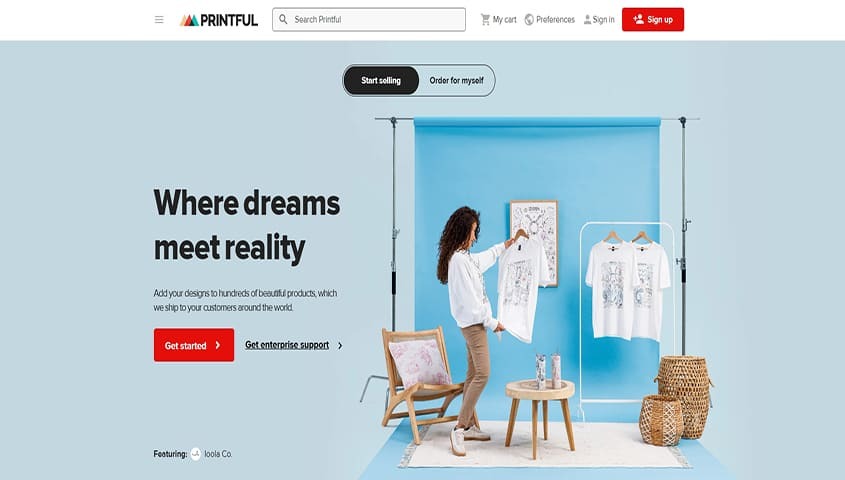
Printful remains one of the most recognized names in the print-on-demand companies, especially among sellers who care about product quality and brand consistency. Unlike many POD platforms that rely on different third-party suppliers, Printful handles its own printing and fulfillment, which gives sellers more control over the final product. Its catalog covers a wide range of options, including apparel, wall art, home products, and accessories.
The main drawback is the cost. Printful’s products usually come with higher base prices compared to some competitors like Tapstitch and Printify, which can make it harder for sellers to maintain larger profit margins, especially when starting out.
Integrations
- Shopify
- Squarespace
- Ecwid
- Weebly
- Big Cartel and more
Pros
- Offers warehousing and storage services for sellers who need inventory support.
- User-friendly design tools make it easy to create and customize products.
Cons
- Product prices are generally higher compared with some other print-on-demand platforms.
- Additional shipping fees may apply during peak holiday seasons.
6. AOP+
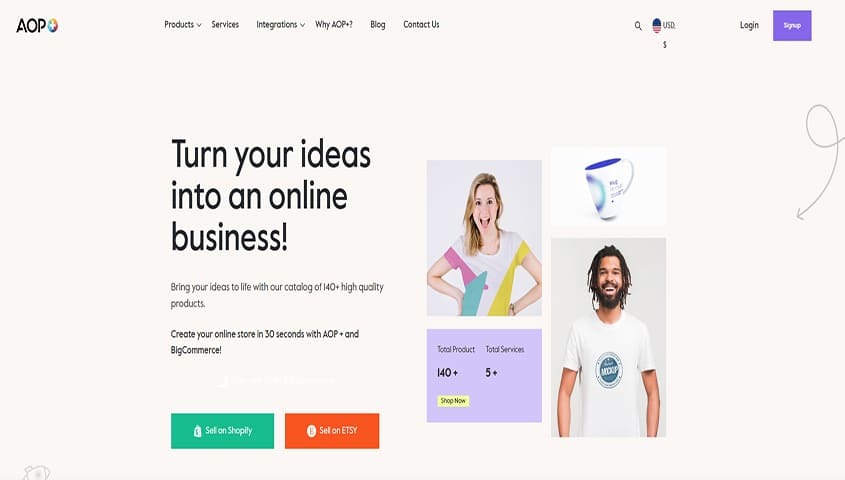
AOP+ stands out because it handles printing in-house, which helps keep product quality more consistent. It is especially known for its all-over print products, making it a good option for sellers who want more creative and unique designs.
One thing to keep in mind is that AOP+ is based in Europe, so sellers with customers in the U.S. may experience longer delivery times depending on the order location. Compared with larger print-on-demand websites, it also has fewer user reviews and less community feedback available online.
AOP+ connects directly with Shopify and Etsy, but sellers who want to integrate with other platforms may need to upgrade to a paid plan.
Integrations
- Shopify
- Etsy
- BigCommerce
Pros
- In-house printing for better quality control
- Simple Shopify integration
Cons
- Limited e-commerce integrations
- Slower shipping for some international markets
7. Gooten
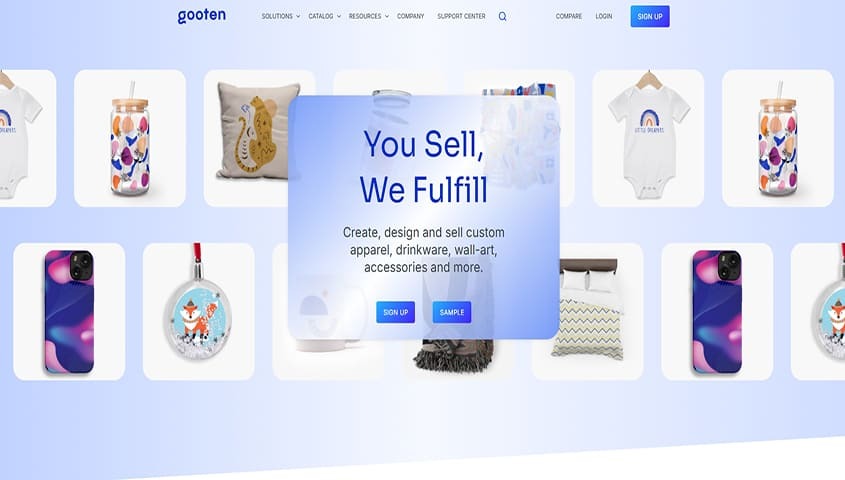
Gooten offers more than 300 customizable products, including popular items like pillows, drinkware, keychains, and baby products. While it may not have the lowest prices in the POD market, many sellers choose Gooten for its reliable quality, especially for products like mugs and water bottles.
Compared with apparel-focused platforms, Gooten is often a better fit for sellers who want to expand into home goods and accessories.
Integrations
- Shopify
- Custom order forms
- Gooten API
- Etsy and more
Pros
- Wide product selection
- No monthly fees or upfront costs
Cons
- Slower shipping compared with some competitors
- Limited branding options compared with some competitors
8. Zazzle
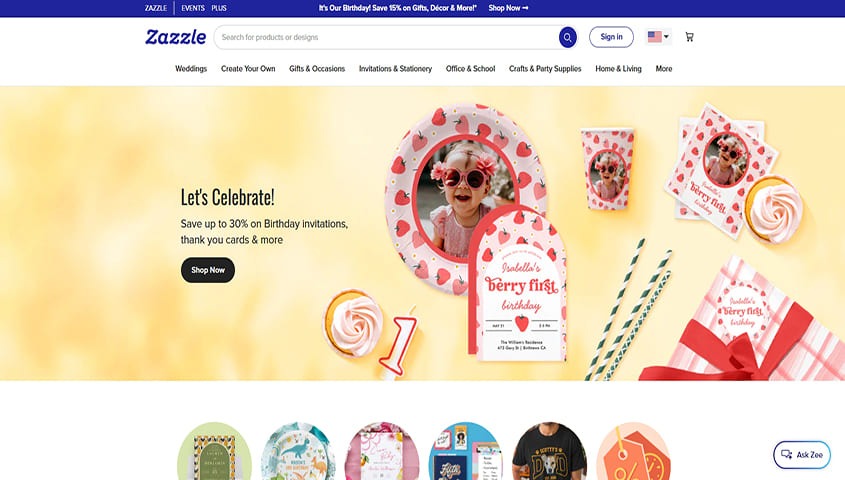
Zazzle works a little differently from traditional print-on-demand sites because it operates as its own marketplace for artists and designers. The platform offers more than 1,200 customizable products, including clothing, stationery, and personalized gifts. Customers can also adjust details like colors, sizes, and design elements before placing an order, giving them more control over the final product.
One limitation is that Zazzle does not offer direct integrations with most third-party e-commerce platforms, so it may not be the best choice for sellers who want to manage everything through their own store.
Integrations
- Not available
Pros
- You keep ownership of your designs and can sell them on other platforms as well.
- Built-in marketplace traffic helps your products reach existing Zazzle customers.
Cons
- No direct integration with external e-commerce platforms.
- High competition among designers can make it harder to stand out.
9. JetPrint
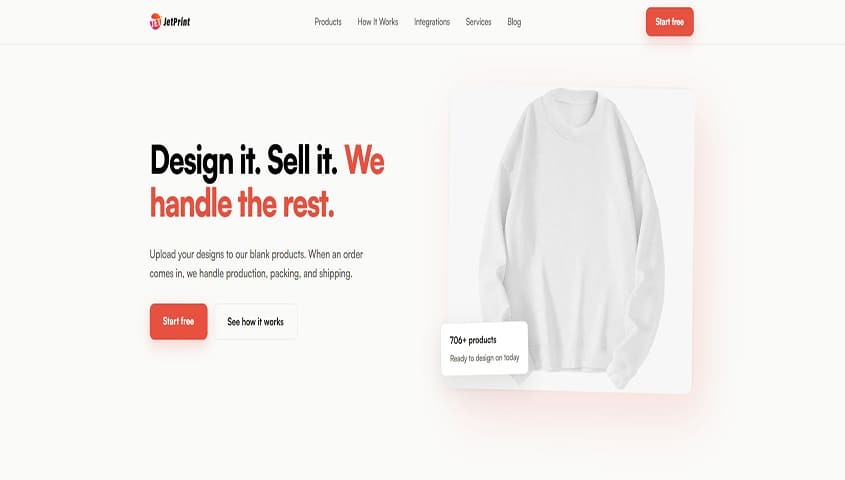
JetPrint is a print-on-demand company that's especially known for custom shoes, watches, jewelry, and accessories. This platform offers a wider range of niche products along with private-label services. If you're looking to build a more distinctive brand instead of selling the same products as everyone else, it's definitely worth considering.
Integrations
- Shopify
- Etsy
- WooCommerce
- Wix
Pros
- Unique products like shoes, watches, and accessories
- Free to use with no monthly subscription fees
Cons
- Limited to four e-commerce integrations
- International shipping takes longer depending on the destination.
10. Redbubble
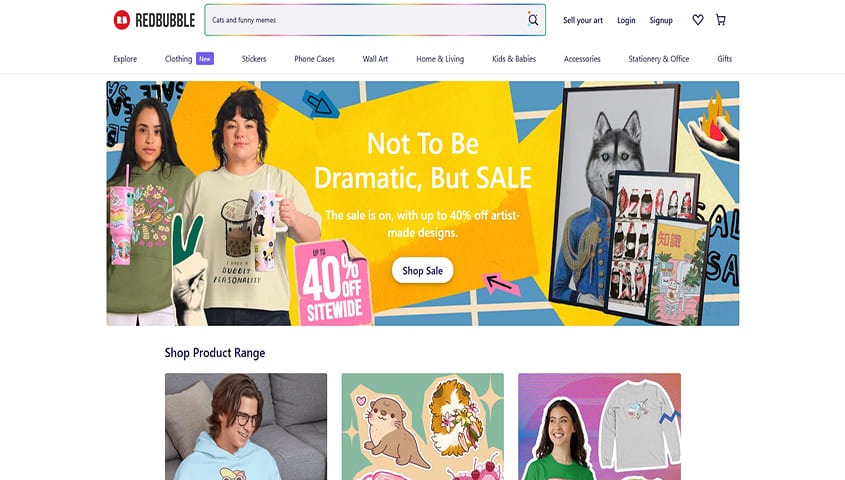
Redbubble is one of the best print-on-demand sites, especially among independent artists and designers. Unlike platforms that connect with your own online store, Redbubble works as a standalone marketplace, so sellers manage everything directly within the platform.
Instead of handling production itself, Redbubble works with a network of third-party printing partners around the world. When a customer places an order, it is sent to a suitable production partner based on the product and delivery location, helping simplify fulfillment for sellers.
Integrations
- Marketplace only
Pros
- Global marketplace with customers from around the world
- Built-in traffic helps artists get their designs discovered without running their own store.
Cons
- No direct integration with e-commerce platforms
- Standard accounts can lose up to 50% of earnings to platform fees.
11. Apliiq
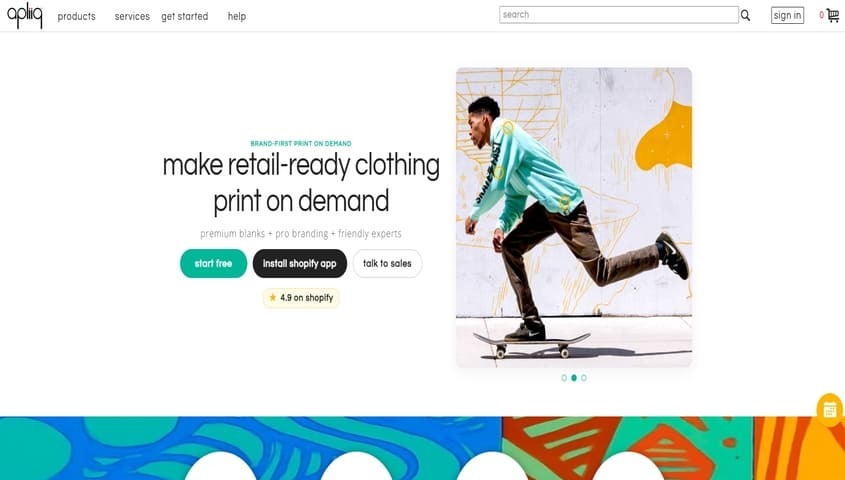
Apliiq is a POD platform built mainly for fashion brands that want a more premium, private-label feel. Instead of just adding designs to basic blanks, sellers can customize apparel with options like woven labels, embroidery, and branded details to create a stronger brand identity.
The platform is a great fit for clothing-focused businesses, but the product range is more limited compared with larger POD companies. Apliiq also supports fewer integrations, currently connecting mainly with Shopify, WooCommerce, and Etsy.
Integrations
- Shopify
- WooCommerce
- Etsy
Pros
- Multiple customization and printing options for creating unique apparel
- Professional design support is available for sellers who need extra help.
Cons
- Limited product selection since Apliiq focuses mainly on apparel
- Product approval and review steps may slow down the launch process.
12. Prodigi
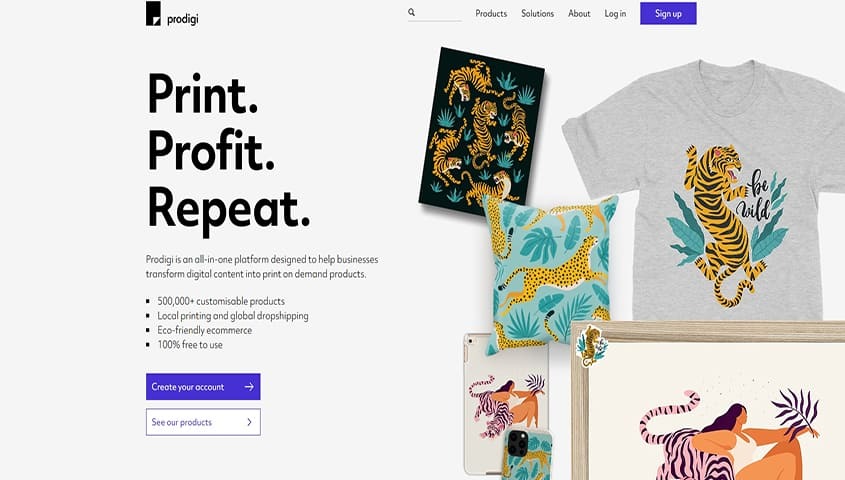
Prodigi is a popular choice among artists and creators who focus on wall art, posters, and premium-quality prints. While it may not be as widely recognized as platforms like Printful, it has built a strong reputation for its print quality, especially for artwork and photography products.
Unlike some POD platforms that rely heavily on a large network of suppliers, Prodigi focuses on maintaining consistent print standards across its production network. This makes it a solid option for sellers who want their products to have a more professional, gallery-style finish.
Integrations
- Etsy
- Shopify
- WooCommerce
- Wix and more
Pros
- Excellent print quality for wall art, photography, and fine art products
- Global production network
Cons
- Better suited for artists and print-focused businesses than general stores
- Fewer branding options than some apparel-focused POD providers
13. SPOD(Spreadconnect)
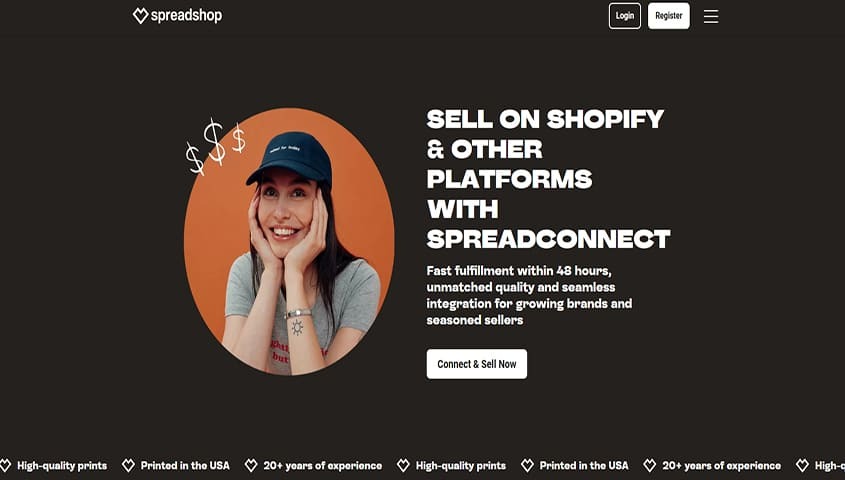
If fast fulfillment is one of your top priorities, SPOD is a platform worth considering. It is known for its quick production times, with around 95% of orders processed within 48 hours. This makes it a good fit for sellers who want to reduce waiting times for their customers. Keep in mind that larger orders, especially those with more than 10 items, may require additional processing time.
The platform offers a range of custom products, including apparel, accessories, drinkware, and home décor. While its catalog may not be as extensive as some larger POD providers, SPOD focuses on speed and simplicity, which makes it a practical option for beginners.
Integrations
- Etsy
- Shopify
- WooCommerce
- Wix
Pros
- Fast production speed, with most orders processed within 48 hours.
- Access to a built-in library of free design resources for product customization.
Cons
- Delivery can be slower for customers outside the US and Europe.
- Smaller product catalog compared with other print-on-demand websites.
14. Society6
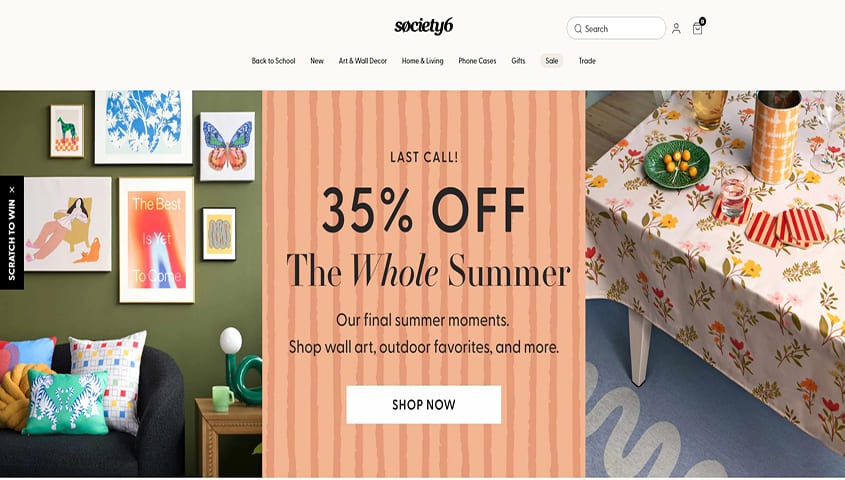
Society6 is a popular POD marketplace that is especially well-known among artists and creators who focus on artistic and home décor products. Compared with many print-on-demand sites that prioritize apparel, Society6 puts more emphasis on wall art, furniture, and lifestyle products with a strong focus on visual design.
The site has built a global community of independent artists. This diverse creator base brings together a wide range of styles and creative perspectives, making Society6 a great place for customers looking for unique artwork and original designs.
Integrations
- No integrations
Pros
- Global artist community
- Focus on original art and creative designs.
Cons
- Lower profit margins for some artists
- Limited appeal outside the art-focused audience
15. Merch By Amazon
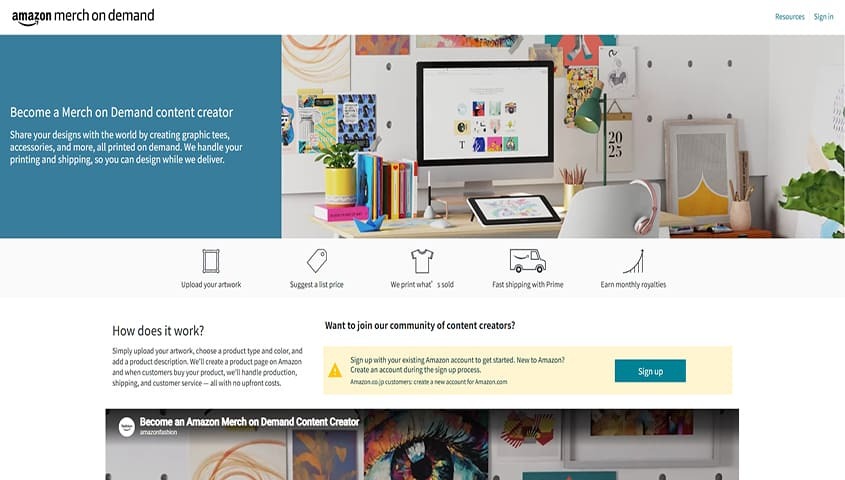
Amazon Merch on Demand lets designers sell custom products directly on Amazon without managing inventory or fulfillment. Sellers simply upload their designs, and Amazon handles production, shipping, and customer service when an item is purchased.
The biggest advantage is access to Amazon’s massive customer base, allowing creators to reach shoppers without building their own online store. However, sellers have less control over branding and the overall customer experience compared with traditional POD platforms.
Integrations
- Amazon marketplace only
Pros
- Lets designers sell their products directly on Amazon’s marketplace
- Access to Amazon’s large customer base without managing fulfillment
Cons
- Smaller product selection compared with most POD platforms.
- Invite-only access and tier limits can make it harder for new sellers to scale quickly.
How to Choose the Right Print-on-Demand Platform for Your Business
With so many print-on-demand companies available, choosing the right one can be challenging. Focus on what matters most for your business, such as product quality, costs, and fulfillment.
Shipping Times
Before choosing a POD partner, take a close look at shipping costs, delivery times, and fulfillment locations. A platform with reliable global shipping can make it easier to serve customers in different markets. Since delayed deliveries can affect customer satisfaction, shipping is one of the key factors worth checking early.
Print Quality
Good print quality helps create a better customer experience and encourages repeat purchases. When comparing POD providers, check what type of printing, materials, and customization features they offer. Tapstitch manages much of its production in-house, which helps keep product quality more consistent across orders.
Price
Don’t just look at the base product price — consider fulfillment fees, shipping costs, subscription plans, and any extra charges for branding or customization. A lower product cost can help improve your margins, but it’s also important to balance pricing with product quality so your store remains competitive and profitable.
Product Range
Not every POD platform is designed for the same type of business. Depending on what you plan to sell, you may prefer a platform with a broad catalog or one that specializes in a specific product category. Choose a platform that matches your product strategy, and don’t be afraid to use multiple providers if one platform cannot cover all your needs.
Integration
For sellers with an existing online store, integrations can save a lot of manual work. Connecting platforms like Shopify, Etsy, or TikTok Shop allows orders to flow directly to your POD provider instead of being entered one by one.
FAQs
What is a print-on-demand business?
A print-on-demand business lets you sell custom products without buying or storing inventory upfront. A POD provider handles printing, packaging, and shipping after a customer places an order, while you focus on designing products and marketing your store.
Is print-on-demand profitable for 2026?
Yes, but it’s no longer just about uploading designs and waiting for sales. Choosing the right products, understanding your customers, and building a unique brand matter more than ever.
What is the difference between POD and dropshipping?
POD is a type of dropshipping where products are created after an order is placed, usually with your own designs. Traditional dropshipping typically sells existing products from suppliers without custom production. POD gives you more control over branding, while dropshipping often offers a wider range of ready-made products.
Which print-on-demand platform is best for your business?
The best POD platform depends on your products, budget, and business goals. For example, Printify is great for product variety, Printful is known for reliable quality, and Tapstitch is a strong choice for fashion-focused brands. Compare factors like pricing, product selection, branding options, and shipping before making a decision.
Final Thoughts
Starting a print-on-demand business is no longer about finding a platform with the biggest catalog or the lowest price. It’s about finding a partner that helps you create better products, deliver a good customer experience, and build something customers want to come back to.
If you’re ready to turn your ideas into custom products, Tapstitch makes it easier to build a fashion-focused brand with trend-driven apparel, no minimum orders, and flexible branding options.
.webp)

.jpg)
.jpg)
.jpg)
.png)

.jpg)
.jpg)
%20(3).jpg)

.png)
.jpg)
.jpg)
.jpg)
.jpg)
.jpg)
.jpg)






.png)



.png)
.jpg)










.jpg)



.jpg)

.png)
.jpg)


.jpg)
.jpg)



.jpg)
.jpg)
.jpg)
.jpg)
.jpg)

%20(1).jpg)

.png)

.png)



%20(1)%20(1).jpg)





.png)
.png)