






10 Best Printify Alternatives for Your POD Business in 2026



Printify is often the first platform that comes to mind when you talk about print-on-demand suppliers. It’s popular for a reason, but popularity doesn’t always mean it’s the right choice for your online store.
From product variety and pricing to shipping speed, integrations, and fulfillment quality, the best POD partner depends on what your business actually needs. And with so many reliable print-on-demand sites available today, it’s worth exploring your options before committing to one platform.
In this post, we’ll compare 10 of the best Printify alternatives and break down what makes each one a strong choice for different types of online sellers.
Quick Comparison Chart
Before we dive into the details, here’s a quick comparison of the top sites like Printify that clearly illustrates the differences between each supplier.
Why Sellers Look for an Alternative?
Sellers often look for companies like Printify when their store starts to outgrow a basic POD setup. At the beginning, a large catalog and easy integrations may be enough. But as orders increase, factors like shipping speed, total fulfillment cost, product consistency, and branding support become much more important.
For marketplace sellers, slow or unpredictable delivery can affect reviews, refunds, and conversion rates. For growing e-commerce brands, high shipping costs, VAT or customs friction, replacements, and support time can quickly reduce profit margins. And when quality varies between products, print providers, or regions, even small production issues can hurt customer trust.
That’s why choosing a print-on-demand supplier is not only about finding the cheapest product or the biggest catalog. The best Printify alternative should match your business model, target market, product niche, and long-term brand goals.
Top 10 Printify Alternatives for Every Need
The best Printify alternative depends on what you sell, where your customers are, and how much control you want over quality, branding, and fulfillment. Here are 10 options worth taking a closer look at.
1. Tapstitch
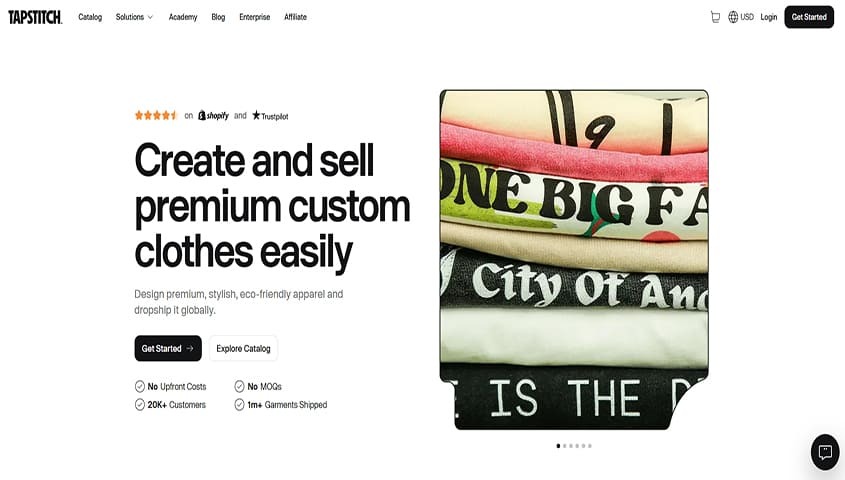
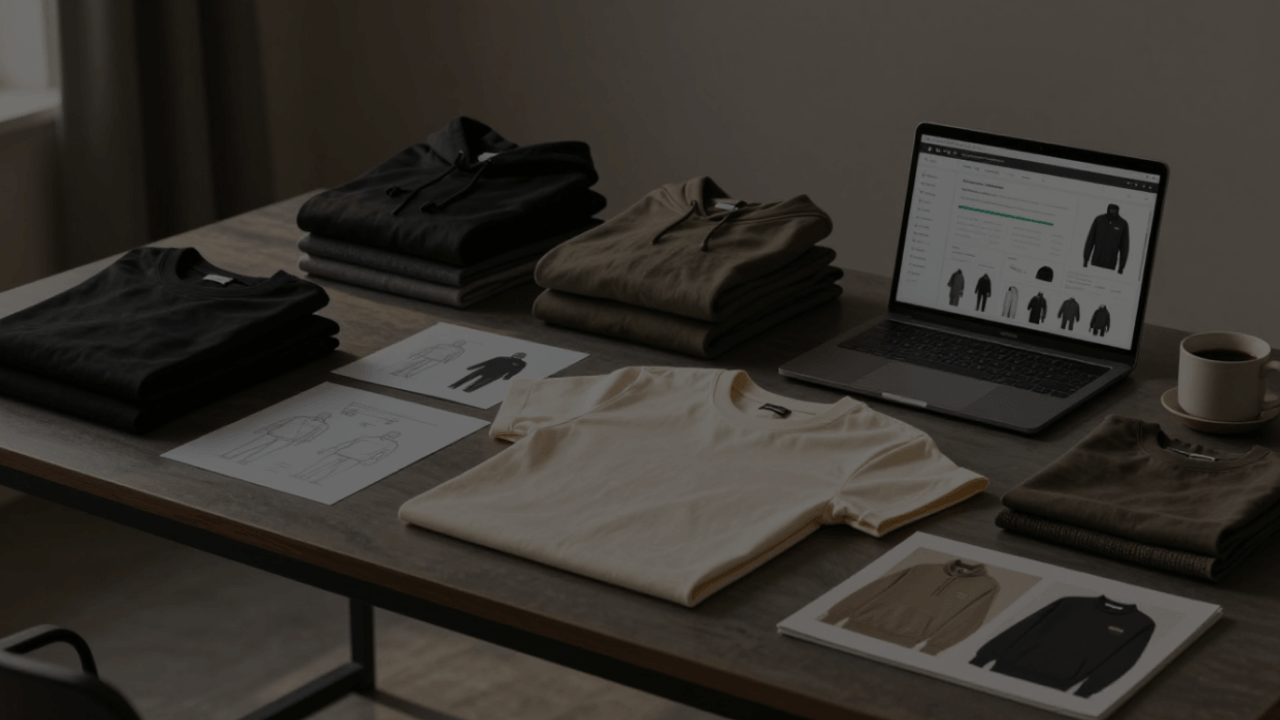
Tapstitch is a strong Printify alternative for sellers who want to build a fashion-focused print-on-demand brand rather than just sell basic merchandise. Unlike many POD suppliers that rely on third-party blanks, Tapstitch offers fashion-on-demand apparel with self-developed blank clothing, giving sellers more control over style, fabric quality, and print results.
This makes it especially useful for online clothing brands that care about consistency. From the garment itself to the final print, Tapstitch produces its apparel in its own factory, which helps reduce quality differences between orders. For sellers trying to protect their brand reputation, that level of control can make a big difference.
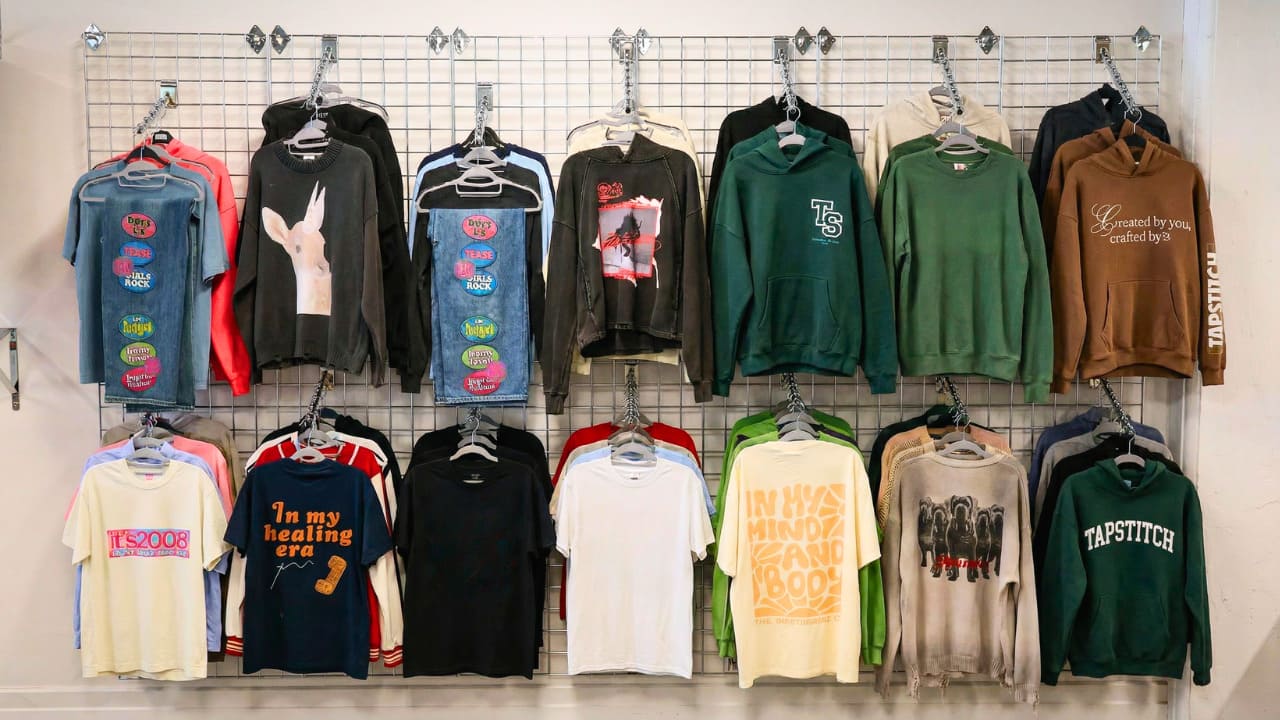
Another reason Tapstitch stands out is its fast-growing clothing catalog. The platform currently offers 700+ premium apparel items and adds 20+ new designs every week. Sellers can find everyday staples like custom T-shirts, hoodies, and sweatpants, as well as newer categories such as yoga wear and sports jerseys. This makes it a good fit for streetwear brands, fitness apparel stores, lifestyle clothing labels, and other online fashion businesses.
Tapstitch also puts a strong focus on branding, which is one of the key reasons it deserves a place on this list. Sellers can choose from four custom label options, add hang tags to share product details or origin information, and include custom insert cards to tell their brand story. These small touches help create a more polished customer experience and make the product feel less like a generic POD order.
Pricing:
Tapstitch is free to sign up and use, making it easy for new sellers to start testing products without upfront platform fees.
Product Quality:
Tapstitch works with high-quality fabric suppliers and chooses printing methods based on the nature of each garment. Its printing inks are professionally adjusted to help create clear, durable, and visually consistent prints.
Shipping & Fulfillment:
Shipping time depends on the method chosen. When sellers choose international shipping, most orders can arrive in around 5 days on average after production is complete.
Integrations:
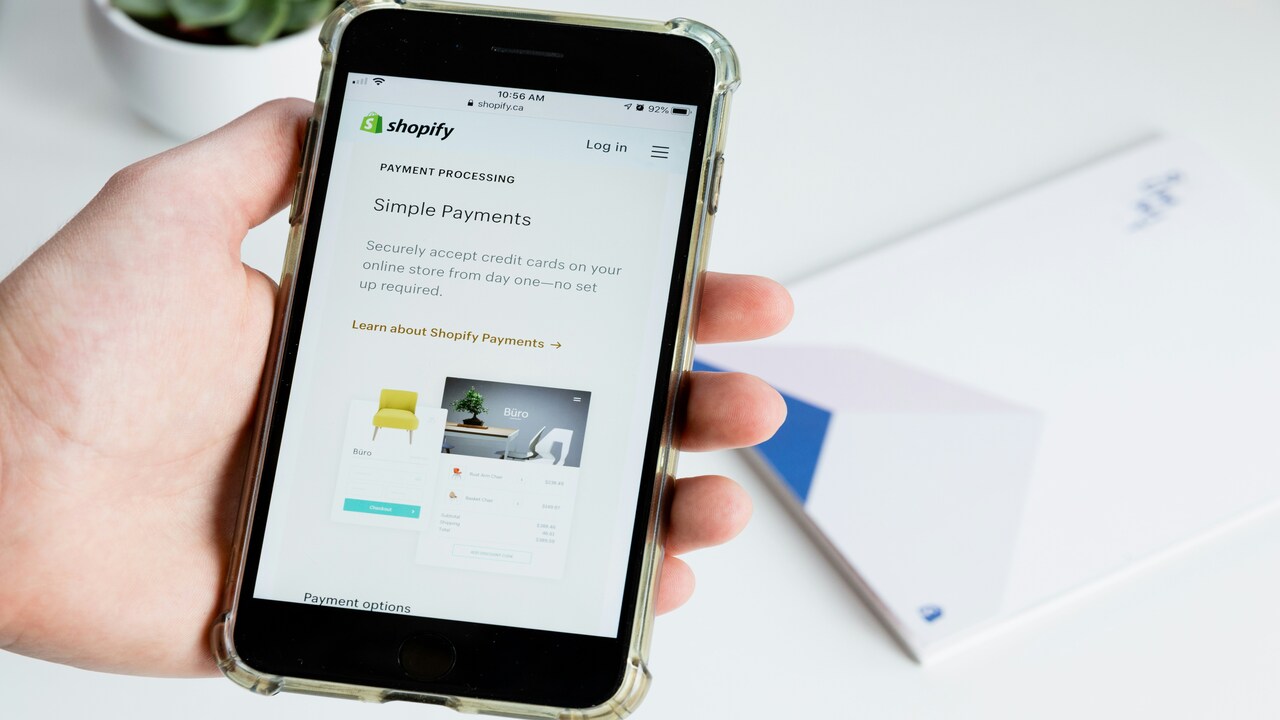
Tapstitch integrates with popular e-commerce platforms such as Shopify, Etsy, and Wix. TikTok Shop integration is also coming soon.
Pros:
- Built specifically for fashion-on-demand apparel brands
- Offers in-house developed blanks for better control over fabric, fit, and style
- Useful branding options, including custom labels, hang tags, and insert cards
Cons:
- Less suitable for sellers who need a broad catalog beyond clothing
2. Printful
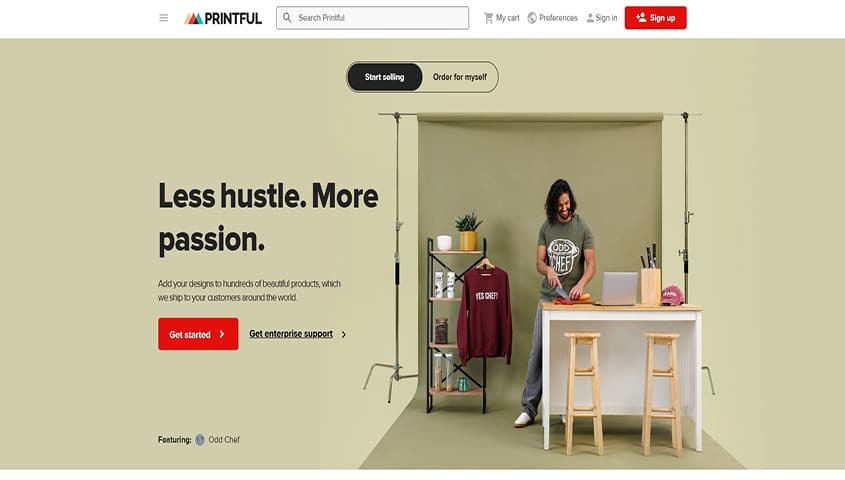
Printful is another big name in the print-on-demand space, especially for sellers who want a reliable, all-in-one fulfillment partner. Its catalog covers plenty of popular products, including T-shirts, swimwear, hats, stickers, backpacks, and phone cases. Since Printful handles much of its production in-house and has a strong quality control process, it’s often a good fit for brands that care about consistency and a smooth customer experience.
Pricing:
Printful is free to start, so sellers can test products without paying a monthly platform fee. For those who want access to extra discounts, Printful Growth is available at $24.99 per month and includes savings on products, branded packaging, and sample orders.
Shipping & Fulfillment:
Printful offers in-house fulfillment across multiple regions, which can make shipping more reliable, though delivery times may vary by product, destination, and shipping method.
Pros:
- In-house fulfillment network that supports global selling
- Integrates with popular e-commerce platforms and marketplaces
- Reliable quality control for most products
Cons:
- Base costs can leave less room for profit
- Not a standalone marketplace, so you need your own store or sales channel
- Delivery times may sometimes go beyond the original estimate
Read more: Printful Vs. Printify: Which One is Better for Your Business? | Tapstitch
3. Gelato
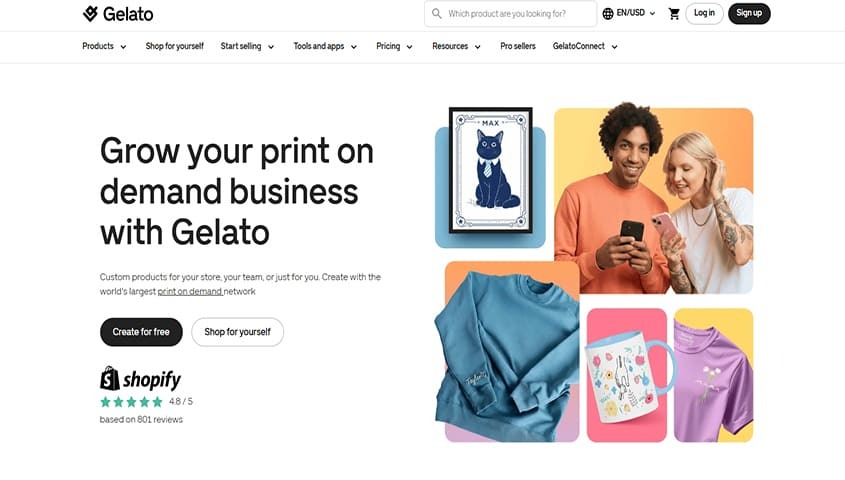
Gelato is a global print-on-demand platform that uses a network of local production partners to fulfill orders closer to the customer. This can help reduce shipping costs, delivery distance, and carbon emissions, but because production is outsourced, quality control may vary depending on the partner and product.
Pricing:
Gelato is free to start, while Gelato+ costs $23.99 per month, or $19.99 per month when billed annually, and adds product discounts, unlimited store connections, and premium mockups. High-volume sellers can contact Gelato for custom Platinum pricing.
Shipping & Fulfillment:
Gelato partners with 130+ production facilities in 32 countries, with estimated delivery times of 4–6 business days for economy shipping and 3–4 business days for express shipping.
Pros:
- Broad global production network for international fulfillment
- Good range of products across different categories
- Helpful design tools and premium mockup features
Cons:
- Quality may vary depending on the production partner
- Less direct control over manufacturing because production is outsourced
- Some products may have higher base costs than expected
4. Redbubble
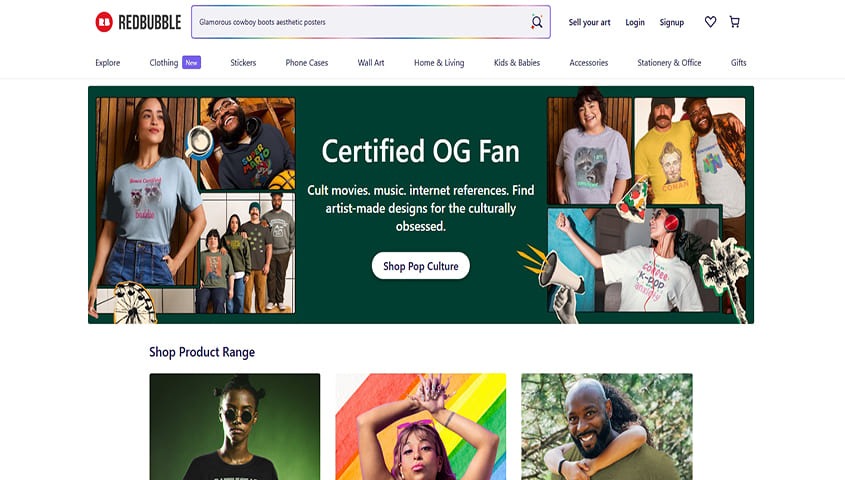
Redbubble is a simple choice for artists who want to upload their designs and let the platform handle the rest. It works as a standalone marketplace, so you do not need your own website or e-commerce store to start selling.
However, the platform is quite competitive. With so many sellers already on Redbubble, getting your designs noticed can take time. There is also a risk of other sellers copying popular artwork, which makes it less ideal for creators who want stronger control over their brand and designs.
Pricing:
Redbubble is free to sign up, and your earnings come from the markup you set above the base price. However, account fees may apply depending on your tier and monthly sales, which can affect your overall margins.
Shipping & Fulfillment:
Orders are fulfilled through production facilities in the US, UK, Canada, Europe, and Australia, so delivery times can depend on the product type and where the customer is located.
Pros:
- Access to a large marketplace audience
- Good product variety for artwork-based designs
- Easy to start without building your own store
Cons:
- Harder to stand out because of heavy competition
- Design copying can be a concern for original artists
- Higher markups can come with extra fees, which may reduce profit margins
5. Zazzle
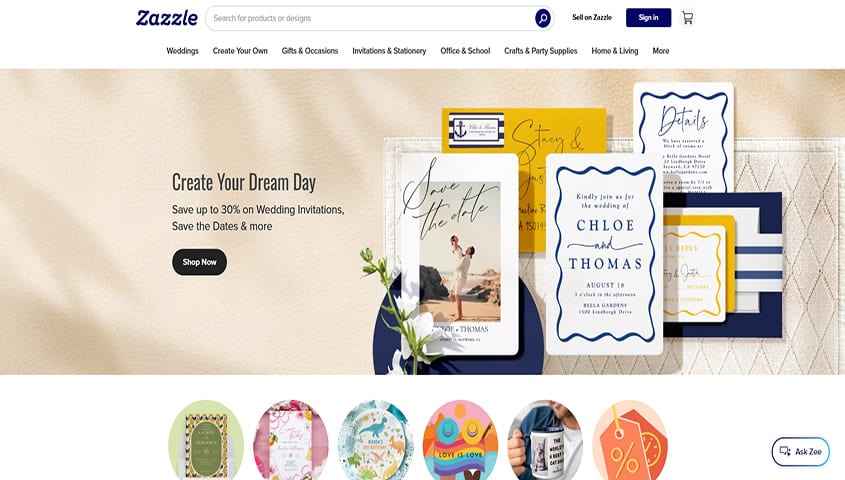
Zazzle is a large print-on-demand marketplace with a strong focus on custom products. Unlike sites like Printify, it is built around customer customization, making it a popular option for sellers who create designs for invitations, greeting cards, wedding stationery, party supplies, and other event-related products. This makes Zazzle a better fit for creators who want to sell customizable gifts and occasion-based products rather than build a traditional POD clothing brand.
Pricing:
Zazzle is free to join and list products on. Sellers earn through royalties, with rates they can usually set between 5% and 15%. If Zazzle drives the sale through its own ads or partner network, part of that royalty may be deducted as a marketing fee.
Shipping & Fulfillment:
Since Zazzle is based in the US, shipping is usually more predictable for domestic orders, which often arrive in about 4–7 business days. International shipping is available too, though delivery times depend on the destination.
Pros:
- Plenty of customization options for personalized products
- Access to a large marketplace audience
Cons:
- Royalty earnings may be lower than what sellers can make from a self-hosted store
- The interface may take some time for beginners to get used to
6. Teelaunch
Teelaunch is worth considering if you are looking for Printify alternatives with more niche product options. Instead of focusing only on standard POD items, it offers a range of products that can work well for stores looking to test something a little different.
The platform works with outside production partners rather than producing everything in-house. This gives sellers access to specialized products, but it also means the experience may vary from one item to another. Shipping times, print results, and overall consistency can depend on the product type and the partner handling the order.
Pricing:
Free to join.
Shipping & Fulfillment:
Most products take about 3 to 14 business days to produce, and shipping time is added after that.
Pros:
- Good option for sellers who want to test less common product types
- Free to start, with no upfront platform cost
- Connects easily with Shopify and Etsy
Cons:
- Branding support is limited
- Payments and pricing are limited to USD
- E-commerce integrations are more limited compared with broader POD platforms
7. Spring
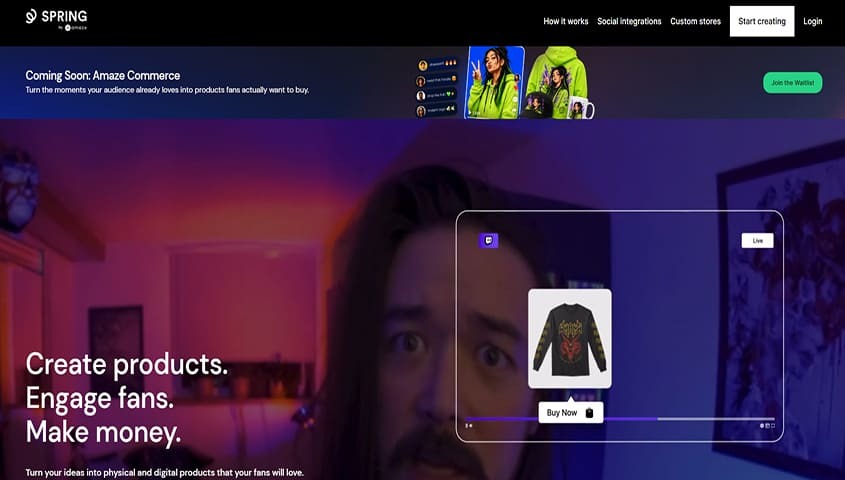
Spring, formerly known as Teespring, is a print-on-demand site built mainly for creators, influencers, and anyone selling merchandise to an existing audience. Instead of requiring sellers to build a full e-commerce store from scratch, Spring makes it easier to design products, launch a simple storefront, and promote merchandise through social platforms.
That said, Spring is not always the best fit for sellers who want deep control over branding, premium apparel sourcing, or a highly customized online store experience. It works better as a creator merch platform than a full brand-building POD solution.
Pricing:
Spring does not charge a monthly fee to list physical or digital products. For physical products, sellers set the retail price and earn the amount left after base costs and Spring’s 15% service fee. Digital product sales include a 20% processing fee and a small transaction fee per order. Earnings can be requested from the dashboard and paid out through Payoneer or PayPal.
Shipping & Fulfillment:
Spring manages the full fulfillment process, from production to shipping and customer support. Since products are made on demand, delivery times may vary based on the item, shipping method, and where the customer is located.
Pros:
- Works well for creators who sell through social media
- Lets sellers offer digital products alongside physical merch
- Free to start
Cons:
- Quality can vary from product to product
- Spring charges a 20% service fee on digital product sales
- Not the best fit for sellers who need deeper branding or a fully customized storefront
8. Sellfy
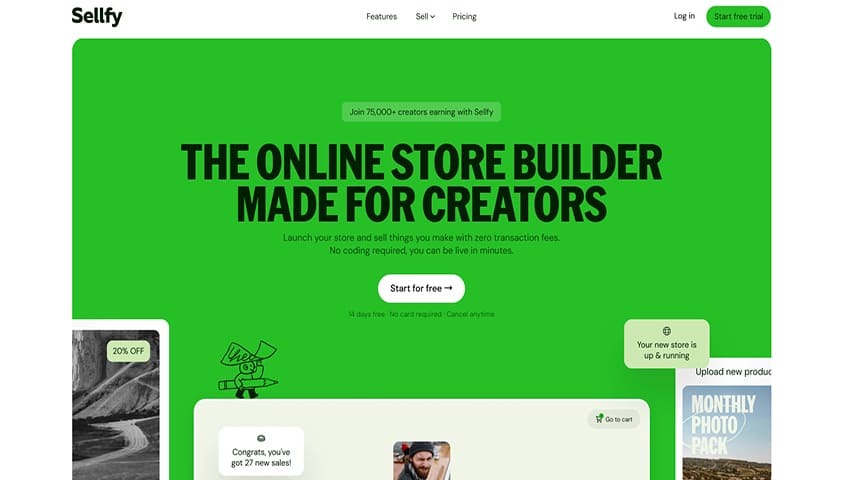
Sellfy is a little different from Printify because it is not only a print-on-demand provider. It also works as an e-commerce platform, giving sellers the tools to build a simple online store and manage their products in one place.
Along with POD products, Sellfy includes features like a drag-and-drop store builder, built-in checkout, order management, basic marketing tools, and support for selling digital products. For creators who want both a storefront and fulfillment tools without connecting too many separate apps, Sellfy can be a practical Printify alternative.
Pricing:
You can try Sellfy for free before upgrading. Paid plans start at about $19–$29 per month, depending on the billing term, and Sellfy does not charge extra transaction fees on regular sales.
Shipping & Fulfillment:
Sellfy handles print-on-demand production and shipping after an order is placed. Fulfillment usually takes around 2–5 business days.
Pros:
- Combines e-commerce tools and print-on-demand in one platform
- Built-in POD features for selling physical products
Cons:
- Requires a paid subscription after the free trial
- Payment options are limited to PayPal and Stripe
9. Gooten
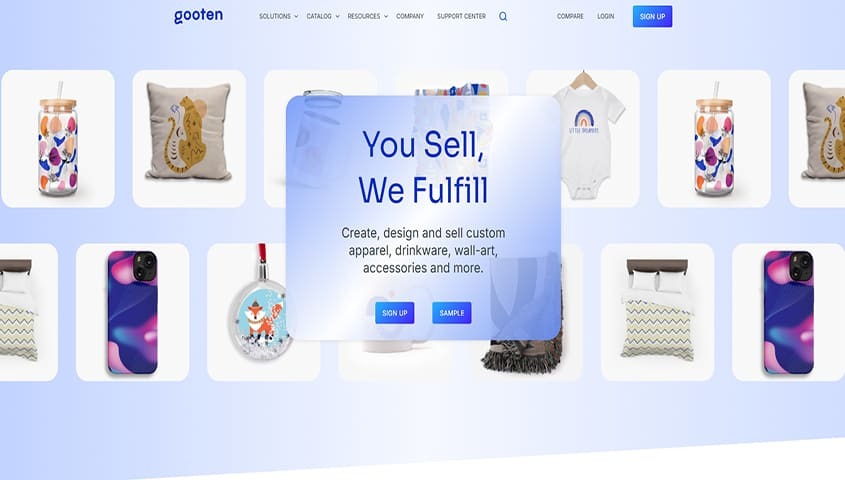
Gooten is worth considering if you’re comparing alternatives to Printify and want a platform built more around scale, automation, and supplier access. It may be especially relevant for sellers with a US-focused customer base or stores that are ready to handle higher order volume.
Its catalog includes many familiar print-on-demand products, from apparel like T-shirts, hoodies, crewnecks, and tank tops to home and lifestyle items such as doormats, pillowcases, and coasters. For sellers who want to offer more than just basic clothing, Gooten gives them a broader product mix to work with.
Pricing:
Sellers can create an account for free.
Shipping & Fulfillment:
Orders are generally ready to ship in about 3–4 business days, with delivery taking around 6–9 business days after that. Shipping estimates can change depending on the product type and delivery destination.
Pros:
- Broad product catalog covering apparel, home goods, and lifestyle items
- Works well for businesses that are ready to scale beyond basic POD testing
Cons:
- Product quality and shipping times may vary depending on the supplier
- Not as beginner-friendly as simpler POD tools
10. Inkthreadable
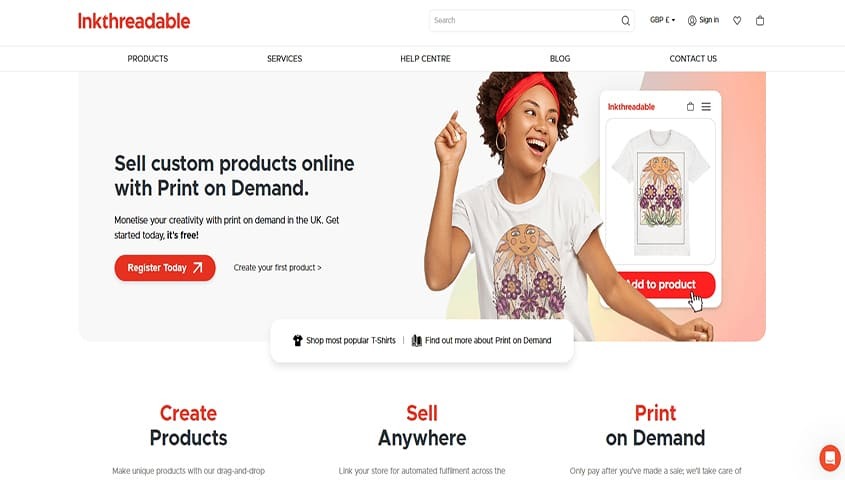
Inkthreadable is a UK-based print-on-demand supplier that can be a good fit for sellers focused on the UK market. It is known for solid product quality and reliable printing, making it especially useful for brands that care about how their products feel and look when they reach customers. For stores with most of their buyers in the UK, Inkthreadable offers a more local and straightforward setup.
Pricing:
Inkthreadable is free to start, with no monthly fees or sign-up costs. Sellers only pay after an order is placed, and growing stores can access reward pricing discounts of up to 10%.
Shipping & Fulfillment:
Its usual production turnaround is around 5 working days, and shipping time is added after fulfillment, depending on the courier, delivery method, and destination. For US customers, Inkthreadable may be less practical. Standard shipping is affordable, but deliveries can take weeks.
Pros:
- High-quality products with a strong focus on materials
- Well suited for UK and EU-focused sellers
Cons:
- Only has one fulfillment center, which limits regional flexibility
- US delivery can take longer compared with local UK orders
Why POD Sellers Choose Tapstitch

Many sellers choose Tapstitch because it is built for fashion-focused print-on-demand, not just basic merch. With in-house developed blanks, 700+ premium apparel items, and regular new arrivals, Tapstitch gives online clothing brands more control over product quality, style, and customer experience.
It also supports sellers beyond fulfillment. Tapstitch offers branding options such as custom labels, hang tags, and insert cards, helping products feel more polished and brand-ready. For beginners who want to launch products faster, its design tools and mockup features make it easier to create visuals, test new ideas, and prepare listings without starting from scratch.
If you are comparing sites like Printify and want to build a real apparel brand instead of just selling generic custom products, Tapstitch is worth considering for its product consistency, branding support, design tools, and fashion-focused catalog.
Frequently Asked Questions
Which print-on-demand company is beginner-friendly?
The best print-on-demand company depends on your business goals. Printify works well for product variety, Printful is strong for fulfillment, and Tapstitch is a good choice for beginners who want to start a fashion-focused clothing brand with design tools, mockups, and branding support.
What is the best POD site worth partnering with?
The best POD site to partner with depends on your products, target market, and brand goals. If you want to build a fashion-focused online store, Tapstitch is worth considering for its premium apparel catalog, branding support, design tools, and print-on-demand international fulfillment.
What are the best Printify alternatives for Shopify sellers?
The best Printify alternatives for Shopify sellers include Tapstitch, Printful, Gelato, Gooten, and Sellfy. Tapstitch is a good choice for fashion-focused Shopify stores, while Printful and Gelato work well for sellers who want a more general print-on-demand setup.
Final Verdict for Printify Alternatives
The best Printify alternative depends on what you want to build. Some sellers need stronger US fulfillment, while others care more about product quality, branding, or building a fashion-focused clothing brand.
Start with your brand goals first, then choose a POD supplier that can support them. With no minimum order quantity, quality printing, fashion-on-demand apparel, and 24/7 customer support, Tapstitch can help you bring your ideas to life more easily.
.jpg)
.png)

.jpg)
.jpg)
%20(3).jpg)

.png)

.jpg)
.jpg)
.jpg)
.jpg)
.jpg)
.jpg)






.png)




.png)

.webp)

.jpg)












.jpg)



.jpg)

.png)
.jpg)


.jpg)
.jpg)




.jpg)
.jpg)
.jpg)
.jpg)
.jpg)

%20(1).jpg)

.png)

.png)



%20(1)%20(1).jpg)





.png)
.png)