






Clothing Manufacturers Explained: Should You Choose Print on Demand, Bulk Orders, or Both?
.png)


Starting a clothing brand usually begins with a creative decision.
What should I make? And which clothing manufacturers can help me bring my vision to life?
Should you launch with print on demand? Is it smarter to place a bulk order and hold inventory yourself? Or should you combine both approaches?
There isn't one answer that works for every brand.
Search for clothing manufacturers, and suddenly you're comparing factories, minimum order quantities (MOQs), private label suppliers, samples, shipping costs, lead times, and dozens of manufacturing partners all promising something slightly different. Add print on demand into the mix, and the decision becomes even harder.
Print on demand promises low risk. Traditional manufacturing promises better margins. Both have advantages, but choosing the wrong production model at the wrong stage can slow your growth, tie up cash flow, or leave money on the table.
The better question isn't: "Which clothing manufacturer is best?"
It's: "Which manufacturing model is right for my business today?"
Lessons From Our Print-on-Demand vs. Bulk Manufacturing Webinar
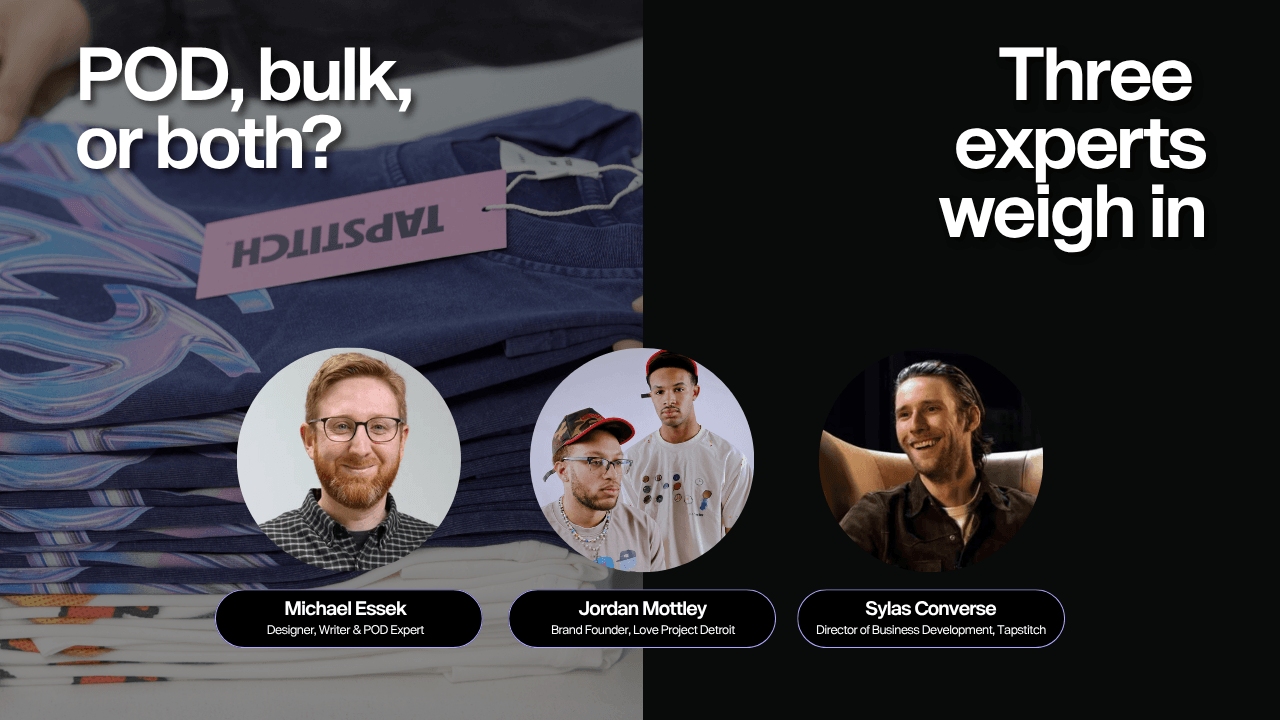
To answer that question, we hosted Tapstitch's first live webinar exploring one of the biggest decisions every fashion founder faces: print on demand vs. bulk manufacturing.
Joining the discussion were three people with very different perspectives on clothing manufacturing:
- Sylas Converse: Director of Business Development at Tapstitch, who works with thousands of fashion brands and manufacturers every year.
- Michael Essek: a print-on-demand expert and commercial artist with more than a decade of experience selling products across Redbubble, TeePublic, Amazon, Etsy, and other marketplaces.
- Jordan Mottley: founder of Love Project Detroit, who shared the perspective of a growing fashion label using both on-demand production and bulk orders to scale.
Together, they covered everything from choosing the right clothing manufacturer and ordering samples to minimum order quantities, margins, fulfillment, product validation, and knowing when bulk production starts to make financial sense.
Throughout the conversation, one idea kept coming back.
The strongest fashion businesses don't simply choose between print on demand and traditional clothing manufacturers.
They build a manufacturing strategy that evolves alongside the business.
The Best Manufacturing Strategy Isn't One-Size-Fits-All
Print on demand and bulk manufacturing solve different problems.
Use print on demand when flexibility, experimentation, and low-risk product launches matter most. Move into bulk production when demand is proven, your bestsellers are established, and improving margins becomes the priority.
For many modern streetwear brands and independent labels, the smartest approach isn't choosing one model forever.
It's knowing when to use each one.
Before We Compare Print-on-Demand and Bulk Manufacturing...
One of the biggest misconceptions in apparel manufacturing is that "bulk" describes a type of clothing manufacturer.
It doesn't.
Bulk describes when your products are purchased and who owns the inventory. That's an important distinction because the same garment can often be sold through either model.
You could sell a heavyweight oversized T-shirt through print on demand, where it's produced only after each customer places an order. Once that design proves popular, you could order the exact same garment in bulk, hold inventory yourself, and fulfill orders from stock.
The garment hasn't changed. The production model has.
As Sylas explained: "When I'm talking about bulk, I'm speaking more from the function rather than the size."
Bulk doesn't necessarily mean ordering thousands of products. It could be five T-shirts, fifty hoodies, or several thousand garments. What defines bulk is that you're purchasing inventory before customers buy it, rather than producing each item after the order.
On-Demand vs Bulk Production at a Glance
Why So Many Successful Brands Start With Print-on-Demand
One of the biggest advantages of print on demand isn't simply that it's cheaper to start. It's that it changes how you discover successful products.
Traditional manufacturing asks founders to make expensive decisions before they have real data. You choose the garments, invest in inventory, and hope customers agree.
Starting a print on demand business flips that process around. Instead of predicting what people might buy, you can launch products first and let real customers tell you what's worth investing in.
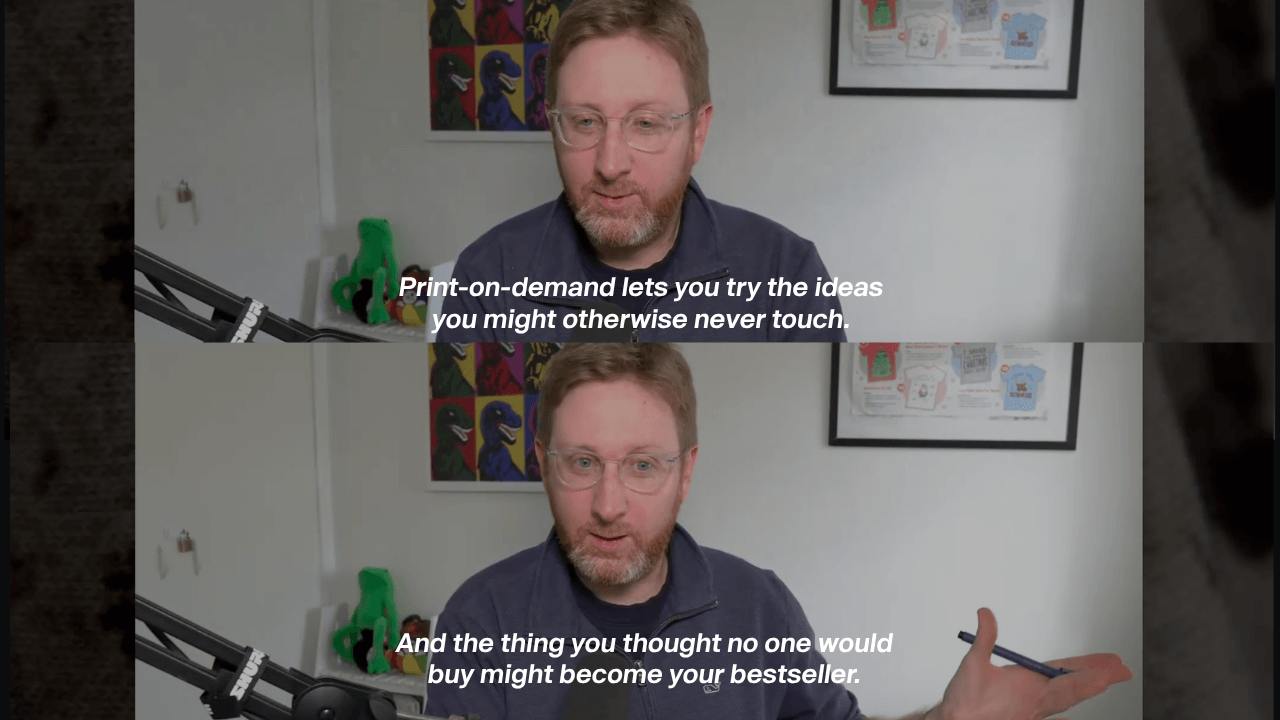
Michael has watched that shift happen firsthand. Before moving into print on demand, he spent years creating artwork for screen-printed apparel, where every design had to justify a production run before it could be sold. As he explained during the webinar: "When print on demand started, it was incredible. We didn't have to make decisions about stock anymore. We can now create a design, put it out there, and if nobody buys it, we're not out of pocket. If somebody buys it, great!"
That shift creates room for experimentation. Instead of committing to hundreds of garments, founders can test new niches, seasonal collections, unusual concepts, different colours, or products aimed at very specific audiences.
Sometimes the least obvious idea becomes the winner. As Michael put it: "The design that you thought was stupid, that no one would ever buy... lo and behold, that's your bestseller. That's the joy of print on demand."
Print on demand isn't just a way to reduce financial risk. It's a way to learn what customers actually want before investing in larger production runs.
Eventually, though, some products stop being experiments. They become reliable bestsellers.
That's when bulk starts to deserve a closer look.
When Bulk Manufacturing Starts Making Sense
Bulk manufacturing isn't the next step because your brand has reached a certain age. It becomes the right decision when the product has earned it.
If the same hoodie or T-shirt continues selling month after month, buying inventory upfront can reduce your cost per unit, improve margins, and potentially shorten delivery times.
As Michael explained:"If a design really takes off, and we're making 100 sales a day, maybe there's an argument to bulk order them and keep them in stock."
There isn't a universal number where every business should switch. Instead, look for signs that demand has become predictable.
You might be ready to consider bulk production if:
- One or two products consistently outperform the rest of your catalogue.
- You're repeatedly selling the same colours and sizes.
- Lower production costs would make a meaningful difference to your margins.
- You have somewhere to store inventory or access to a fulfillment partner.
- Faster dispatch would noticeably improve the customer experience.
Look at Total Cost, Not Just Cost Per Garment
A lower unit price doesn’t automatically mean a cheaper manufacturing model. When comparing clothing manufacturers, calculate the full cost of production and print on demand profit margins, including the garments themselves, shipping, import duties, warehousing, packaging, staff or 3PL fees, returns, and the cost of unsold inventory.
A bulk order might reduce your production cost by several dollars per garment, but those savings can disappear quickly if you’re paying for storage or sitting on stock that doesn’t sell.
That’s why the best time to move into bulk production is usually when demand is predictable enough for the total economics - not just the factory price - to make sense.
Why the Fastest-Scaling Brands Use Both
One of the strongest insights from the webinar came when Sylas challenged the idea that founders have to choose one model.
"Is it one or the other, or is it both?"
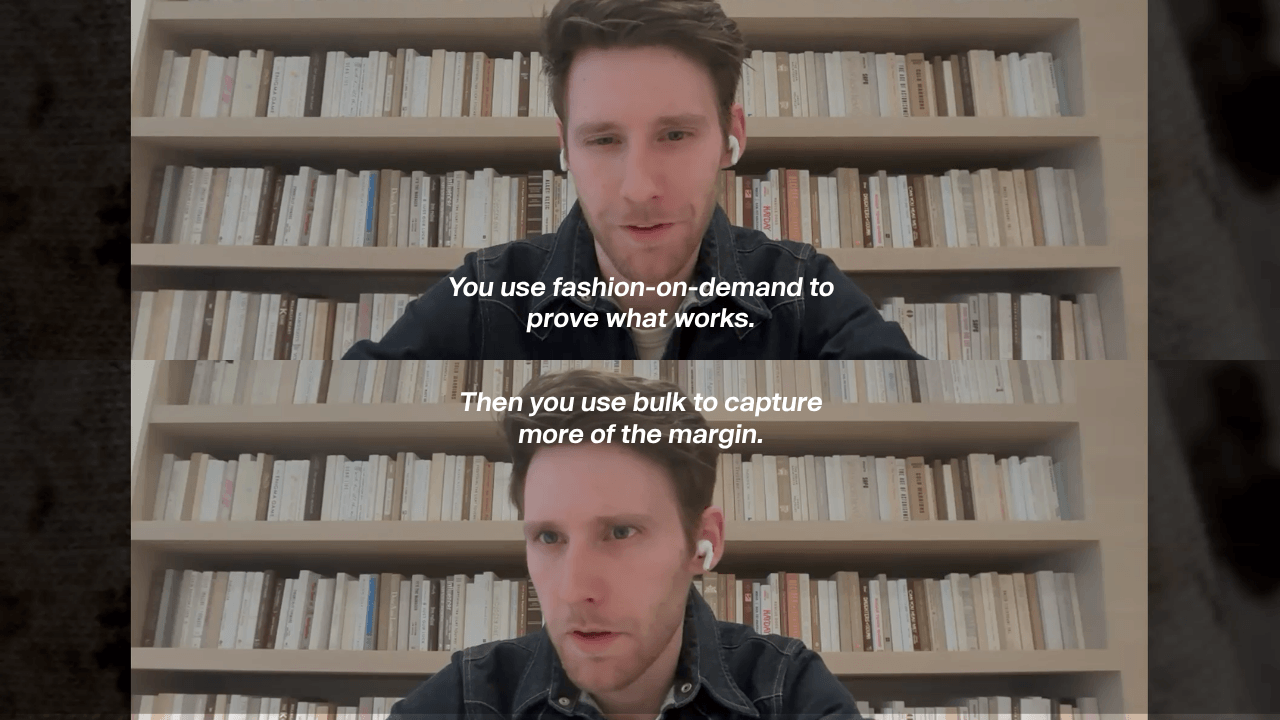
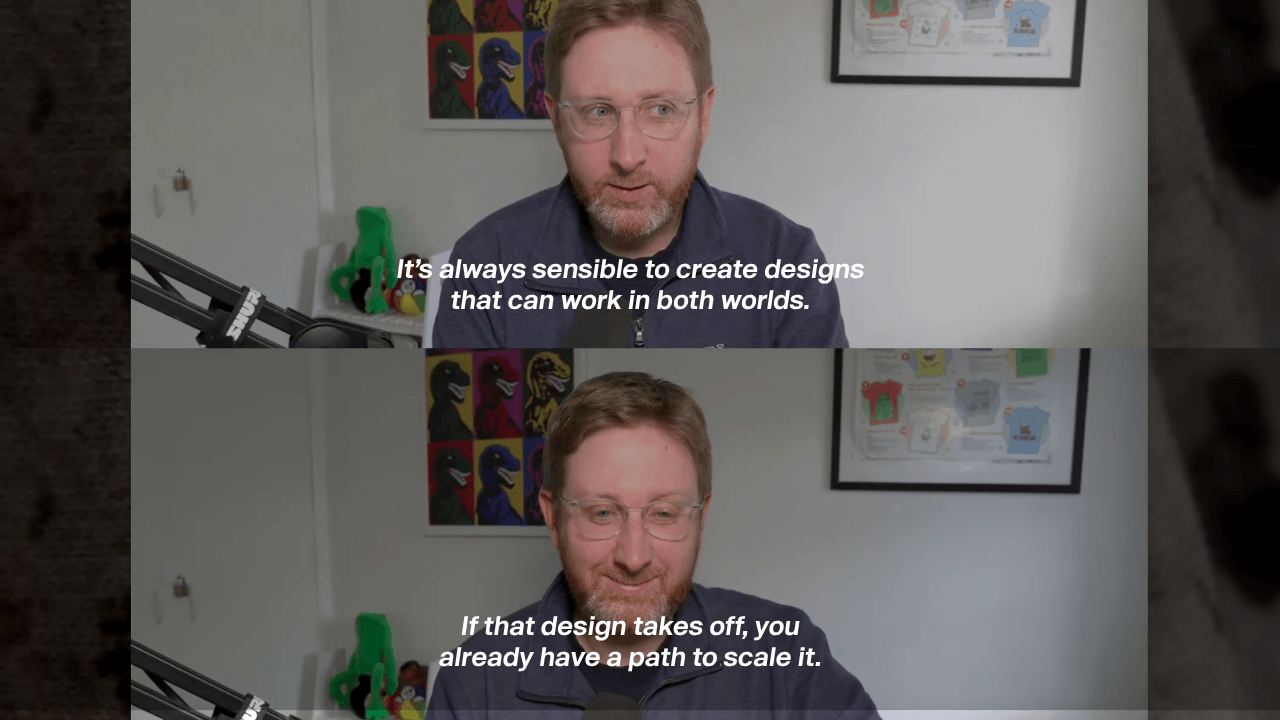
For many growing brands, the answer is both. Print on demand isn't just a low-cost way to launch. It's a powerful way to validate new ideas with minimal risk. Once a product becomes a consistent seller, bulk manufacturing can improve margins and give you more control.
Instead of replacing one model with another, the smartest founders use each where it creates the most value.
Print on demand helps you learn. Bulk manufacturing helps you scale.
A Smarter Way to Scale
Successful brands don't stop experimenting just because they've found a bestseller.
They keep using on-demand production to test fresh ideas while using bulk production to maximise the products customers already love.
Before You Manufacture Anything, Answer These Three Questions
Choosing the right clothing manufacturer matters. But before you compare factories, samples, MOQs, or production costs, there's a more fundamental question:
Are you making something people actually want to buy?
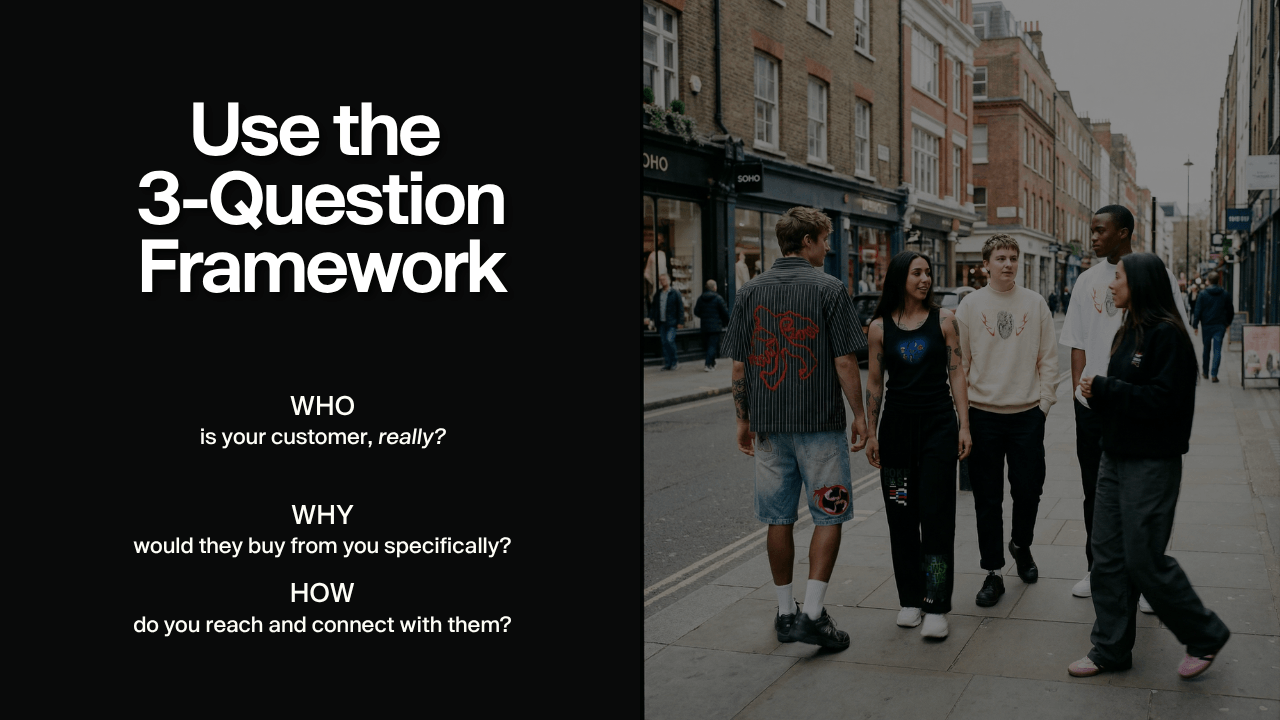
During the webinar, Michael shared a simple way to think about product ideas before investing time or money into production.
Who is it for? Why would they buy it? And how will they find it?
1. Who Are You Creating For?
Before you worry about fabrics, fits, or printing techniques, get clear on the person you're trying to reach.
Michael explained it like this:"Is there someone this would appeal to? Who else would get this joke? Is it just me?"
A product can be clever, beautifully made, and technically impressive... and still fail if the audience is too vague. The strongest brands usually have a clear sense of who they're creating for, whether that's a specific subculture, lifestyle, community, or style preference.
You don't need an enormous customer persona document. You just need to know who looks at the product and immediately thinks: "That's for me."
2. Why Would They Buy It?
A good design isn't always enough. Michael put it simply:"Why would they buy it? Why are they engaged in it?"
People buy clothing for all sorts of reasons.
- It might reflect their identity.
- It might connect to a trend.
- It might make them laugh.
- It might be a gift.
- It might represent a community.
- It might simply be something they genuinely love wearing.
For streetwear brands especially, that reason often sits at the intersection of style, identity, and culture.
3. How Will They Find It?
Even a great product won't sell if nobody sees it.
As Michael asked:"How are they going to see it? How are you going to get the eyeballs?"
That could mean organic search, TikTok, Instagram, paid ads, creator partnerships, marketplaces like Etsy, an existing community, or a combination of channels. The key is to think about distribution before you manufacture the product.
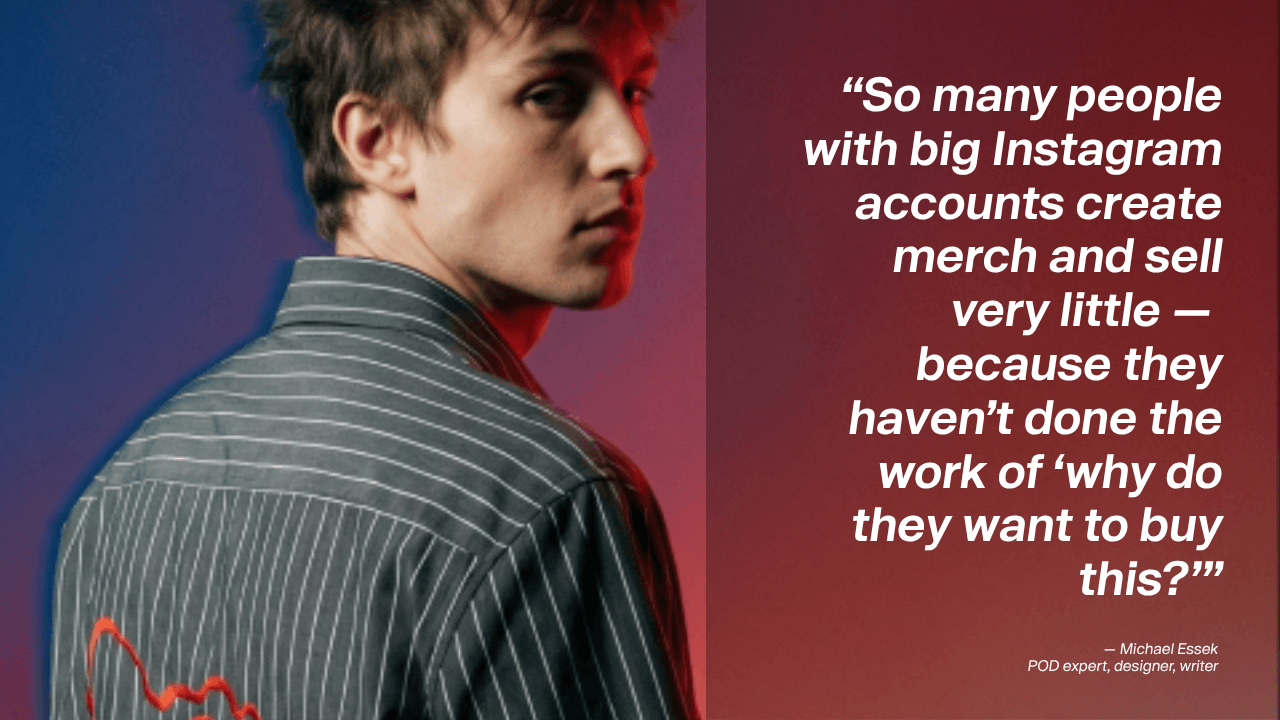
Michael also pointed out that having an audience alone doesn't guarantee sales:"There are so many people with big Instagram accounts, but they create some merch or some product, and they sell very little, because they've not done the work of, why do they want to buy this?"
A large audience can help. A strong manufacturing partner can help. High quality materials, competitive pricing, and fast production can all help. But none of them replace product-market fit.
Before you commit to a bulk order or even launch something through print on demand, make sure you can answer those three questions clearly.
The Instagram Paradox: A Big Audience Doesn't Guarantee Sales
Having an audience and having a market are not the same thing. A creator can have tens of thousands - or even millions - of followers and still launch a clothing collection that barely sells.
As Michael put it:“There’s so many people with big Instagram accounts, but they create some merch or some product, and they sell very little, because they’ve not done the work of, ‘Why do they want to buy this?’”
That’s the Instagram paradox.
Attention does not automatically translate into purchase intent. Someone might follow you because they like your videos, your personality, your photography, or your opinions. That doesn't necessarily mean they want your logo on a T-shirt. The product still needs to give them a reason to buy.
That might be an exceptional fit, a great piece of artwork, a cultural reference they identify with, premium materials, a strong concept, or simply something that looks good enough to earn a place in their wardrobe.
This is especially important for creators launching merch or streetwear brands. An existing audience gives you a major advantage: distribution is already there. But the product has to stand on its own once it reaches that audience.
Before launching, ask yourself:
- Would someone want this if they didn't already know me?
- Does the product say something about the person wearing it?
- Is there a reason to buy beyond simply supporting the creator?
- Does the garment itself feel worth the price?
A large following can get a product seen. It can't make an unconvincing product desirable.
That distinction is why product development still matters, even when you've already solved the audience problem.
Always Sample Before You Commit to Bulk Production
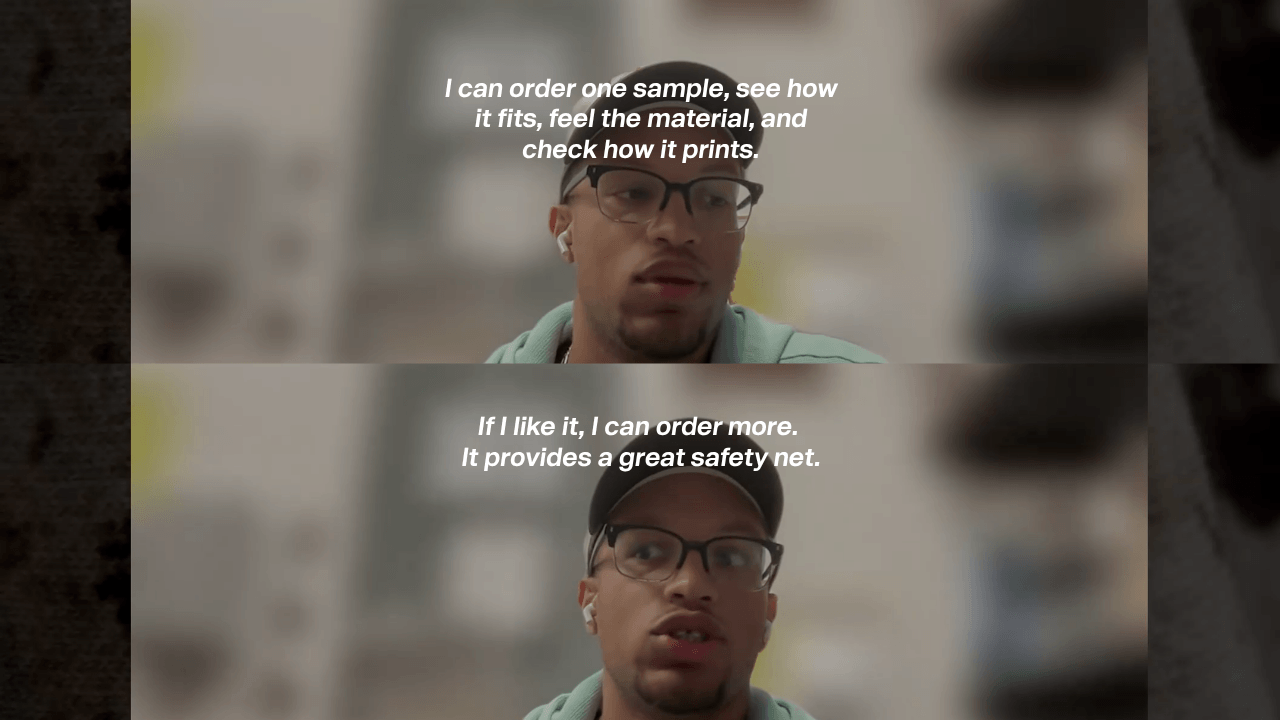
Sampling is one of the most important steps in the manufacturing process.
Before committing to a large production run, order samples and check the fit, fabric, stitching, print quality, measurements, trims, and overall construction against your specifications or tech pack.
It’s also worth testing how the garment performs after washing and wear. A product can look perfect when it first arrives but behave differently once it’s been washed, stretched, or worn repeatedly.
Sampling gives you a chance to make changes before those mistakes are multiplied across hundreds or thousands of units.
What Does Good Quality Control Look Like?
Quality control shouldn’t happen only after production is finished. Strong manufacturers build quality checkpoints throughout the process, from fabric inspection and cutting to stitching, printing, measurements, finishing, and final inspection before shipment.
Ask a potential manufacturer how they identify defects, how often products are inspected, and what happens if a batch doesn’t meet agreed specifications.
For larger production runs, some factories use formal inspection standards such as AQL sampling, while others rely on their own internal quality control process. The exact system matters less than having a clear, repeatable process that protects consistent quality from the first sample through to the finished product.
What Makes a Great Streetwear Manufacturer?
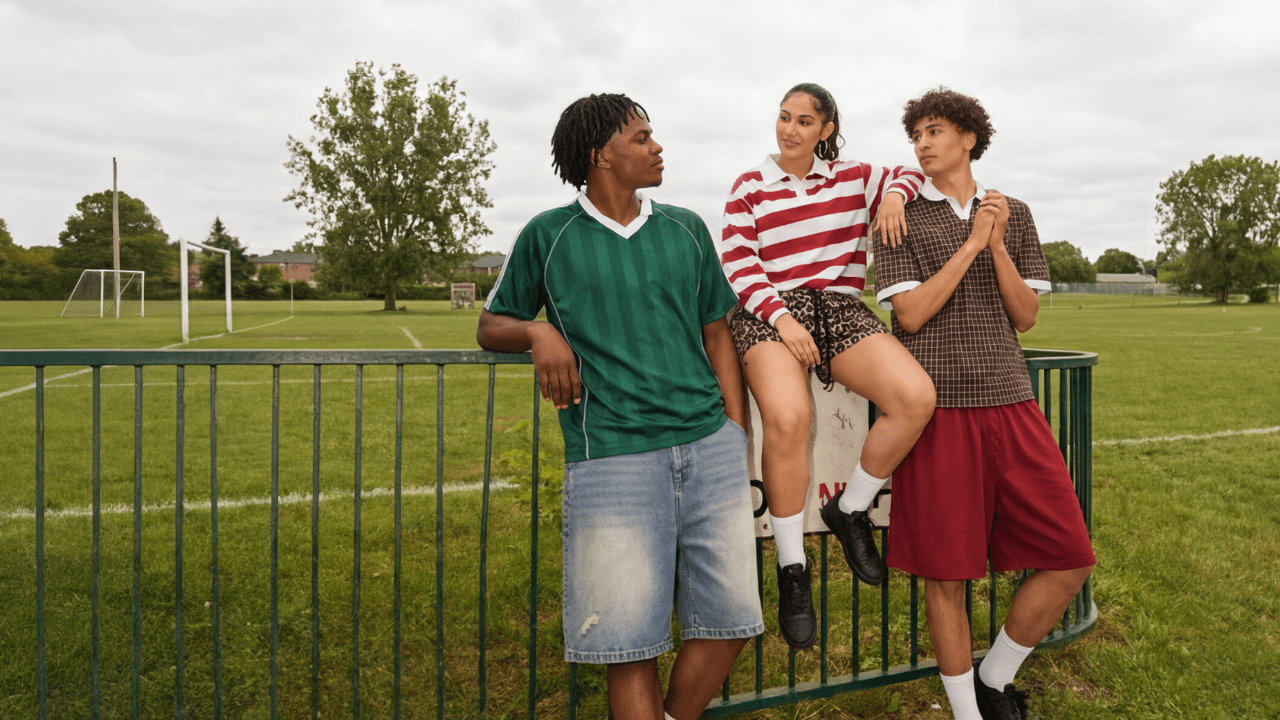
Streetwear has changed dramatically over the past decade. What started as graphic T-shirts and hoodies has evolved into a category where the garment itself can be just as important as the design printed on it.
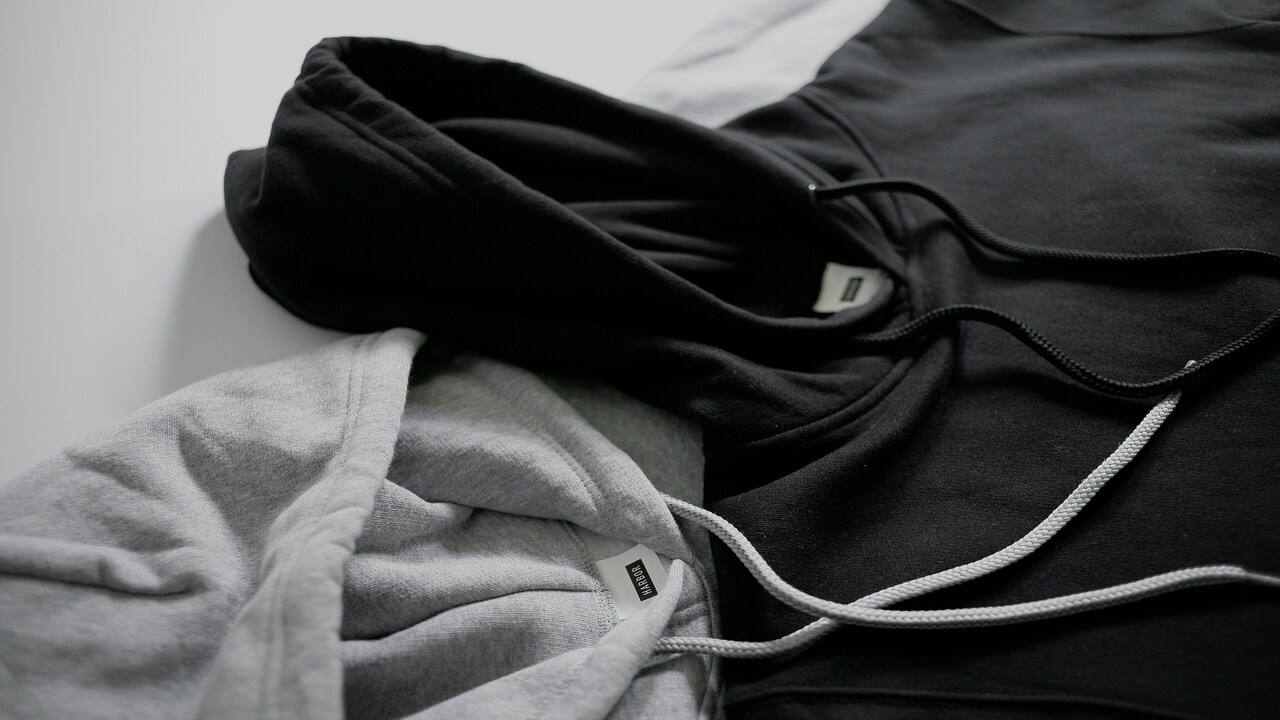
Modern streetwear brands compete on silhouette, fabric weight, construction, fit, finishing, and overall craftsmanship. Heavyweight cotton, oversized cuts, French terry fleece, vintage effects, custom washes, embroidery, screen printing, puff print, and premium trims have all become part of the streetwear language.
People aren't just buying graphics: they're buying style, quality, and a brand they want to identify with.
That means choosing a streetwear manufacturer isn't simply about finding someone who can print your artwork. A strong streetwear clothing manufacturer should understand the garments, finishes, and production techniques that define the streetwear market.
Why Streetwear Brands Should Look Beyond Traditional Print-on-Demand
One challenge many founders discover is that traditional print-on-demand platforms were originally built around promotional products rather than fashion.
They're fantastic for launching quickly, but the product range may be limited to standard wholesale blanks that thousands of other sellers are already using.
If your goal is to build a premium streetwear company, look for a manufacturing partner that offers fashion-forward options.
That might mean heavyweight T-shirts, oversized hoodies, French terry sweatshirts, washed garments, premium materials, distinctive silhouettes, or more advanced customization options.
It also means paying attention to consistent quality.
A leading streetwear manufacturer shouldn't just make one good sample. They should be able to maintain quality checkpoints throughout production so the finished product stays consistent as volume grows.
Building Custom Streetwear With Tapstitch
Tapstitch approaches streetwear production differently from traditional POD.
Instead of starting with generic promotional garments, the catalogue is built around fashion-focused styles designed for modern streetwear brands.
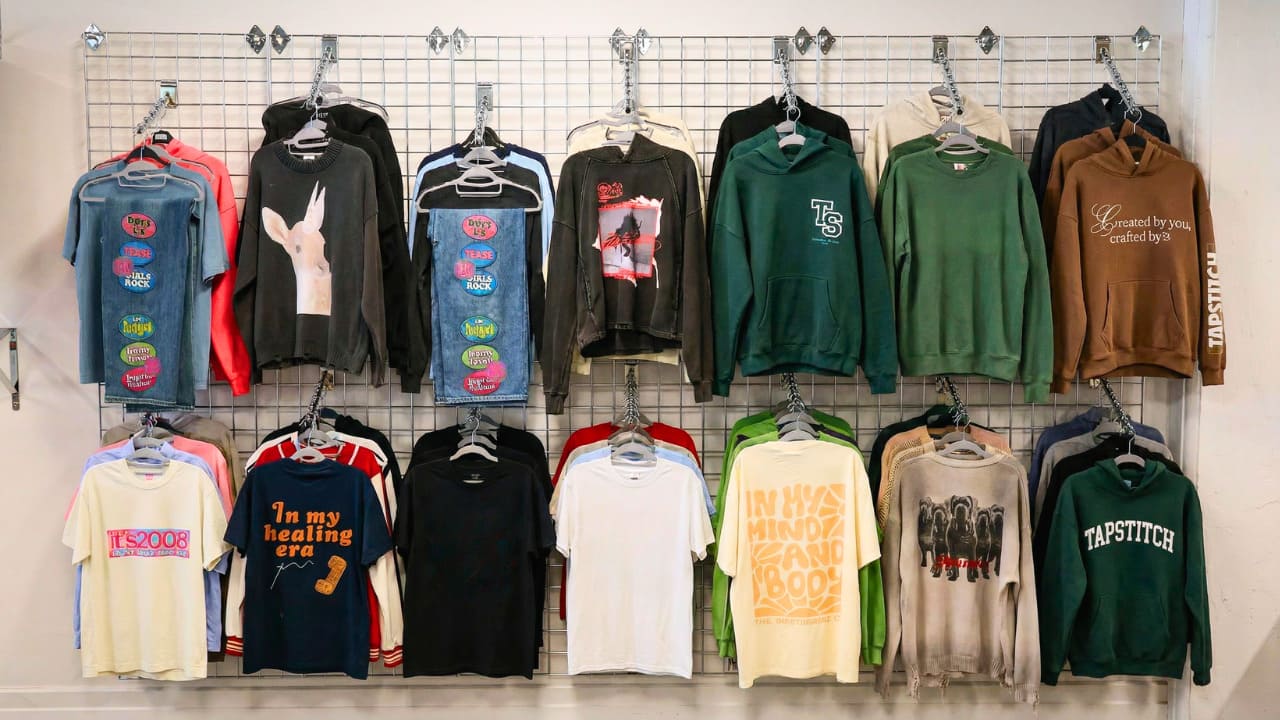
Alongside premium heavyweight T-shirts and oversized silhouettes, brands can use custom labels, hang tags, embroidery, puff print, vintage effects, and other finishing details to create more distinctive custom streetwear.
The advantage isn't simply having more options.
It's being able to build collections that feel intentional from the first sample, then continue using the same products whether you're selling on demand or moving proven bestsellers into larger production runs.
Choosing the Right Type of Clothing Manufacturer
A clothing manufacturer is much more than a factory that sews garments together.
Depending on the type of manufacturer you work with, they may help with everything from tech pack development and pattern making to fabric sourcing, sample development, apparel production, quality control, and even fulfillment.
Some manufacturers build completely custom garments from scratch, while others produce existing blanks with your branding. Some specialise in large-scale production, while others manufacture products one order at a time through print on demand.
The important thing to understand is this: A clothing manufacturer isn't automatically a factory requiring 1,000-piece minimum order quantities.
Today, there are several different manufacturing models, each designed for different stages of growth.
Clothing Manufacturer Types at a Glance
Traditional Clothing Manufacturers (Cut-and-Sew)
Best for: Brands creating completely original garments with the budget, time, and confidence to invest in custom production.
When most people think about clothing manufacturers, this is the model they picture.
A traditional cut-and-sew manufacturer creates garments from scratch rather than starting with an existing blank. Instead of choosing from a catalogue of pre-made T-shirts or hoodies, you're developing your own product from the ground up.
That usually begins with tech pack development: a detailed specification document that tells the manufacturer exactly how the garment should be made. A tech pack may include measurements, construction details, stitching, trims, branding, artwork placement, fabric choice, and specific materials.
From there comes pattern making, pattern development, fabric sourcing, and sample development before the garment moves into full cut-and-sew production.
What Happens Before Apparel Production Begins?
Before full apparel production starts, traditional manufacturers usually work through several development stages.
Tech packs communicate the garment specifications. Pattern making determines the shape and fit. Fabric sourcing establishes the materials. Sample development allows the brand to test the product before moving into larger-scale production. Some manufacturers use CNC fabric cutters to ensure precise cutting for high quality garments, and the result is more consistent pieces before production scales.
Strong quality control at this stage matters because mistakes become much more expensive once hundreds or thousands of garments are being produced.
The biggest advantage of cut and sew is control. You decide the fit, silhouette, materials, stitching, trims, labels, washes, finishes, and every other detail that contributes to your brand identity. If you're building something completely unique that doesn't already exist on the market, a custom clothing manufacturer may be the only way to achieve it.
The trade-off is that this level of customization requires a much bigger investment. Most traditional clothing manufacturers work with higher MOQs, longer lead times, and greater upfront costs. Depending on the complexity of the garment, developing a product can take weeks or months before you're ready to sell.
For newer brands, that means committing to inventory before you know whether customers actually want the finished product.
Wholesale Clothing Manufacturers
Best for: Brands that want lower per-unit costs and faster access to proven garments, without the complexity of developing products from scratch.
Wholesale clothing suppliers work very differently from traditional cut-and-sew manufacturers.
Instead of creating a garment specifically for your business, they sell ready-made clothing in volume. Your job is to choose the products you want, purchase them, and sell or decorate them.
Unlike cut-and-sew manufacturing, wholesale suppliers offer very little control over how the garment itself is made. The fabric, fit, construction, colours, and overall style have already been decided. You simply select from an existing catalogue.
Some suppliers may offer decoration such as screen printing, embroidery, or private label branding, but the underlying garment doesn't change. You generally won't be choosing the fabric, altering the cut, or developing custom washes from scratch.
The biggest advantage of wholesale is speed and cost. Because the clothing items have already been manufactured, they're usually available faster and cost less per unit than fully custom apparel production.
The trade-off is that you'll need to buy inventory upfront, store it yourself or through a 3PL, and handle fulfillment when orders come in. You're also choosing from products that other brands may be selling too, which can make differentiation harder.
Print-on-Demand Manufacturers
Best for: New brands that want to launch quickly, validate ideas, and grow without investing heavily in inventory.
Print-on-demand manufacturers completely changed how people launch apparel businesses.
Instead of producing inventory upfront, products are made after a customer places an order. That means you don't need to buy stock, rent storage space, or invest thousands of dollars before you've made your first sale. Once an order comes in, the manufacturer prints, packs, and ships the product directly to your customer.
For start ups, it's one of the lowest-risk ways to begin selling.
Because there's typically no minimum order quantity, you can launch a single design, test new ideas, expand your product line, or experiment with different niches without worrying about dead stock. If something doesn't sell, you've lost little more than the time spent creating it.
The trade-off is that traditional print-on-demand services often prioritise convenience over product development. Many providers rely on large catalogues of standard wholesale blanks shared across thousands of sellers. While those products work perfectly well for many businesses, the garments can offer limited choice in fit, fabric, weight, construction, and style. If you're trying to build a premium streetwear clothing brand, that can become restrictive.
There's also the cost to consider. Producing garments individually generally means a higher cost per unit than placing a larger bulk order once you've identified proven bestsellers.
For many founders, though, that's a worthwhile trade-off. Paying more per product is often less risky than investing thousands in inventory that may never sell.
Fashion-on-Demand: Beyond Traditional Print on Demand
Best for: Brands that want premium garments, custom branding, and the flexibility of on-demand production without committing to bulk inventory.
Traditional print on demand changed the apparel industry by removing one of the biggest barriers to starting a brand: inventory. Tapstitch's fashion-on-demand model takes the same low-risk principle and pushes it further.
Rather than focusing solely on printing graphics onto standard wholesale blanks, fashion-on-demand combines the flexibility of print on demand with many of the branding and product options traditionally associated with larger clothing manufacturers.
That can include custom labels, branded hang tags, premium heavyweight garments, fashion-forward silhouettes, and elevated finishing details. Instead of choosing from generic promotional apparel, you're building collections around garments designed specifically for modern fashion and streetwear brands.
As Sylas explained during the webinar: "Tapstitch allows you to create a brand on demand."
That distinction matters. Customers don't just experience the graphic on the front of a garment. They experience the fabric, fit, label, packaging, and everything else that shapes their perception of quality.
Fashion-on-demand makes it possible to deliver a more premium experience without the high minimum order quantities or upfront investment traditionally associated with custom clothing manufacturing. For founders who want to build a long-term brand rather than simply sell printed products, it offers a practical middle ground between traditional print on demand and fully custom manufacturing.
Explore Tapstitch's fashion-on-demand platform and launch premium apparel with custom branding, no minimum order quantities, and production that can scale alongside your business.
How to Source Clothing Manufacturers
Finding the right manufacturer usually starts with narrowing down what you actually need. Decide whether you’re looking for cut-and-sew production, wholesale garments, private label, print on demand, or a hybrid model before you start comparing suppliers.
You can source clothing manufacturers through industry directories, trade shows, referrals, sourcing agents, or marketplaces such as Alibaba. Trade shows are especially useful because they let you inspect fabric quality, compare garments in person, and build relationships directly with potential manufacturing partners, which can reduce the time you’d otherwise spend doing separate research on each option.
For overseas manufacturers, lower unit costs can be attractive, but longer lead times, shipping costs, duties, and communication across time zones all need to be considered. Domestic clothing manufacturers may cost more per unit, but often offer faster shipping, easier communication, and greater visibility into production.
The goal isn’t simply to find the lowest quote. It’s to find the right partner for your product, budget, timeline, and expected scale, while also checking ethical practices such as fair labor conditions and sustainability certifications when comparing suppliers.
When Clothing Manufacturing Gets Complicated
Finding a clothing manufacturer sounds straightforward - until you actually start looking. What begins as a search for someone to make your products quickly can turn into managing a network of different suppliers, production timelines, and decisions.
As Sylas explained during the webinar:"You go to one person to get your T-shirt made, another person to get denim made, then another person to get your labels and hang tags made. Then you have to compile all that together."
For many founders, that's the reality of traditional manufacturing. One supplier specialises in heavyweight T-shirts. Another produces custom labels. Someone else handles embroidery or screen printing. You're coordinating samples over email, tracking production in spreadsheets, juggling different lead times, and sometimes communicating across multiple time zones. Even if every supplier performs well, the process itself can become difficult to manage.
Then comes the biggest question. As Sylas put it: "How many can you buy of a specific hoodie when you have no audience? You don't even know if you're going to get through that inventory."
That uncertainty is exactly why so many modern brands start with print on demand before committing to bulk production.
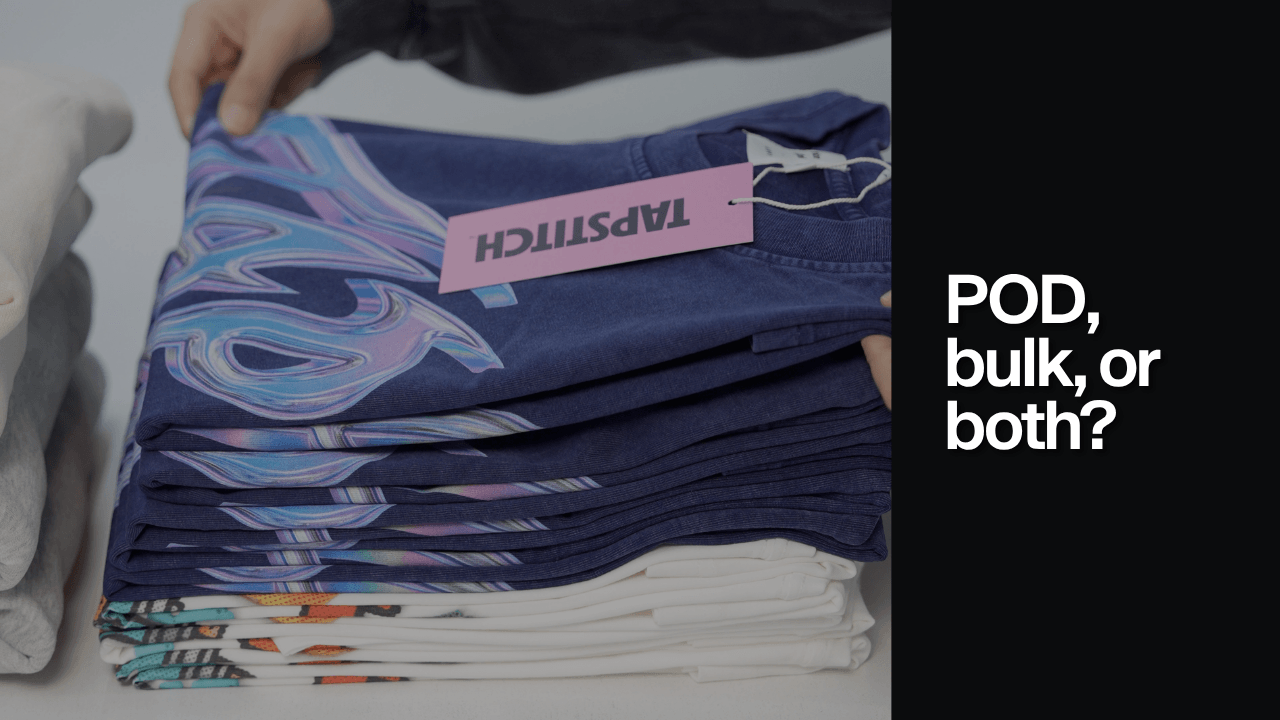
Final Checklist: Should You Choose Print-on-Demand, Bulk Manufacturing, or Both?
There's no single manufacturing model that's right for every clothing brand. The best choice depends on where your business is today... and where it's heading next.
Use this quick checklist to decide. The goal isn't to choose between print on demand and bulk manufacturing. It's to know when each model gives your brand the biggest advantage.
Choosing the Right Clothing Manufacturer Is About Timing
If there's one lesson from the webinar, it's that choosing a clothing manufacturer isn't about finding a single partner you'll use forever. It's about choosing the right model for where your business is today.
When you're launching, speed, flexibility, and low risk matter. Print on demand lets you experiment, validate ideas, and learn what customers actually want without committing to inventory too early.
As you grow, your priorities change. Reliable bestsellers make bulk production more attractive. Better margins, faster fulfillment, and greater control over inventory can begin to outweigh the flexibility that made print on demand so useful in the beginning.
The strongest businesses don't necessarily see those as competing strategies. They use print on demand to discover what works, bulk production to scale what works, and continue using both as their product line evolves.
Whether you're looking for a traditional clothing manufacturer, a streetwear manufacturer, or a fashion-on-demand platform, the goal is the same: build a manufacturing strategy that grows alongside your business, not one that forces your business to grow around it.
FAQs
During our live webinar, founders submitted hundreds of questions about print on demand, bulk manufacturing, product selection, pricing, ecommerce, quality, shipping, and scaling a clothing brand. We’ve answered as many as possible throughout this guide and expanded the FAQ section below to cover some of the most common questions we couldn’t address in detail during the session.
1. What is a clothing manufacturer?
A clothing manufacturer is a business that produces garments for fashion brands and apparel companies. Depending on the manufacturer, this can include tech pack development, pattern making, fabric sourcing, sample development, apparel production, quality control, and bulk production.
Some clothing manufacturers build completely custom garments from scratch, while others specialise in wholesale apparel or print-on-demand production.
2. What is the difference between a clothing manufacturer and a print-on-demand supplier?
Traditional clothing manufacturers typically produce garments in larger quantities before they're sold, while print-on-demand suppliers manufacture clothing only after a customer places an order.
A traditional manufacturer often requires a minimum order quantity, while print on demand usually has no MOQ, making it ideal for testing products with less financial risk.
3. Is print-on-demand better than bulk ordering for apparel manufacturing?
Neither is universally better. Print on demand is ideal for validating ideas and avoiding inventory risk. A bulk order becomes more attractive once you have proven bestsellers, because lower production costs can improve margins and support larger-scale production.
4. When should I switch from print-on-demand to bulk manufacturing?
Consider moving proven products into bulk production when demand becomes predictable and reducing your cost per unit would meaningfully improve profitability.
Many brands continue using print on demand for new launches while moving only their bestselling products into bulk.
5. What is a minimum order quantity (MOQ)?
A minimum order quantity is the smallest number of garments a manufacturer requires you to purchase in one production run.
Traditional cut-and-sew factories often have higher MOQs, while many print-on-demand providers and some modern manufacturers offer low MOQ or single-unit production.
6. Can I use print-on-demand and bulk manufacturing together?
Yes.
Many successful brands use print on demand to test ideas and bulk production to increase margins on products they've already validated.
Combining both can create a more scalable production strategy without limiting your ability to experiment.
7. How do I choose the right clothing manufacturer?
The right clothing manufacturer depends on your goals.
Consider key factors such as quality, lead times, customization options, pricing, communication, production capacity, and quality control standards. Ask potential partners for proof of scale and experience that shows they can support clients around the world.
A good manufacturing partner should be able to support the business as it grows rather than forcing you to rebuild your supply chain later.
8. Should I order clothing samples before launching?
Yes.
Ordering samples allows you to evaluate fit, fabric, print quality, construction, and the finished product before selling to customers.
It's also a good opportunity to check sizing, washes, stitching, and how the garments perform after wear and washing.
9. How much does it cost to manufacture clothing?
Manufacturing costs depend on the production method, garment complexity, materials, order size, printing techniques, and customization.
Custom apparel production through a custom clothing manufacturer usually requires a larger upfront investment than print on demand, while wholesale and bulk manufacturing generally reduce the cost per unit as quantities increase.
10. Is print-on-demand profitable for clothing brands?
Is print on demand profitable is one of the first questions that businesses ask. The answer? Of course!
Print on demand usually carries a higher cost per item than bulk production, but it also removes the risk of buying inventory that doesn't sell.
For many start ups, protecting cash flow and testing products is more valuable than maximising margins immediately.
11. Can I build a premium clothing brand with print-on-demand?
Yes, provided you choose the right manufacturer.
Traditional POD platforms often focus on basic wholesale blanks, but fashion-focused providers can offer premium garments, custom labels, custom washes, heavyweight fabrics, and other customization options that create a stronger brand identity.
12. How do I find a clothing manufacturer for a startup?
Start by deciding what you're trying to build.
If you want completely original garments, look for a custom clothing manufacturer or cut-and-sew factory.
If you're validating ideas, print on demand may make more sense.
Many start ups benefit from choosing a manufacturing partner that can support both on-demand and bulk production as the business grows.
13. What should I look for in a streetwear manufacturer?
A good streetwear manufacturer should offer more than basic T-shirts.
Look for heavyweight cotton, oversized fits, French terry hoodies and sweatshirts, strong craftsmanship, custom streetwear options, embroidery, puff print, custom washes, and custom labels.
The best streetwear clothing manufacturers understand both the style of the streetwear market and the production standards needed to maintain consistent quality.
14. What's the difference between private label clothing manufacturers and print-on-demand?
Private label manufacturers produce garments that carry your own branding rather than the manufacturer's.
Print-on-demand describes when the product is made: after an order is placed.
The two approaches can overlap. Some modern manufacturers offer private label features such as custom labels, hang tags, and packaging alongside on-demand production.
15. Should I manufacture overseas or locally?
There's no single right answer.
USA clothing manufacturers and domestic production may offer shorter lead times, simpler communication, and easier oversight, while overseas factories may offer access to different materials, specialist capabilities, or competitive pricing.
The right partner depends on your budget, quality expectations, supply chain priorities, and production requirements.
16. What is private label clothing manufacturing?
Private label clothing manufacturing allows you to sell garments under your own brand rather than the manufacturer's.
Depending on the supplier, private label production may include custom labels, packaging, decoration, and other custom apparel options without requiring you to develop the entire garment from scratch.
17. What quality control should I expect from a clothing manufacturer?
Good quality control should cover materials, measurements, stitching, printing, construction, finishing, and the final garment.
For larger production runs, ask your manufacturer where quality checkpoints sit within the manufacturing process and how they maintain consistent quality between batches.
18. What is a streetwear clothing manufacturer?
A streetwear clothing manufacturer specialises in garments and production techniques suited to modern streetwear brands.
That can include heavyweight T-shirts, oversized hoodies, French terry, vintage effects, custom washes, embroidery, screen printing, puff print, custom labels, and other details that help create a distinctive streetwear product.
19. How many products and designs should I launch with when starting a clothing brand?
You don't need a huge collection to launch successfully. For most new brands, a smaller, focused range is easier to market, test, and improve than dozens of unrelated products.
Start with a few garments and designs that clearly represent your style and target customer. Print on demand makes it easier to launch small, see what customers respond to, and then expand the colours, fits, designs, and product categories that actually generate demand.
20. How do I know which clothing products to test first?
Start with products that closely match your target audience, brand identity, climate, lifestyle, and intended price point.
Think beyond how a garment looks in a mockup. Consider fit, fabric weight, construction, versatility, and how easily you can demonstrate it through content. Ordering samples is particularly valuable when comparing different blanks, cuts, and materials because the product that looks strongest on screen isn't always the one customers will prefer in person.
21. How do I know when a product is a real bestseller?
Don't call something a bestseller because of one viral post or a handful of orders. Look for repeated demand over time, consistent sales across multiple weeks or launches, healthy margins, manageable return rates, and recurring demand for the same colours, sizes, or styles.
Those signals give you much more confidence that demand is sustainable and that the product may be a strong candidate for bulk production.
22. How should seasonal demand affect print-on-demand and bulk inventory?
Seasonality matters much more when you own inventory. If you sell globally, customers may be entering completely different seasons at the same time, which can make forecasting winter or summer products difficult. Print on demand gives you more flexibility to test seasonal products without committing heavily to inventory.
Once you understand when and where demand occurs, bulk production can make more sense for seasonal bestsellers where sales patterns have become predictable.
23. Should I tell customers that my clothing is print on demand?
You don't necessarily need to make the production method the defining feature of the product. Customers generally care more about quality, fit, design, price, delivery expectations, and whether the finished garment matches what was advertised.
What matters is transparency around things that directly affect the customer, particularly production and shipping times. A well-made fashion-on-demand product should be presented as the product it is, rather than apologetically positioned as "POD."
24. Does print on demand make a clothing brand look less premium?
A clothing brand feels premium because of the complete experience: garment quality, materials, fit, artwork, labels, trims, packaging, photography, customer service, and consistency.
Traditional print-on-demand can sometimes feel generic when it relies on basic promotional blanks and minimal branding. Fashion-focused on-demand production can create a much more elevated result through premium garments, stronger silhouettes, custom branding, and better finishing details.
25. What profit margin should a clothing brand aim for?
There isn't one universal margin that works for every clothing brand. Your true profitability depends on production costs, shipping, duties, platform fees, advertising spend, creator commissions, returns, discounts, packaging, fulfillment, and customer acquisition costs.
Rather than looking only at the difference between the garment cost and retail price, calculate your full landed cost and determine how much profit remains after every expense involved in acquiring and serving the customer.
26. Is domestic clothing manufacturing better than overseas manufacturing?
Neither is automatically better. Domestic production can offer shorter shipping distances, easier communication, and greater visibility into the manufacturing process. Overseas manufacturers may provide access to specialist materials, larger product ranges, different manufacturing capabilities, or lower unit costs.
Tapstitch supports both international production and U.S. fulfillment for eligible products, allowing brands to choose products and fulfillment options based on their customer base and priorities.
The right decision depends on your product, margins, lead times, expected volume, and where your customers are located.
27. Can I use print on demand and my own inventory in the same online store?
Yes. Many brands use a hybrid fulfillment setup. Some products may be fulfilled automatically through a print-on-demand manufacturer, while established bestsellers are stocked and shipped by the brand or a third-party logistics provider.
The key is setting clear expectations. If products within the same order are being fulfilled from different locations, customers should understand that items may have different delivery times or arrive in separate packages.
28. Which ecommerce platform is best for a print-on-demand clothing brand?
The best platform depends on how you plan to find customers.
Marketplaces such as Etsy give you access to an existing audience but charge platform fees and give you less control over the customer relationship. Shopify provides a fully branded storefront and greater ownership of your customer experience, but you're responsible for generating traffic. Social commerce platforms such as TikTok Shop can add another discovery channel.
Many brands ultimately use a combination: an owned storefront plus marketplaces or social commerce. Tapstitch integrates with major ecommerce platforms so products and orders can flow directly between your store and fulfillment.
Suggested internal link: use “Tapstitch ecommerce integrations” as the anchor text and link it to your integrations/stores page.
29. How do I launch a clothing brand on a small budget?
Keep fixed costs as low as possible in the beginning. Use print on demand or small production runs, launch a focused collection, order samples before making large investments, and prioritise organic content before committing heavily to paid advertising.
Avoid putting cash into inventory simply because you think you'll need it later. Spend first on areas customers genuinely experience - product quality, samples, photography, branding, and the buying experience - then invest more aggressively once demand is proven.
30. How can I tell whether a garment is genuinely high quality?
Quality isn't determined by fabric weight or price alone. Look at material composition, hand feel, stitching, seams, construction, fit consistency, shrinkage, colourfastness, trims, print durability, and how the garment performs after repeated washing and wear.
For streetwear especially, silhouette and fabric behaviour matter just as much as GSM. The best quality test is still remarkably simple: order the sample, wear it, wash it, and decide whether you'd feel confident charging your customer for it.

.jpg)
.jpg)
.jpg)
.jpg)
.jpg)
.jpg)






.png)




.png)
.webp)

.jpg)








.jpg)



.jpg)

.png)
.jpg)


.jpg)
.jpg)



.jpg)
.jpg)
.jpg)
.jpg)
.jpg)

%20(1).jpg)
.png)

.png)


%20(1)%20(1).jpg)





.png)
.png)


.jpg)

.jpg)
.jpg)