






How Much Does Etsy Take from Sellers? Etsy Fees 2026



Etsy looks free until you sell something. The question of how much does Etsy take from sellers gets buried under five different fees, two optional ones, and a handful of gotchas most beginners only discover after their first sale clears. The platform advertises itself as the simplest place on the internet to set up a shop, which it is, right until the fees stack up and you realize the $30 sale somehow paid you $19.
This guide breaks down every fee Etsy charges sellers in 2026, what each one actually costs, and how to calculate your real margin before you list. Whether you're picking your first product, expanding from another platform, or trying to figure out why your "profitable" listing keeps losing money, the math is here.
Etsy Overview: A Leading Marketplace

Etsy launched in 2005 as a handmade-and-vintage marketplace and quietly grew into one of the most important ecommerce platforms in the world. As of 2026, the platform reports over 90 million active buyers, more than 5 million active sellers, and annual GMV well above $13 billion. For independent makers, that traffic is the entire reason to be there.
The selling point is the built-in audience. You don't have to drive your own customers, build your own ad funnel, or sweat Etsy SEO from scratch. Etsy does that work. The downside, of course, is the trade. Etsy charges for that traffic in the form of fees, and the fees stack in ways that surprise new sellers.
Best lanes for Etsy in 2026: handmade goods, custom apparel, jewelry, candles, home decor, art prints, digital downloads, vintage clothing. Lanes that struggle: high-volume commodity products where margins are already thin, anything that needs to compete on price alone, dropshipped generic goods that aren't allowed on the platform anyway.
What Types of Fees Does Etsy Charge Sellers?

If you're asking how much does Etsy take, the answer splits into seven categories. None of them are hidden, but not all of them are obvious either.
Set Up Fee
Is it free to sell on Etsy? Opening the shop itself is free in most countries. How much does Etsy charge to sell once you start listing is a different question, and that's where the fee stack kicks in. As of 2026, Etsy charges a one-time shop set-up fee in select regions (typically $15 USD or local equivalent) for new sellers, but this varies by country and rolls in and out of the platform's policy. Check the current set-up policy for your specific market before you sign up.
The set-up cost, where applicable, is the only one-time fee on this list. Every other fee scales with activity.
Listing Fees
$0.20 per listing. Every item you list on Etsy costs twenty cents, regardless of whether it sells. The listing stays active for four months or until it sells, whichever comes first. After that, it expires unless you've set it to auto-renew.
The math gets uncomfortable fast on big catalogs. A shop with 100 listings is paying $20 every four months just to stay live. A shop with 500 is paying $100. Multivariate listings (different sizes, colors, materials) only pay the listing fee once, but every separate SKU stacks up.
The fee is small per listing—the total bleeds across a catalog.
Transaction Fees
6.5% of the total sale price, including shipping. This is Etsy's biggest direct cut and the one most sellers forget to factor into their pricing.
The percentage applies to the total order value, not just the product price. If your tee sells for $25 and shipping is $5, Etsy's transaction fee is 6.5% of $30, not $25. Gift wrap charges count too.
For a clean example: a $30 sale costs you $1.95 in transaction fees alone.
Shipping Label Fees

Etsy gives you a discount on USPS, UPS, and FedEx labels purchased through the platform. The "fee" here is actually a savings. You're paying less for the label than you would at retail rates.
Worth using even if you have your own shipping setup. The discount stacks across the year.
Payment Processing Fees
Roughly 3% + $0.25 per transaction in the US, with both the percentage and flat fee varying by country. Outside the US, the percentage ranges from 3% to 5%, and the flat fee adjusts to local currency.
This is Etsy Payments, the platform's payment processor. You can't really avoid it. Etsy requires you to use it in countries where it's available.
So on every transaction, you pay roughly: 6.5% transaction fee + 3% payment processing + $0.25 flat. That's around 9.5 to 10% of the total sale going to the platform, before any advertising costs.
Advertising Fees
Etsy runs two advertising programs:
Onsite Ads. Optional, pay-per-click. You set a daily budget (minimum $1/day). Etsy promotes your listings higher in search results and category pages. You pay only when someone clicks. Useful for testing or boosting specific listings, optional for most shops.
Offsite Ads. Mandatory for shops doing more than $10K USD in sales over the trailing 12 months. Optional below that threshold (opt-in by default). Etsy advertises your listings across Google, Meta, Pinterest, and other external networks. If a buyer clicks one of those ads and buys from your shop within 30 days, you pay 12% of that sale (15% for shops doing less than $10K who voluntarily opt in, capped at $100 per order).
Offsite Ads are the most controversial fee Etsy charges. If you're under $10K and opted out, you pay nothing. Once you cross $10K, opting out is no longer possible, and 12% comes off the top of any attributed sale.
Other Costs

A few additional fees that don't fit the main categories:
- Currency conversion: 2.5% on international sales when the buyer pays in a different currency than your shop is denominated in.
- Etsy Plus: $10/month, gives you 15 listing credits, $5 in Onsite Ads credit, advanced shop customization, and restock notifications.
- Pattern: $15/month (after a free trial), lets you build a standalone website using your Etsy product data, with no extra transaction fees.
- Square Reader fees for in-person sales (typically 2.5% per swipe).
How to Calculate Your Total Selling Costs
The real take on every Etsy sale is the sum of everything above, run against the specific transaction.
Etsy's take per sale = Listing fee (amortized) + Transaction fee + Payment processing + Offsite ad fee (if attributed) + Currency conversion (if international)
Concrete example. A custom apparel sale, $30 product, $5 shipping, US buyer, no offsite ad attribution:
- Listing fee: $0.20 (already paid when the listing went up)
- Transaction fee: 6.5% × $35 = $2.28
- Payment processing: 3% × $35 + $0.25 = $1.30
- Total platform take: $3.58 on a $35 sale, or about 10.2%
Now run the same sale with offsite ads attributed:
- Transaction fee: $2.28
- Payment processing: $1.30
- Offsite ad fee: 12% × $35 = $4.20
- Total platform take: $7.78 on a $35 sale, or about 22.2%
This is the spread most new sellers don't see coming. Without offsite ad attribution, Etsy takes 10 to 12% of a sale. With it, 20 to 25%.
Then you still need to cover product cost, materials, packaging, and your time. What's left is the margin, and that's the number that decides whether the shop is a business or a hobby.
How much does Etsy take across an average year of selling? For most independent apparel sellers running print-on-demand, the realistic platform averages 12 to 15% across all orders. Higher if offsite ads attribute heavily. Lower if your repeat-customer rate is strong (those buyers usually come directly).
Hidden Costs Etsy Doesn't Advertise
The platform fees are the obvious cost. The hidden ones decide whether you actually make money.
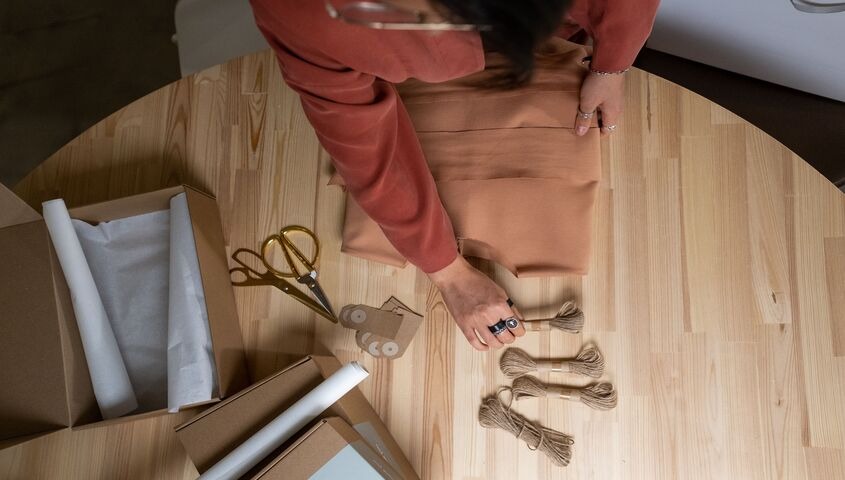
Packaging. Custom mailers, tissue paper, thank-you cards, stickers, branded inserts. The whole unboxing experience costs $1 to $4 per order, and you eat it. Buyers expect a branded delivery on Etsy, and skimping shows up in reviews.
Returns and exchanges. Etsy's policy varies by category, but returns happen. You absorb the shipping cost both ways, refund the platform fees out of your own margin (Etsy refunds them on cancellations but not always on returns), and sometimes lose the original product to damage in transit.
Time. This one nobody calculates. Customer service messages, listing updates, photography, packaging, post office runs, social media posts driving traffic to your shop. The hourly cost of running an Etsy shop adds up fast, and the dollar figure on each sale doesn't include it.
Sample orders for photography, especially for print-on-demand sellers. To photograph what you're selling, you usually need to order it yourself first. That's $10 to $30 per SKU before the first listing goes live.
Failed launches. Not every product works. The listing fees, sample costs, and time invested in SKUs that don't sell are real losses that don't show up on Etsy's seller dashboard.
These hidden costs are why two sellers with identical sales numbers can end the year with wildly different bank balances. The platform fees you can model. The operational cost is the one that quietly decides the year.
Etsy Fees FAQ
Is it worth it to sell on Etsy?
For most independent makers, yes. How much Etsy takes from sellers (12 to 15% effective) is roughly what you'd spend reaching the same buyers through paid ads, and Etsy shoppers arrive ready to buy. The exception is thin-margin commodity products, where the percentage taken can erase your profit. Handmade, custom, and POD products absorb the fees with room left over.
How do I cut down my Etsy fees?
Five real moves:
- Keep your catalog focused. Fewer active listings, less listing fee bleed.
- Build off-platform brand recognition. Direct shop-name searches skip the 12% offsite ads fee.
- Raise your average order value. One $40 order absorbs fees better than two $20 orders.
- Stay on Etsy Payments. Routing around it saves nothing and costs you buyer protection.
- Bundle high-margin products with accessories to lift AOV.
Should I pay for Etsy Plus or Premium?
Etsy Plus ($10/month) pays for itself if you list aggressively: 15 listing credits plus a $5 ad credit. Small shops come out ahead on standalone fees. Etsy Premium no longer exists as of 2026, whatever older articles say.
How do Etsy fees compare to other ecommerce platforms?
The short comparison:
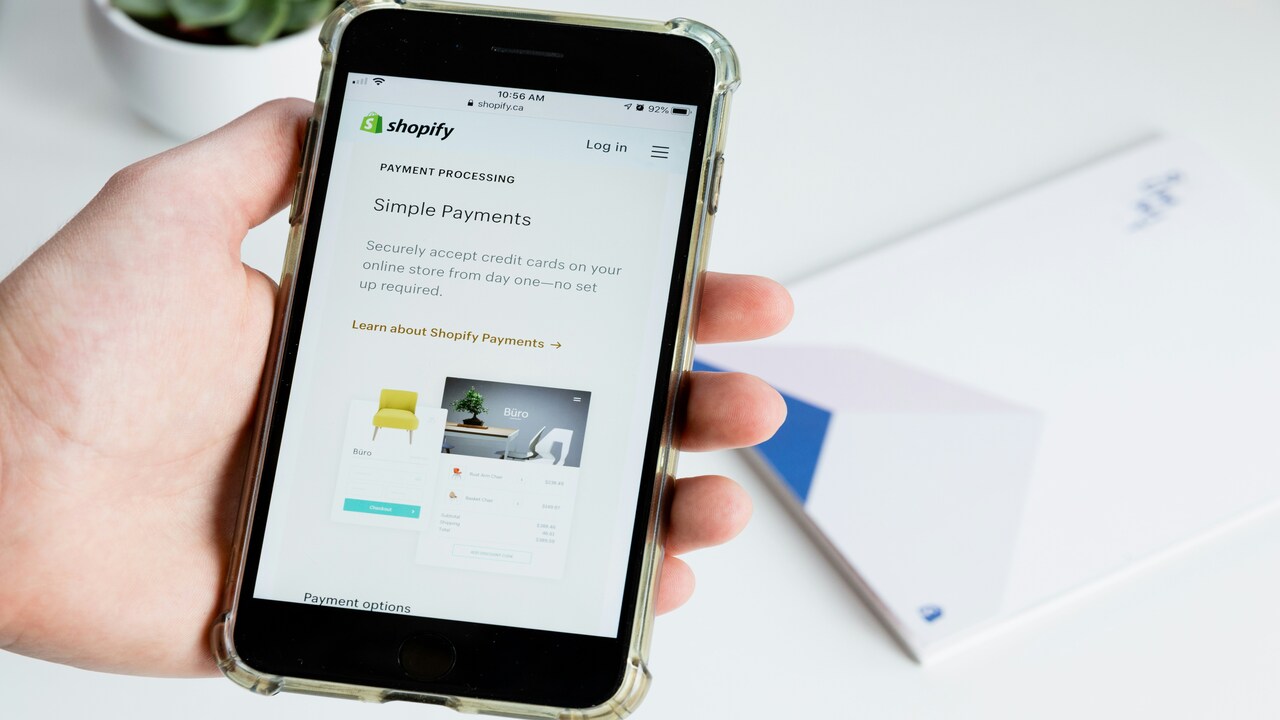
- Shopify: $39/month + 2.9% + $0.30 processing. Cheaper per sale at volume, but you pay whether you sell or not.
- Amazon Handmade: 15% per sale plus extras. Generally higher than Etsy.
- Big Cartel: $10 to $30/month, no transaction fees. Works for small catalogs.
Etsy costs the most per sale but the least to launch, thanks to built-in traffic. Under roughly $50K/year, Etsy usually wins on net economics. Above that, Shopify pulls ahead.
Are there any high-margin, low-cost products on Etsy?
- Digital products: templates, printables, presets. Near-100% margin after the initial build.
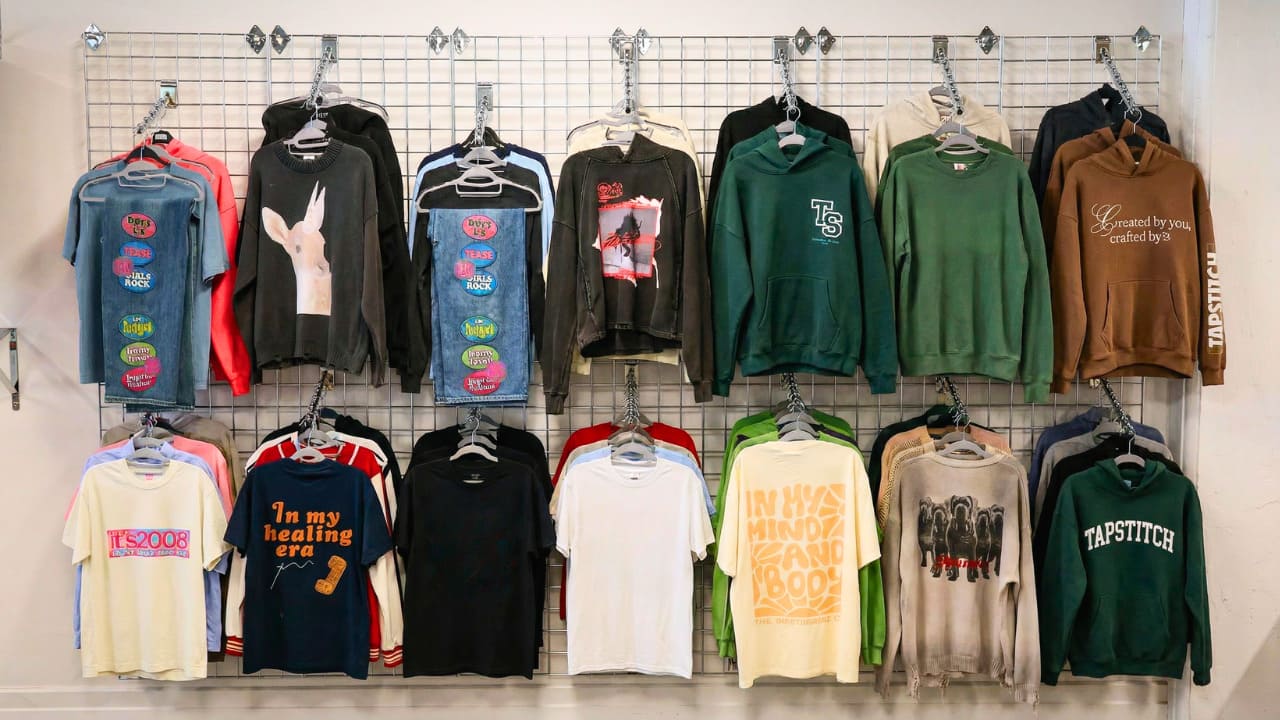
- Print-on-demand apparel: no inventory, no warehousing. Through a POD partner like Tapstitch, production can stay under $10 a unit while you retail at $30 to $80, which absorbs Etsy fees cleanly.
- Small handmade goods with high perceived value: jewelry, candles, prints, journals.
- Custom and personalized items: buyers pay a premium for "made for me."
Avoid anything that competes with mass production on price. If Amazon sells it for half, Etsy's fees will crush whatever margin you had.
The Bottom Line on Etsy Fees
How much money does Etsy take from sellers in 2026? Between 10% and 23% of every sale, depending on whether offsite ads are attributed. For most independent sellers, the realistic average lands in the 12 to 15% range. That's a real cost, but it's also the price of access to 90 million active buyers without having to find them yourself.
The smart play isn't trying to beat Etsy's fees. It's structuring the product economics so the fees become a manageable line item instead of a margin killer. Higher AOV. Lower production cost. Repeat customers who search your shop name and buy directly. A markup big enough that 12 to 15% to the platform still leaves real money in your account.
.png)

.jpg)
.jpg)
.jpg)
.jpg)
.jpg)
.jpg)







.png)





.png)

.webp)

.jpg)











.jpg)


.jpg)

.png)
.jpg)


.jpg)

.jpg)





.jpg)
.jpg)
.jpg)
.jpg)
.jpg)

%20(1).jpg)


.png)

.png)



%20(1)%20(1).jpg)






.png)
.png)


.jpg)

.jpg)
.jpg)