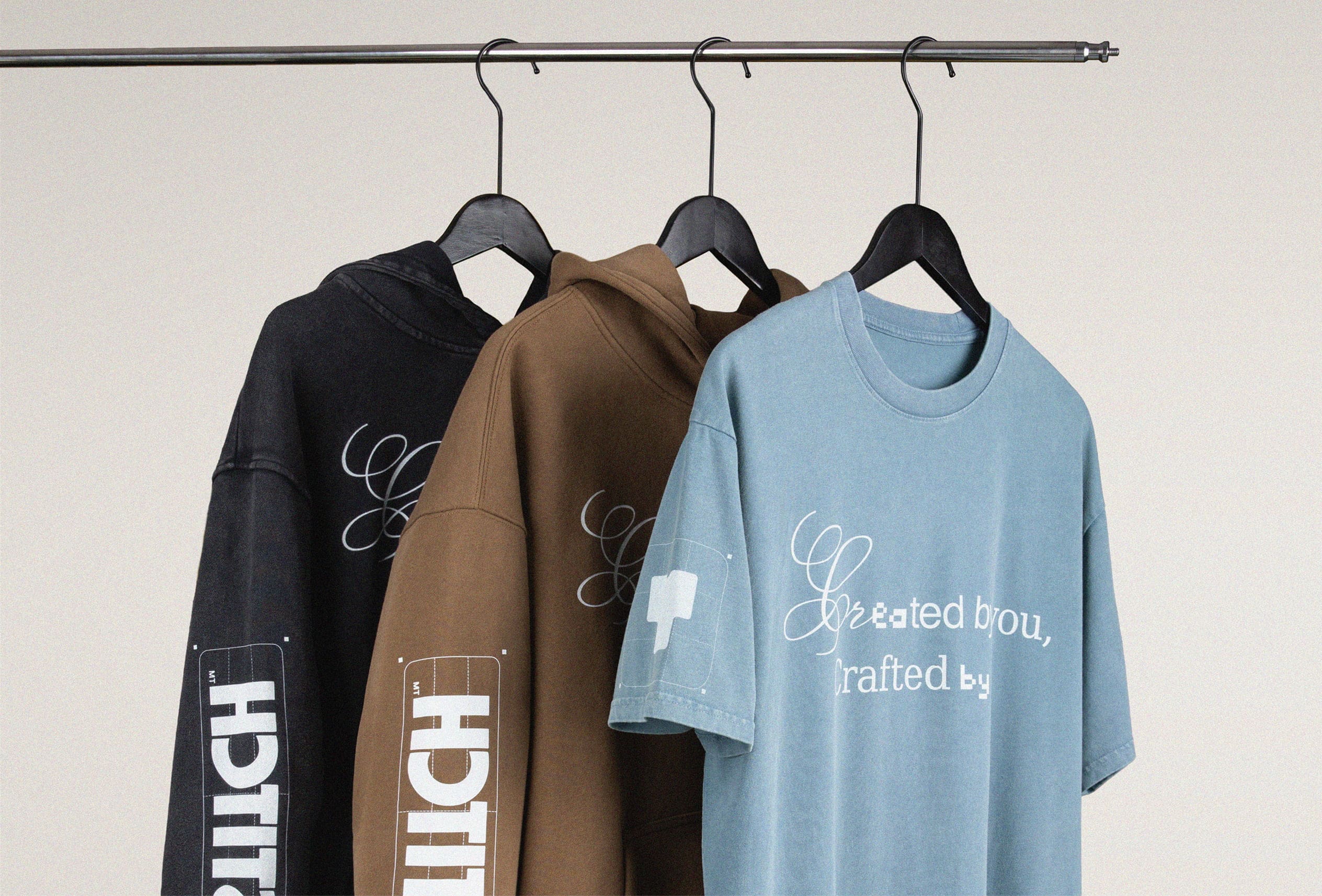







DTG Printing: How to Print on Your Shirt
.jpg)


DTG printing is what allows one-man brands to sell a shirt in vivid full color detail without needing a single screen or carrying any inventory. It is what drives much of the behind-the-scenes work in the print-on-demand market, and it is the simplest means of decorating a garment with a complicated design without spending a five-figure sum.
If you're building a clothing brand, DTG printing is probably behind your first hundred sales, whether you know it or not. Here's what it is, how it works, where it wins, where it loses, and how to tell if it's the right call for what you're building.
What is DTG Printing?
Direct-to-garment refers to DTG printing. This is similar to using a large-scale inkjet printer, but instead of using sheets of paper for outputting designs, a blank t-shirt gets loaded and sprayed with water-based ink. In simple terms, direct-to-garment is a process of using an inkjet printer to spray ink directly on a garment.
This is how DTG printing functions. Instead of applying a design to a shirt using screen printing or other processes, DTG printing merges the design with the fabric. As a consequence, the finished product feels very soft when touched and has great quality graphics that cannot be replicated through screen printing.
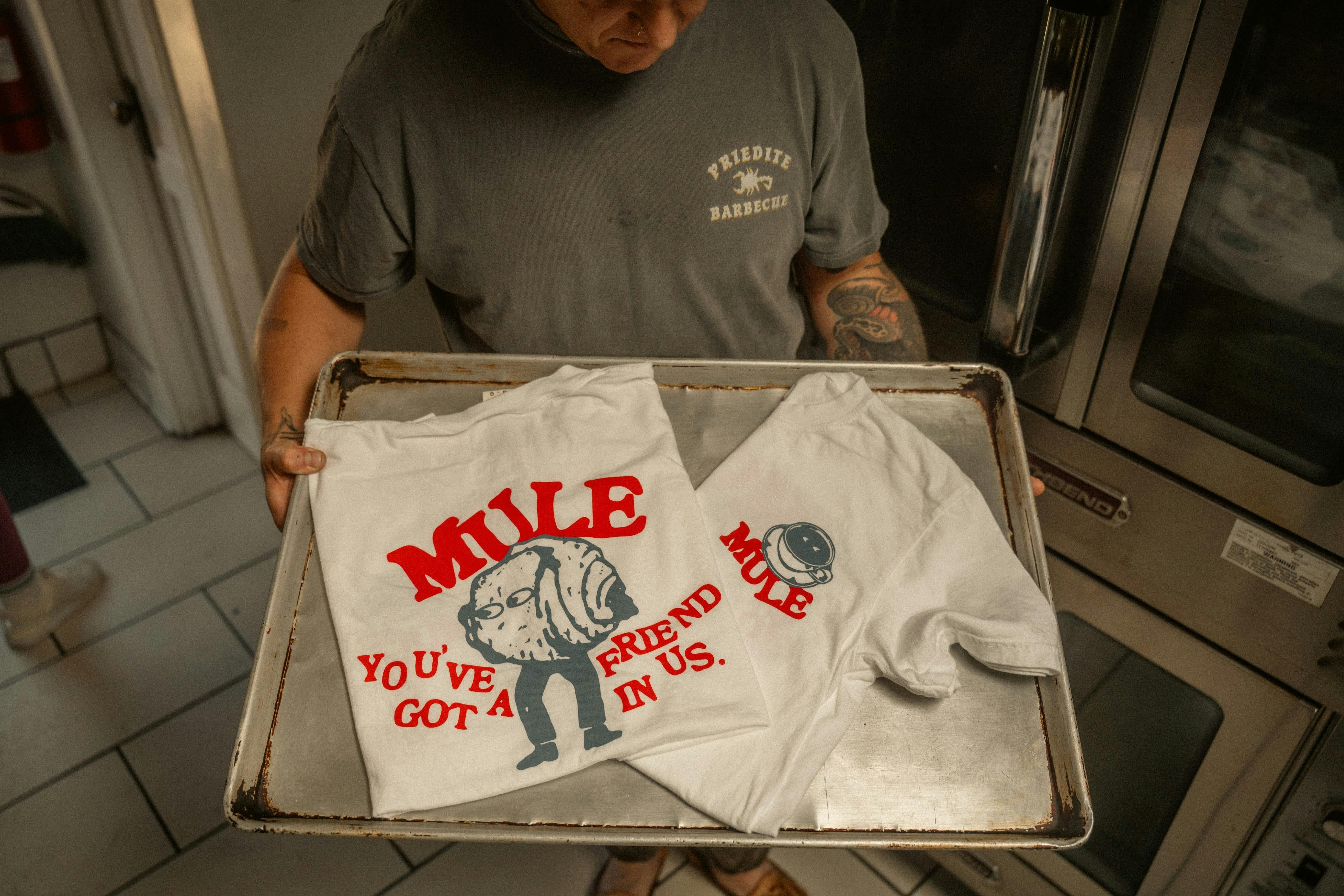
The two types of printing can easily be distinguished by touching their output products. In contrast to a heat transfer or vinyl print, which is felt to be a layer on the shirt's fabric, DTG printing is embedded inside the garment such that its graphic blends with the fabric.
DTG shirt printing was made possible by the arrival of fast and affordable printers in the decade beginning in 2010. Prior to this, using photographic printing on shirts required screen printing, an approach that was only feasible with hundreds of units ordered. DTG removed any such restrictions, and that is why we now have the ability to order a single customized shirt that looks like a pro job.
How Does DTG Printing Work?
The process is simpler than it sounds. Five steps:
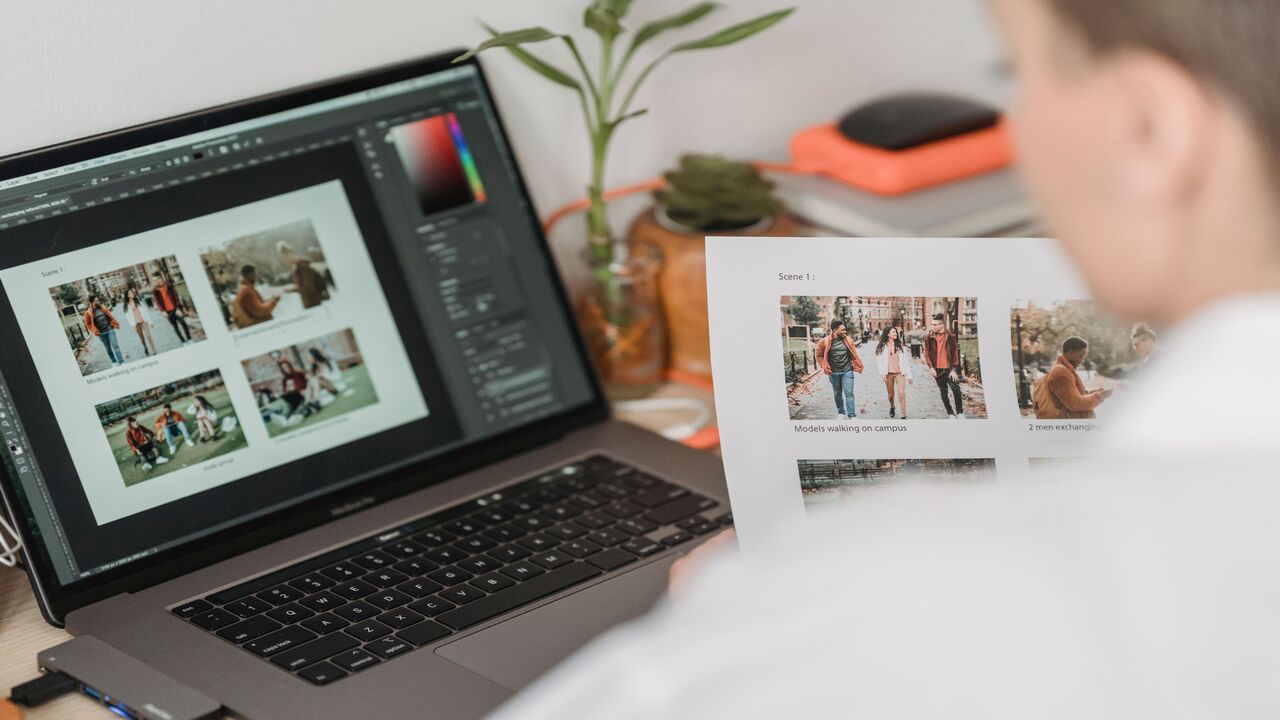
- Design. Create your artwork digitally. High resolution, transparent background, sized to the print area.
- Pretreat. The garment gets sprayed with a pretreatment solution so the ink bonds properly. This step matters most on dark shirts.
- Load. The shirt is laid flat on a platen that holds it steady under the print head.
- Print. The DTG printer sprays water-based ink directly into the fabric, building the design in layers. On dark garments, a white underbase goes down first, then color on top.
- Cure. Heat from a press or conveyor dryer sets the ink so it survives the wash.
From start to finish, the whole process can be done within minutes. There's no need to prepare anything between printing different images or even changing the design. This is precisely what makes DTG printing a perfect match for printing smaller batches or one-off shirts in ways the old printing techniques could never have accomplished.
There are two processes that define the quality of the final product: pretreatment and curing. The pretreatment is the liquid sprayed over the material before applying any ink. Its function is to facilitate the bond between the white underbase and the dark clothing. Too little or too much of it will affect the final look of your printing project negatively. Under-curing and over-curing of the inks lead to undesired results as well.
Pros and Cons of DTG Printing
The pros:
- No minimums. Print one shirt or one thousand. Built for print-on-demand and small brands testing designs.
- Unlimited color and detail. Photographic images, gradients, fine lines, complex art. DTG handles all of it.
- Soft hand-feel. The ink soaks in, so there's no heavy plastic layer sitting on the shirt.
- Fast turnaround. No screen setup means a design goes from file to finished in minutes.
- Cleaner inks. Water-based, not plastic-based.
The cons:
- Higher cost per unit at volume. For 500 identical shirts, screen printing wins on price.
- Loves cotton, struggles with synthetics. DTG performs best on 100% cotton. Polyester and blends are less reliable.
- Dark garments need pretreatment. Skip it, and the colors look dull and washed out.
- Durable, not bulletproof. A DTG print holds up well but can fade slightly faster than a screen print over dozens of washes.
So, is DTG printing good quality? On the right garment, yes. A DTG print on heavyweight cotton rivals anything in a retail store. On a cheap poly blend with no pretreatment, it disappoints. The method is only as good as the blank underneath it.
Is DTG Printing Right for Your Clothing Business?
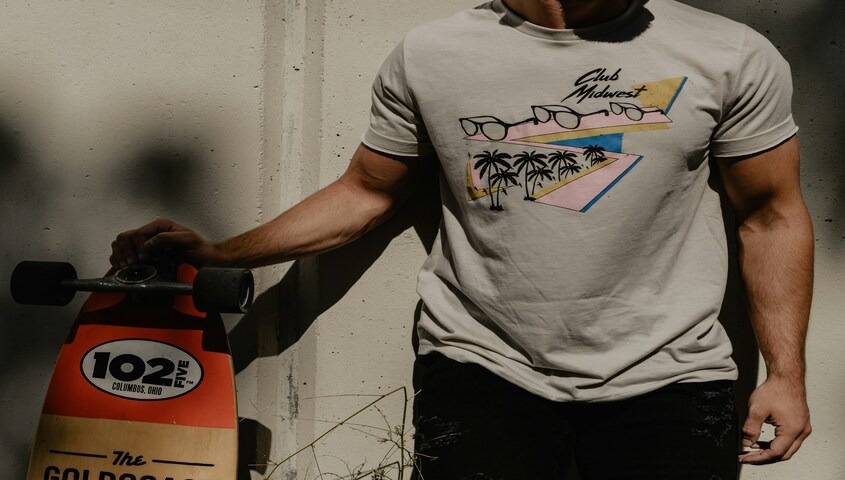
DTG printing is the right call if you value design freedom over bulk pricing. Dropping new designs often, selling in small batches, testing what resonates before committing to inventory? DTG is built for exactly that.
It would be the wrong choice if you were printing 500 units of just one simple logo consisting of only two colors. This would work much better with screen printing, and the per-unit cost would be difficult to beat with any other method.
In 2026, there’s a better chance that the figures will add up to using DTG printing. You don’t have to take chances with pre-printed merchandise in bulk. You simply print according to your sales.
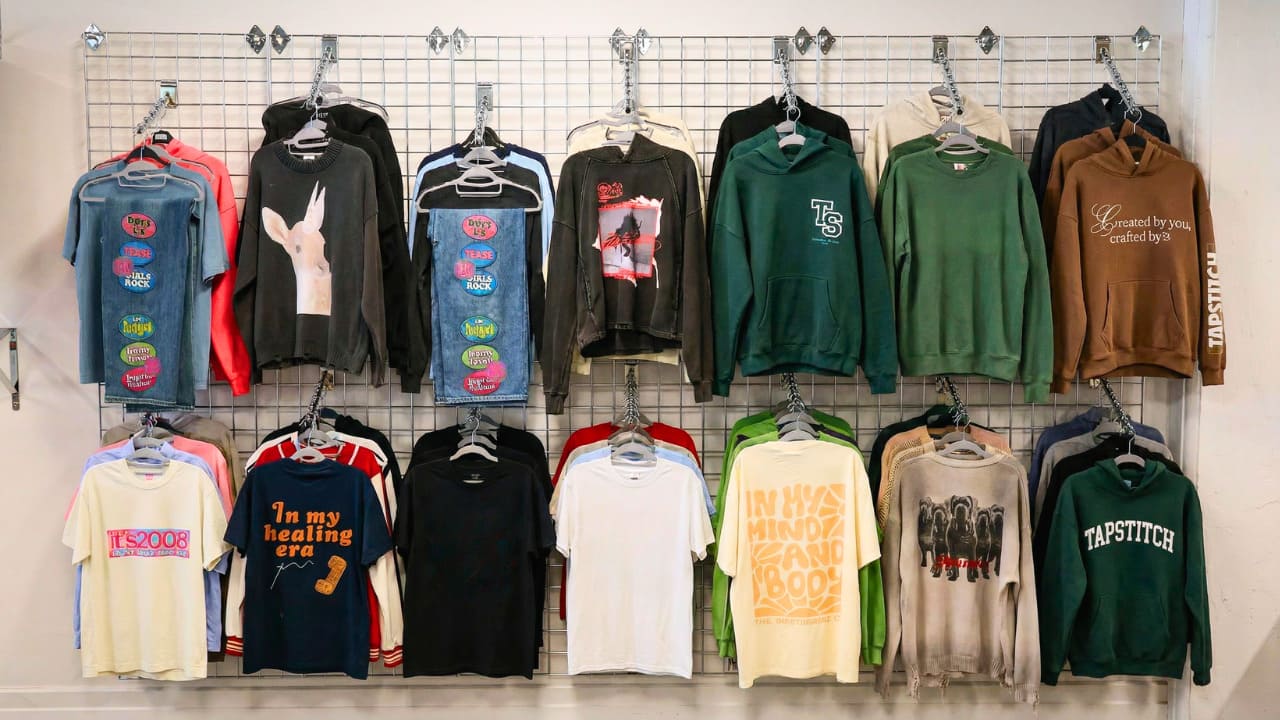
This is what Tapstitch operates with. DTG printing services on fashion-quality blanks, which are made and shipped only when an order comes in. DTG prints on the garments that have the same feel as those sold in stores, but not in print-on-demand form. Thick fabrics, washed styles, and contemporary designs. Without any minimums, without keeping any stock or paying any set-up fees.
What Garments Work Best for DTG Printing?
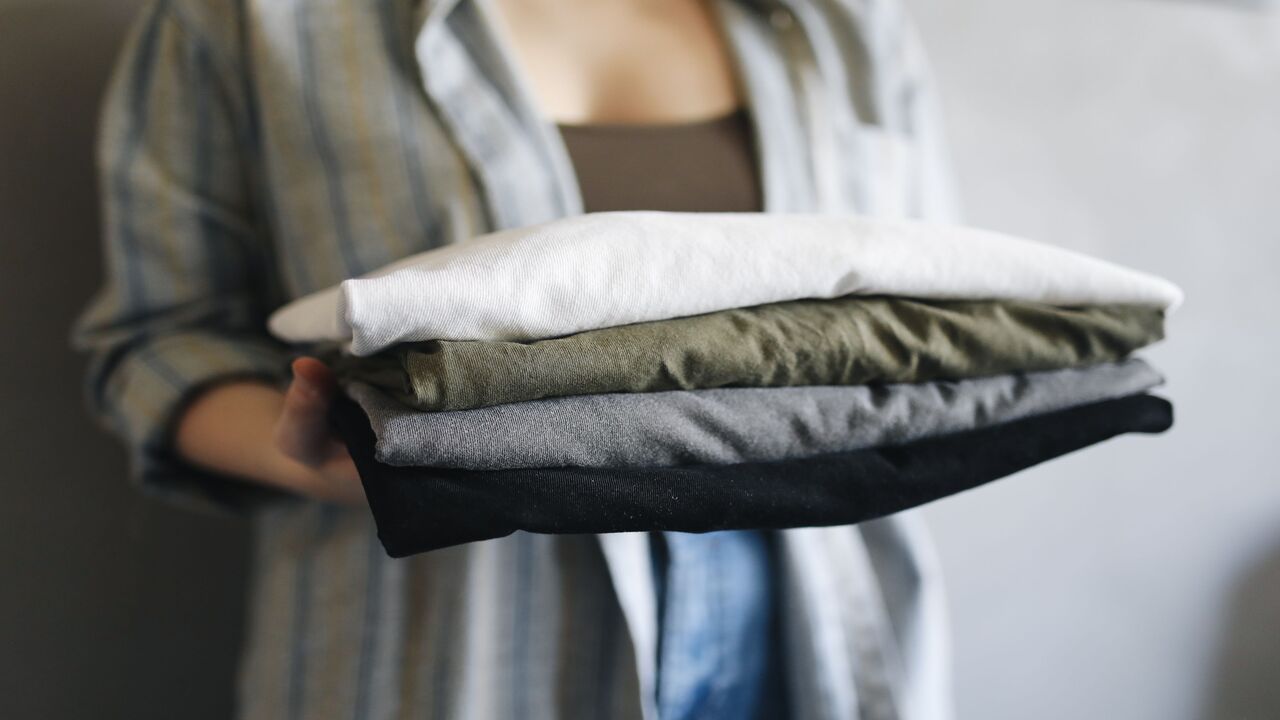
The print method gets all the attention, but the garment decides the outcome. DTG was built around cotton, and the closer your blank gets to 100% cotton, the better the print holds.
Here's how different fabrics handle DTG printing:
- 100% cotton. The best there is. Perfect ink bonding, vibrant colors, and durability. For fine print quality, go with ringspun and combed cotton.
- Cotton-poly blends. Acceptable but less vivid, the more poly is used. A 50/50 blend will produce a faded result, just like some brands need.
- 100% polyester. The most challenging fabric for direct-to-garment printing. Difficult bonding process, migration of dye that gives a pinkish or grey tinge to whites. Sublimation is the better choice here.
- Tri-blends. Soft and trendy, but it contains the least amount of cotton, leading to a washed-out effect. Adjust your design accordingly.
Fabric weight matters too. A heavyweight blank in the 240 to 280 GSM range gives the print head a dense, stable surface to work on, so the design lands crisp instead of sinking into a thin, loose knit. It's the difference between a tee that looks designed and one that looks printed.
The takeaway: if you want DTG quality, start with a quality cotton garment. A perfect print on a bad blank still feels like a bad shirt.
How Much Does DTG Printing Cost?
DTG pricing works differently from screen printing, and understanding the difference saves you from pricing your products incorrectly.
Very little startup fee needs to be paid. This means there are no screens burned, plates used, or fees for individual colors. It also means that it costs pretty much the same amount to print one shirt as it does to print fifty shirts. The downside is that as the volume rises, it does not save much in unit prices since the time it takes per unit to be printed remains constant.
On average, the unit price of a basic DTG print of a blank shirt can range from about $8 to $15 based on several factors, including the nature of the garment, size of the print, and number of colors. After adding the cost of the blank shirt, the minimum base cost can be marked up into a retail price of $30 to $80 based on branding.
Screen printing, on the other hand, comes at a setup cost of between $80 and $200, but then costs just a few dollars per unit after this. The only way that the screen printing process is cheaper than digital transfer is if the order is above a few hundred identical items.
For a print-on-demand brand, the DTG math is the entire point. You pay per order, not per batch, so you never front the cash for inventory that might not sell.
How to Make Your DTG Prints Last
A common worry about DTG is durability. The honest answer: a properly cured DTG print on cotton lasts for years of normal wear, but it rewards good care and punishes bad care faster than screen print does.
Four habits keep a DTG print looking new:
- Wash cold, inside out. Heat and friction are enemies. Turning the shirt inside out protects the print surface from abrasion in the drum.
- Skip the harsh detergents and bleach. Gentle, dye-free detergent keeps the colors from breaking down.
- Hang dry or tumble low. High dryer heat is the fastest way to fade and crack any print, DTG included.
- Don't iron the print directly. Iron inside out or avoid the printed area entirely.
Follow those, and a DTG print easily survives 40 to 50 washes with minimal fading. Ignore them, and you'll see wear in a fraction of that. The quality of the print at production is only half the story. The other half is how it's treated after.
Comparison of Different Types of Printing
Four methods dominate apparel printing. None is universally best. Each wins a different job.
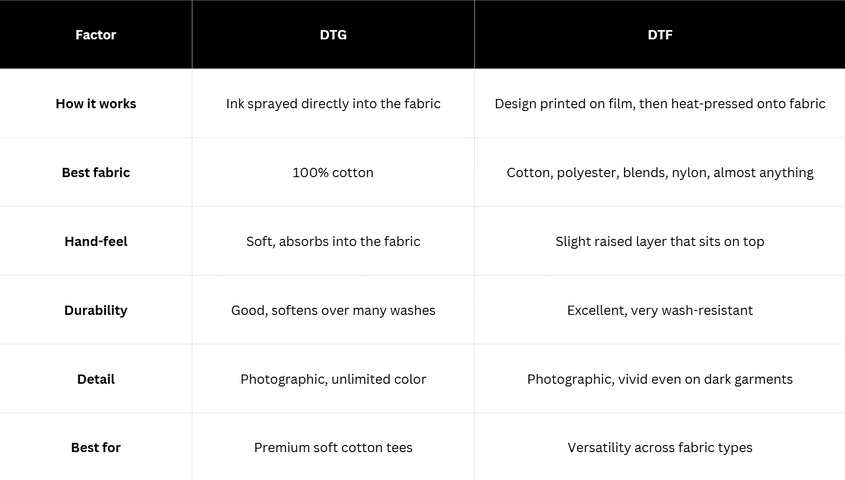
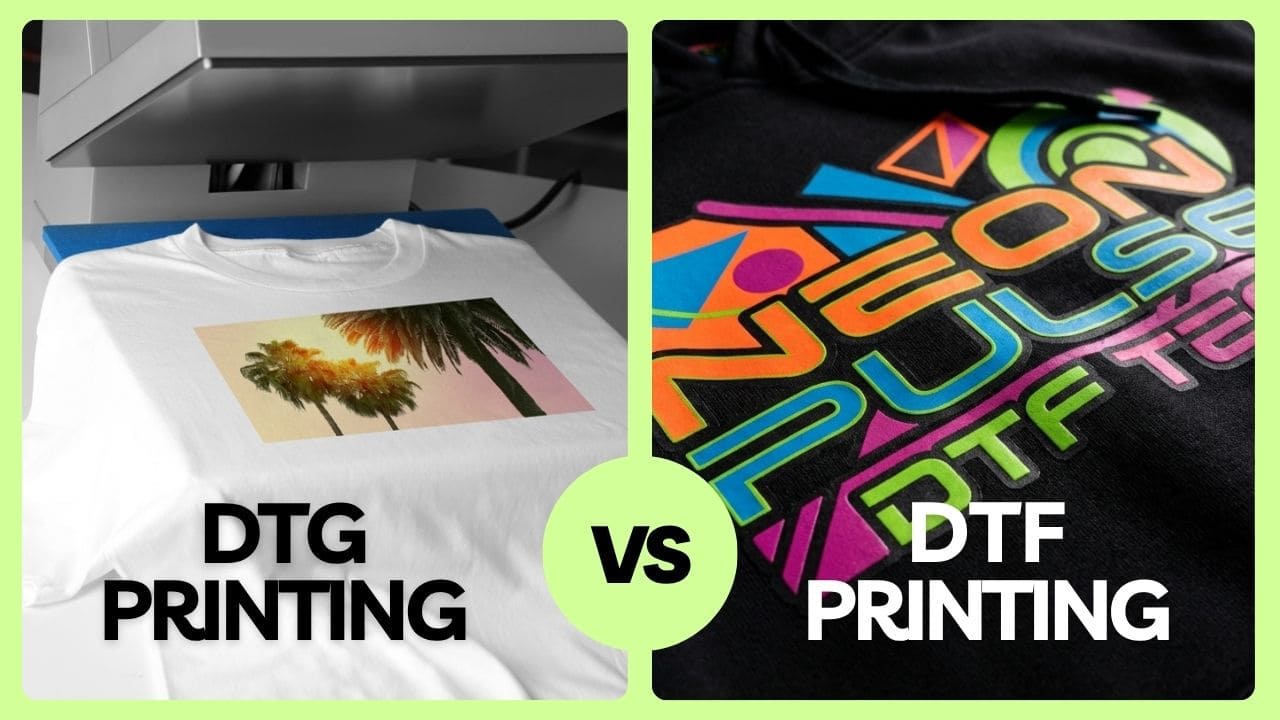
DTG vs DTF: The short version, DTG feels better on cotton, DTF works on more materials, and holds color longer on synthetics.
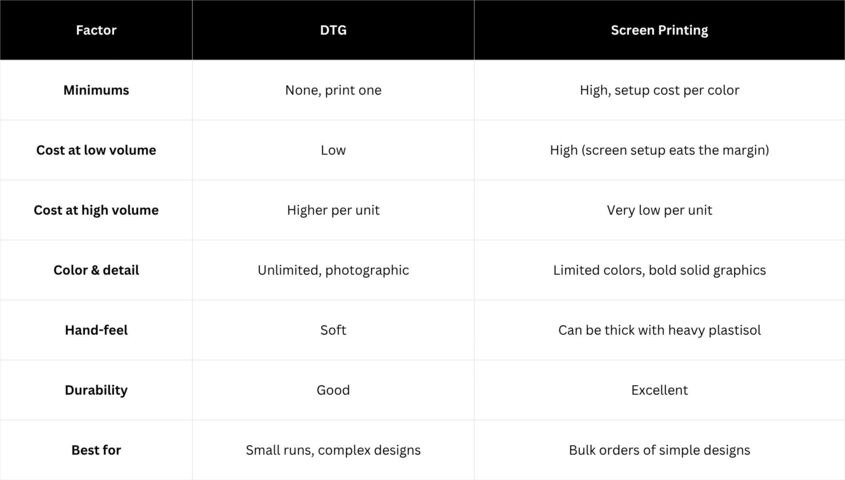
The short version: DTG for variety and small batches, screen printing for volume and simple bold art.
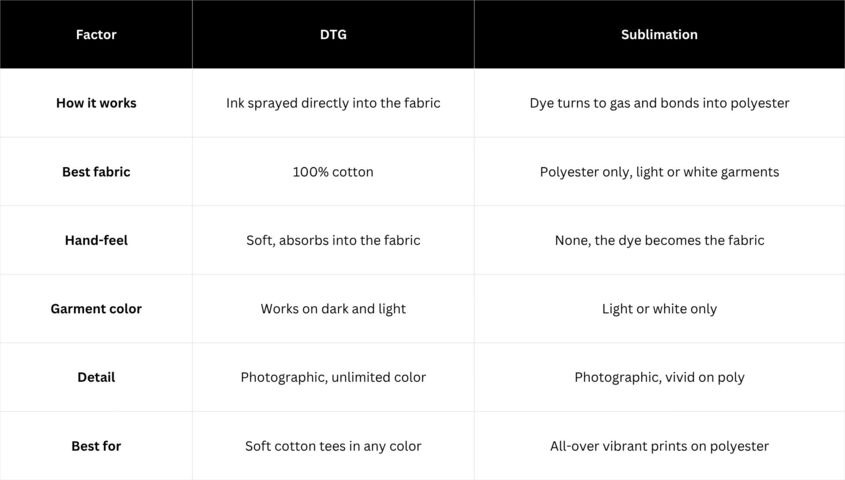
The short version: DTG owns cotton in any color, sublimation owns all-over prints, but only on light polyester.
DTG Printing: FAQs
How long does DTG printing last?
A properly cured DTG print on cotton holds up for 40 to 50 washes with minimal fading, which is years of normal wear for most shirts. Care decides the rest. Cold water, inside out, gentle detergent, and low or no dryer heat keep a DTG print looking new far longer than careless washing does
What is the best method of t-shirt printing?
There's no single winner. It depends on the job. DTG wins for soft, detailed, full-color prints on cotton in small batches. Screen printing wins for bulk orders of simple designs. DTF wins for versatility across fabric types. Sublimation wins for all-over vibrant prints on polyester. For most independent brands running print-on-demand, DTG is the default because it needs no minimums and handles complex art with ease.
Is DTG printing good quality?
Yes, when it's done right on the right garment. On heavyweight 100% cotton with proper pretreatment and curing, DTG produces retail-grade prints with photographic detail and a soft hand-feel. The quality drops on cheap poly blends or when production cuts corners on pretreatment. The method is reliable. The variable is the garment and the operator.
What is the best fabric for DTG printing?
100% cotton, every time. Ringspun or combed cotton gives the cleanest surface, the truest colors, and the longest-lasting print. Cotton-poly blends work, but print more softly and slightly fade. Pure polyester is the weakest fabric for DTG, which is where DTF or sublimation makes more sense.
The Bottom Line on DTG Printing
DTG printing changed who gets to start a clothing brand. No screens, no minimums, no garage full of unsold inventory. You print what sells, when it sells, in full color and fine detail on garments that feel like retail. The method rewards two things: a quality cotton blank and an operator who treats pretreatment and curing as craft, not afterthought. Get those right, and a DTG print competes with anything on a store shelf. So if you're dropping new designs, testing what resonates, and building something people actually want to wear, DTG isn't a compromise. It's the engine. Start with the right blank, and let the print do the rest.
.jpg)

%20(1).jpg)
.jpg)
.jpg)
.webp)

.jpg)
.jpg)
.jpg)
.png)
.jpg)
.jpg)

%20(3).jpg)


.png)
.jpg)
.jpg)
.jpg)

.jpg)
.jpg)
.jpg)







.png)




.png)
.jpg)











.jpg)

.png)
.jpg)


.jpg)
.jpg)




.jpg)
.jpg)
.jpg)
.jpg)
.jpg)

%20(1).jpg)

.png)

.png)


%20(1)%20(1).jpg)