







BigCommerce vs Shopify: Which Wins for Your Online Shop


Many people who want to start a store wonder whether to choose Shopify or BigCommerce. They often think about what truly matters when choosing between two platforms that claim to support growth, speed, and scalability.
Well, both platforms look the same, but they are different when you're working with real products and real customers.
Shopify moves with speed and flexibility, fitting fast-changing product updates and constant testing. BigCommerce leans more toward structure and built-in control, which can feel steadier when catalogs grow and operations become more complex.
Neither is a universal answer. The BigCommerce vs Shopify comparison shows up in daily workflow, not in marketing claims or feature lists.
This post breaks down how both platforms perform in real use, starting from setup and moving through growth, scaling, and day-to-day operations.
Why This Comparison Is Not Just About Features
At first glance, comparing Shopify and BigCommerce looks like pricing plans and feature tables. That part is easy.
What gets missed is the movement behind the store. Products are not static. Campaigns change. Traffic spikes happen. A solution that was effective last week may be obsolete next week. All of a sudden, the platform stops being software and turns into the environment in which everything happens.
This is why the comparison between Shopify and BigCommerce focuses more on workflow than on functionality.
Some founders notice this early while building. Others only feel it after months of running a store when small friction points start repeating in daily operations.
There is also a quieter layer here. Decision fatigue. Every extra step on a platform doesn't feel big on its own, but over weeks and months, it changes how fast you move. That is where Shopify and BigCommerce slowly start to feel different in a way that no feature list really captures.
Shopify and BigCommerce in Real Use
Shopify usually feels lighter in the beginning. The setup is direct, the interface is familiar, and you can launch quickly without overthinking the structure. It feels like momentum.
BigCommerce feels more structured from the start. More configuration shows up earlier. It does not slow you down, but it does make you think a bit more before you lock in decisions.
Neither approach is automatically better. It depends on how the store is meant to grow and how decisions are made inside the business.
There is a practical angle people miss here. Shopify encourages experimentation because changes are fast. BigCommerce encourages planning because structure is visible earlier. Both shape how a founder behaves, not just how the platform behaves.
BigCommerce vs Shopify: Some Differences
Let’s compare Shopify and BigCommerce in detail.
1. Setup Experience and Early Store Building

There is always a moment at the start where everything feels simple, almost too simple, like the store will just come together on its own, and then the setup screen opens and reality quietly shifts into view.
- Shopify Setup
Shopify reduces friction in the early stage. Theme selection, product upload, payment setup- everything is designed for speed.
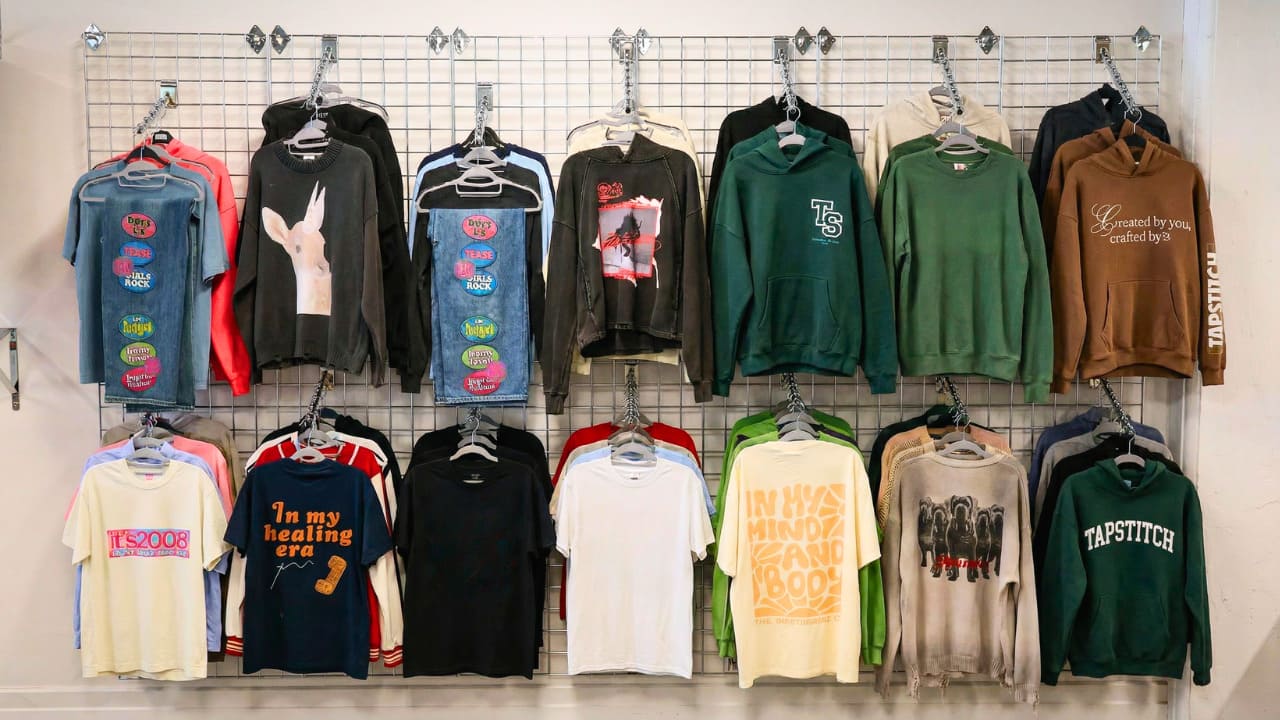
For print-on-demand apparel brands, this matters because testing happens constantly. Designs go live, feedback comes in, changes follow quickly. The platform does not interrupt that cycle, which is why many creators start here.
There is almost a rhythm to it. Create, publish, test, adjust. Very loop-driven.
- BigCommerce Setup
BigCommerce introduces structure earlier in the process. There are more settings visible from the beginning, which can feel more organized for people planning larger catalogs from day one.
It feels less like rapid testing and more like building a system meant to hold long-term complexity.
That can feel slower at first, but later it reduces chaos when product volume increases.
2. Customer Support and Ecosystem Differences
Support is crucial if something breaks or doesn't work as it should.
Shopify has a great ecosystem around it. This includes 24-hour support channels, huge community discussions and thousands of tutorials by users and agencies. In practice, this means most problems already have answers floating somewhere online.
BigCommerce takes a more controlled support approach. Especially on higher plans, guidance feels more structured and platform-driven rather than community-dependent.
Shopify feels faster when you need quick solutions because information is everywhere.
BigCommerce feels more guided when you want direct system-level clarity.
The hidden difference is time. Shopify often reduces waiting time. BigCommerce often reduces uncertainty once you are already inside the support flow.
3. Design Flexibility and Store Identity
Design is not decoration. It affects trust and conversion.
Shopify gives access to a wide theme ecosystem and customization options without requiring deep technical effort. For apparel brands, this flexibility matters because branding often evolves with new drops and campaigns.
BigCommerce provides stable design foundations but offers fewer experimental variations.
Over time, Shopify tends to feel easier to use when the brand identity is actively changing.
There is also a subtle creative difference. Shopify feels more like editing a living storefront. BigCommerce feels more like working inside a structured framework.
4. Pricing and Hidden Cost Behavior
On the surface, pricing looks simple. Monthly plans are visible and easy to compare.
Real cost behaves differently.
Shopify often grows through apps, integrations, and add-ons that expand functionality over time. BigCommerce often offers more built-in features depending on the plan level, reducing external dependencies.
This is why bigcommerce vs shopify comparisons rarely reach one fixed answer on cost. The real factor is how much the store expands beyond its starting setup.
A store with heavy customization needs will feel the impact of Shopify's add-ons. A store with structured needs will feel BigCommerce's limits differently.
5. Impact On Support Store Growth
Both Shopify and BigCommerce handle SEO basics, structure, and scalability.
The difference is not whether growth is possible. It is how growth is supported operationally.
- BigCommerce leans toward structured catalog growth.
- Shopify leans toward flexible product-driven growth.
For apparel brands, consistent product activity often matters more than platform SEO features alone.
Growth in print on demand is usually not a technical SEO issue. It is the consistency of drops, the speed of iteration, and how quickly products reach the market.
Read more: Improving SEO for Shopify: Your Complete Guide
6. Scaling Behavior Over Time
Scaling rarely feels dramatic. It builds gradually.
- More products.
- More traffic.
- More orders.
- More decisions are stacking up.
Shopify scales through flexibility and ecosystem expansion. BigCommerce scales through structured system depth and built-in capabilities. The difference shows up in how management feels, not in whether scaling is possible.
Over time, Shopify can feel like a constant adjustment. BigCommerce can feel like structured stability. Neither is wrong, just different pressure types.
7. Multi-Channel Selling Reality
Most modern stores do not sell in one place. Social platforms, marketplaces, and direct traffic all become part of the system.
Shopify often feels more fluid when connecting channels quickly and adjusting them frequently. BigCommerce feels more controlled when channel structure needs to stay organized at scale.
Comparison Table Shopify vs BigCommerce in Real Use
Let's place both platforms side by side so the differences are visible without interpretation getting in the way.
Which One Actually Wins for Your Online Shop: Quick Review
This is where the comparison stops being technical. It starts to feel more like the daily reality inside a store that is already running and changing every week.
Both platforms work. Both support e-commerce. Both handle print-on-demand. Nothing breaks at a basic level on either side, so the decision is never about survival or capability.
The real question is how the system feels during daily operation, especially when you are inside it for hours making updates, checking orders, and adjusting products that keep evolving.
Shopify fits better when speed matters. When products change often. When testing ideas is part of the workflow, decisions are made quickly without waiting on structure or setup steps slowing things down.
BigCommerce fits better when structure matters, when catalogs grow large. When operations need more control and planning, and when the business starts depending on stability more than experimentation.
Neither is universal. There is no fixed winner that remains correct at every stage or for every store type.
It depends on how the business is run, not just what the business sells. The same platform can feel perfect for one setup and slightly heavy for another, depending on how fast things move inside the operation.
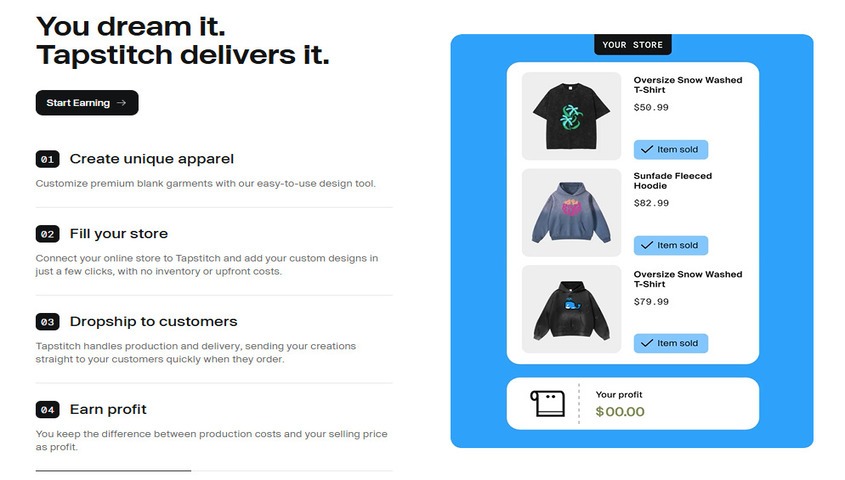
For print-on-demand brands using systems like Tapstitch, the difference becomes even more visible in daily use.
Shopify often feels better for:
- Fast product creation and quick publishing
- Frequent design testing and updates
- Trend-based drops that need speed
- Lightweight workflow with less setup friction
- Rapid iteration without breaking momentum
BigCommerce often feels better for:
- Larger and more structured product catalogs
- More controlled operational flow
- Planning heavy scaling strategies in advance
- Reduced dependency on external tools
- Stability-focused store management over experimentation
At the end, both approaches lead to the same outcome if executed properly. A functioning store, real customers, real orders.
The separation is not in the results. It is in rhythm. How fast things move. How much structure is involved? And how the platform fits into that rhythm without forcing extra resistance into daily work.
Print on Demand Workflow and Tapstitch Integration
Print on demand changes the comparison slightly because it introduces constant product movement.
New designs, seasonal drops, and updates happen frequently.
Shopify supports this rhythm naturally. Products can be created quickly, updated easily, and connected to fulfillment systems like Tapstitch without slowing operations.
BigCommerce supports the same workflow but is often preferred when catalogs become larger and more structured over time. In both cases, the platform is the storefront layer. Fulfillment and production sit behind it through systems like Tapstitch for BigCommerce integration.
FAQs
Wrap Up
This is not a decision made just once. It becomes part of how the business runs every day and shapes the way the store operates over time. Shopify is a better option for print-on-demand brands that move fast and need frequent product testing and updates. BigCommerce works better for structured stores that focus on long-term catalog growth with a more organized system in place.
Tools like Tapstitch sit in the middle by managing production and fulfillment, allowing brands to focus more on growth and less on backend operations. When you are still unsure, the next step is simple. Build, test, and see which system feels easier to manage in real conditions.
%20(3).jpg)

.png)


.jpg)
.jpg)
.jpg)
.jpg)
.jpg)
.jpg)







.png)





.png)

.webp)

.jpg)















.jpg)



.jpg)

.png)
.jpg)


.jpg)

.jpg)






.jpg)
.jpg)
.jpg)
.jpg)
.jpg)

%20(1).jpg)


.png)

.png)



%20(1)%20(1).jpg)







.png)
.png)




.jpg)

.jpg)
.jpg)