







Top E-commerce Platforms to Build Your Business in 2026
.webp)


Selling online isn't the hard part anymore. Picking where to sell is. There are dozens of e-commerce platforms out there, each claiming to be the one, most of which are marketing, but some of them are actually true.
The top e-commerce platforms in 2026 go well beyond hosting a product page. They handle payments, shipping, taxes, inventory, and even print-on-demand integration. The right choice depends on what you're building, how technical you are, and where your business is heading. Here are 10 worth considering, compared side by side with no affiliate link bias.
Types of E-commerce Platforms
Before we dive into a comparison of the different platforms, it is important to get a general understanding of the different categories. So, what is e-commerce platform infrastructure really? Well, at its core, an e-commerce platform infrastructure is simply the software you use to sell, accept payments, and deliver products online. Of course, the platforms vary and are geared towards different types of businesses.
- Hosted (SaaS) Platforms – Everything is managed for you: hosting, security, updates, uptime. You pay a monthly fee and build within the platform's ecosystem. Shopify, Wix, and Squarespace are examples.
Best for: non-technical founders. - Self-Hosted / Open-Source Platforms – You download the software and run it on your own server. Full control, full responsibility. WooCommerce and OpenCart live in this category.
Best for: developers and businesses that require advanced customization. - Marketplace Builders – Platforms that support multi-vendor selling or can be extended to handle it. BigCommerce and Shift4Shop offer this as an add-on.
Best for: businesses building a curated marketplace model. - Lightweight / Add-On Stores – This type of platform adds e-commerce to your existing site rather than replacing it. Ecwid and Square Online are examples of this type of platform, allowing you to integrate a store into your existing site.
Best for: businesses that already have a web presence and don’t want to rebuild.
The type you'll need will depend on your comfort level with technology, as well as budget and control issues. Most independent brands starting fresh are best served by a hosted platform—it lets you focus on product and brand instead of server maintenance.
10 Best E-commerce Platforms for Your Business
So, here is the breakdown. Each of these platforms is rated on price, ease of use, flexibility, and how well they support independent brand builders, especially with print-on-demand and custom products.
1. Shopify
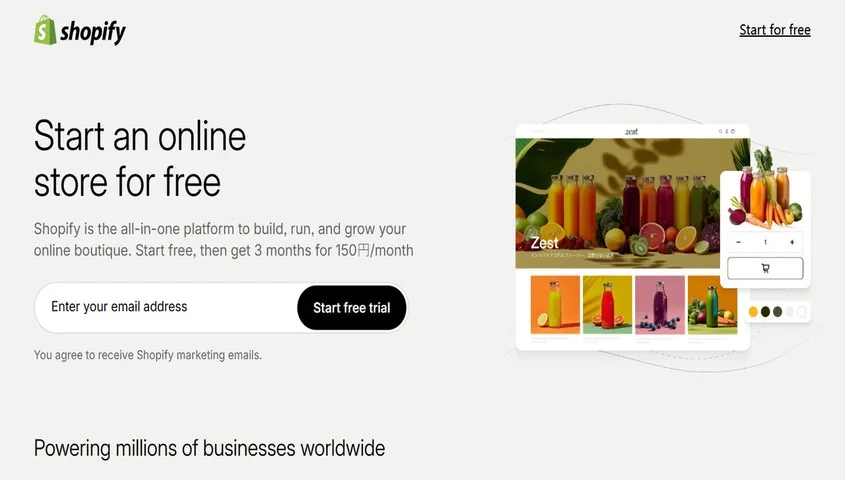
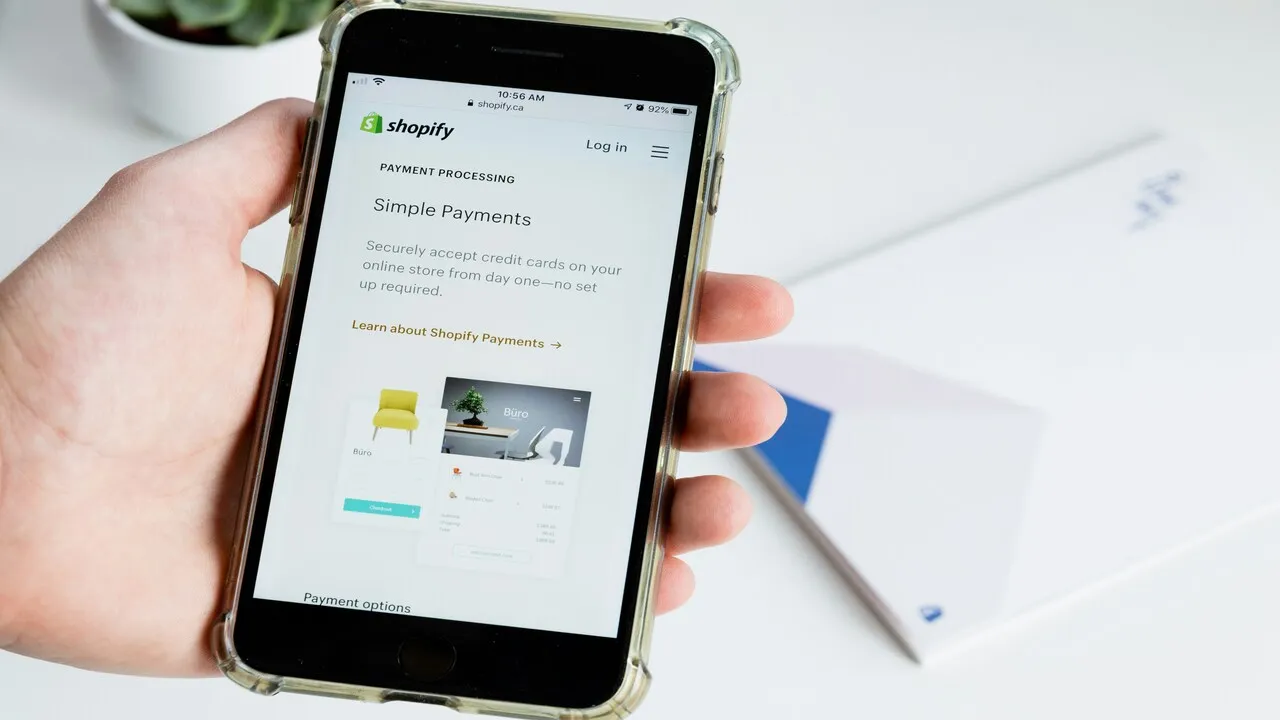
The default is for a reason. Shopify is one of the biggest ecommerce sites, with the most stores, over four million, and has created the most comprehensive platform of apps, integrations, and themes available in the market. Shopify pricing is $39/month for the basic plan, $105/month for the standard Shopify plan, and $399/month for the advanced plan.
Transaction fees are 2.9% + 30¢ per transaction on the basic plan, and they decrease as you move up the pricing tiers if you use Shopify Payments. If you use another payment gateway, you’ll incur an additional 2% surcharge.
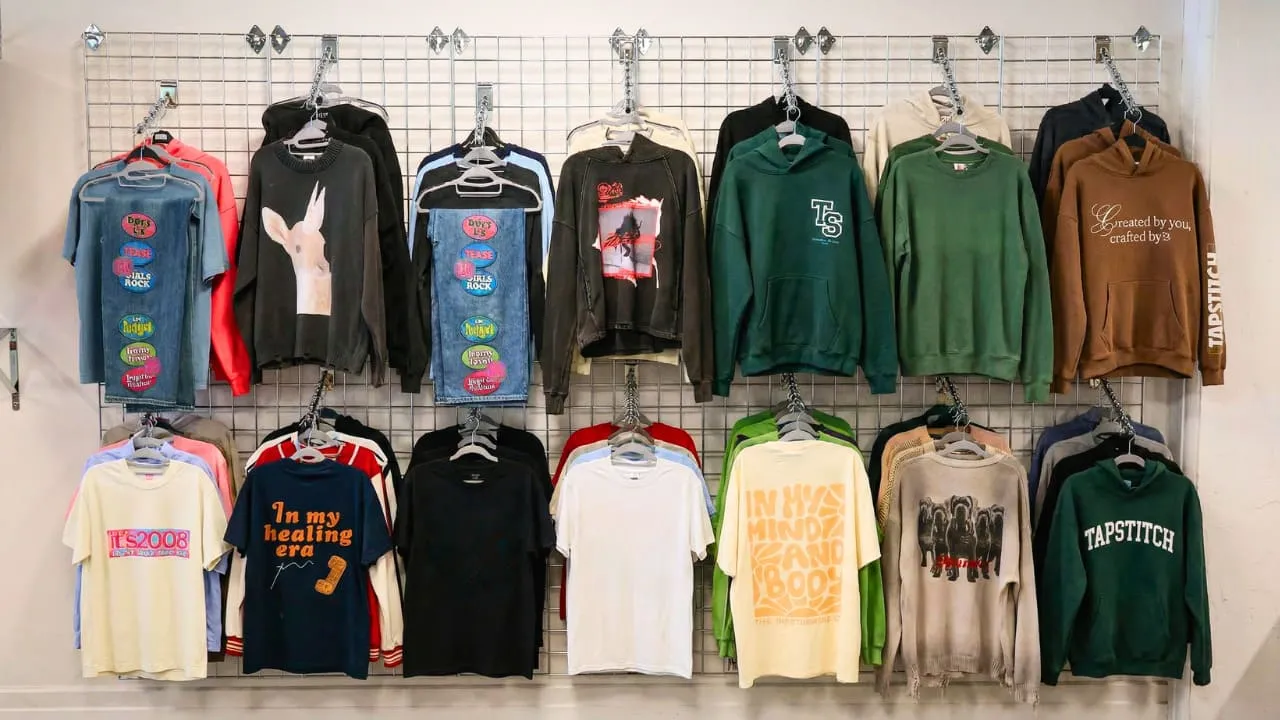
The app store is massive, and integrations are available directly on the platform, including POD integrations like Tapstitch, which connect directly, making it the go-to platform for creators looking to create custom product lines.
Drawback: costs can quickly add up when you begin adding apps.
2. Wix
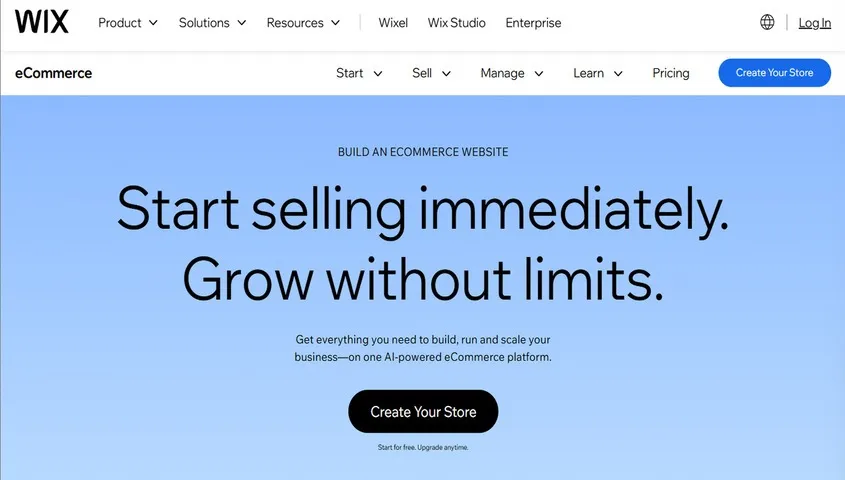
Wix started as a website builder, but has grown into a full-scale eCommerce platform, one that serious sellers are now choosing to grow with, not just start on. The editor (now called Wix Harmony) is a hybrid website builder that combines the ease of drag-and-drop with AI-powered building, giving you both speed and full visual control, with AI tools for marketing, customer support and automation built in. Wix offers a free plan, paid plans start at $17/month, and the Business plan at $39/month is where most online sellers want to be.
Where Wix eCommerce stands out is depth: it supports products, services, bookings, courses, memberships and donations from a single dashboard, and for sellers thinking about AI-driven commerce, Wix already has that covered too. The integration library is smaller than Shopify's, but most merchants find they need fewer of them. Wix eCommerce is a strong choice whether you're just starting out or scaling up, the platform grows with you.
3. BigCommerce
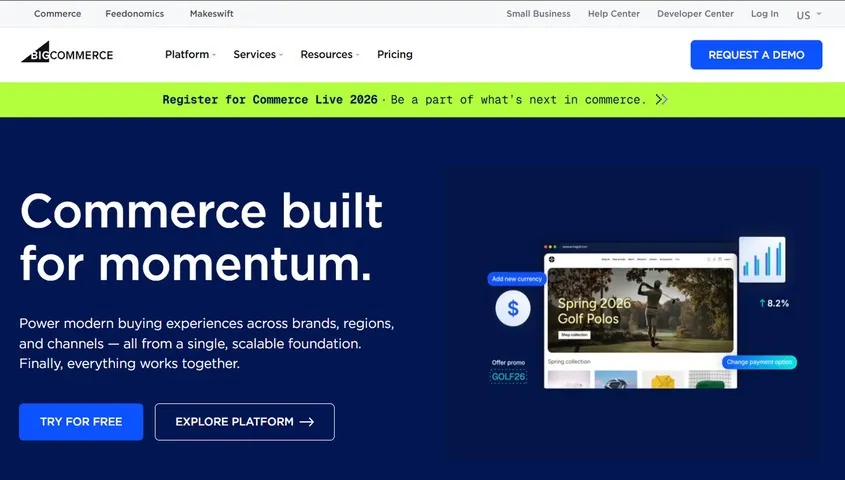
BigCommerce is the only platform that doesn’t have a transaction fee, regardless of the plan. Pricing is $39/month (Standard), $105/month (Plus), and $399/month (Pro). BigCommerce also comes with the most built-in features, so you need the least amount of paid apps to have a feature-rich store.
It’s got a slightly steeper learning curve than Wix and Squarespace, but its multi-channel selling is very advanced, with built-in connections to Amazon, eBay, Facebook, Instagram, and more. Best suited for sellers who have outgrown their first 100 orders per month.
4. Squarespace
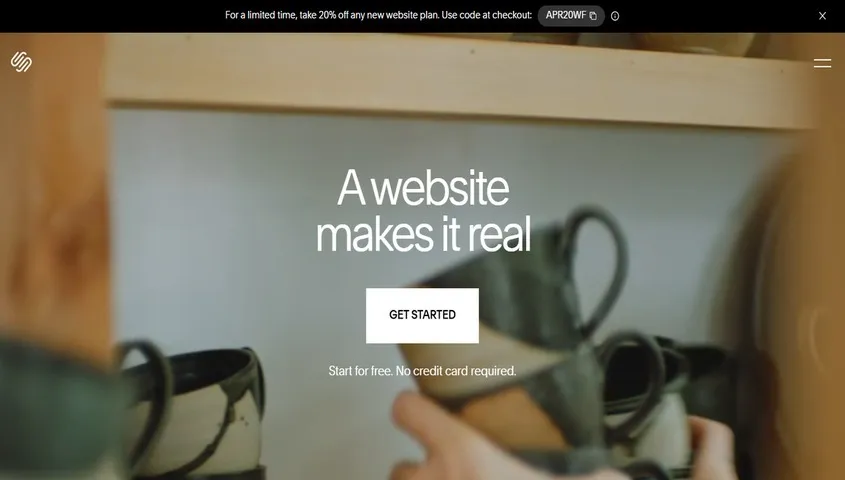
The design-first platform. Squarespace has the most attractive out-of-the-box, no-question-about-it templates. And if your brand presentation is a large part of what you're selling, then yes, absolutely, this is definitely something to consider. The commerce plans begin at $36/month (Basic Commerce) and $65/month (Advanced Commerce).
The Business plan comes in at $33/month, and this includes e-commerce, but comes with a 3% transaction fee. The commerce plans eliminate this altogether. The problem here isn't necessarily with e-commerce, but with less flexibility, less ability to use apps and integrate, etc. It's a beautiful storefront, a bit rigid on the backend, however.
5. WooCommerce
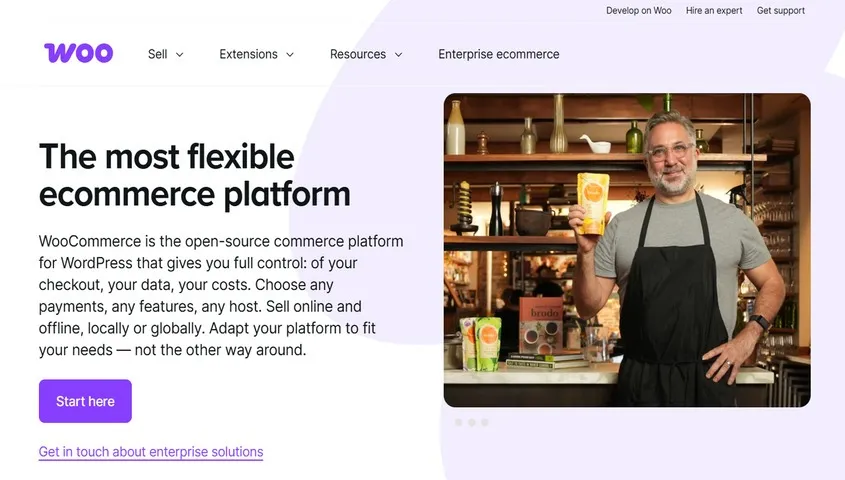
WooCommerce gives WordPress users a free and flexible way to turn their website into a fully functional online store. Currently, 36% of all existing online stores use this plugin, making it one of the largest e-commerce sites in terms of user base. The plugin is free, and users only have to pay for their hosting, domain, and SSL certificate.
The pros of using WooCommerce are that it can be customized endlessly, there are no transaction fees, and it can be used for just about anything with its plugins. The cons of using WooCommerce are that you have to manage security, updates, and performance yourself. If you know WordPress, then it is extremely powerful. If you don’t know WordPress, then it is a steep learning curve.
6. Big Cartel
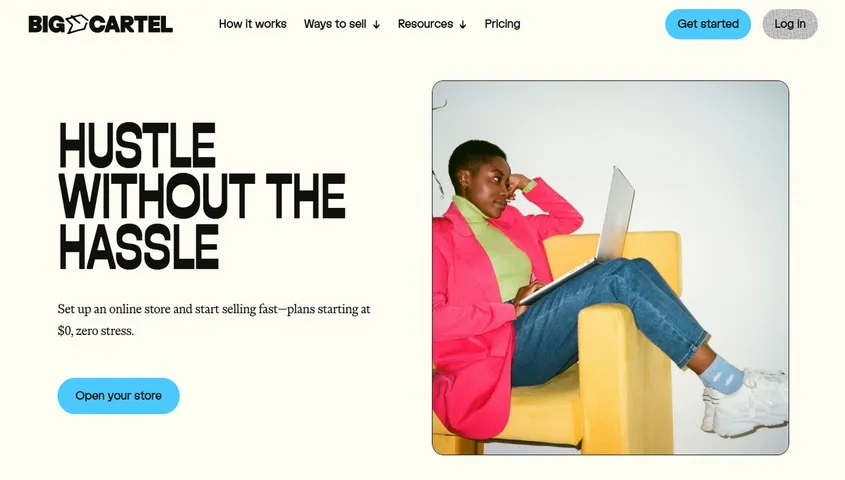
Specifically designed for artists, makers, and small catalog sellers. It includes a free plan for up to five items, and two other plans for $9.99/month for up to 50 items and $19.99/month for up to 500 items. There are no transaction fees.
It’s minimalist–few templates, few integrations, and no unnecessary features. And that’s the idea. If you have a handful of original pieces to sell and don’t want to bother with an overly complicated interface, Big Cartel is the answer. Not only is Big Cartel not designed to handle an entire brand, but it doesn’t have to.
7. Ecwid
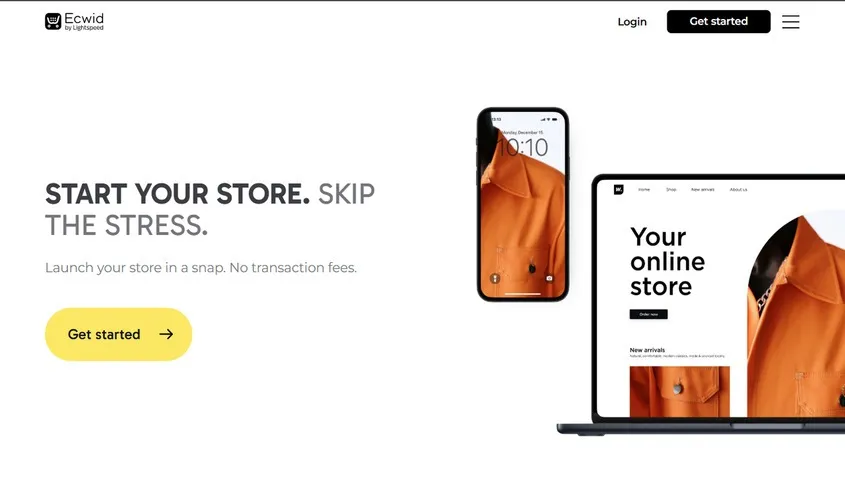
Ecwid doesn't replace your website—it plugs into it. WordPress, Wix, Squarespace, custom HTML — it works on all of them, which makes it the right call if you already have an online presence and don't want to rebuild from scratch.
Free for up to 10 products. Paid plans run $25–$85/month, no transaction fees. Multi-channel selling on Facebook, Instagram, and Amazon is built in. It won't give you the depth of Shopify or BigCommerce, but that's not the point—Ecwid is for businesses that need a store added, not a platform switched.
8. Shift4Shop

Previously known as 3dcart, Shift4Shop offers a free plan, but this is only available to US-based businesses using Shift4 Payments as their payment gateway. The free plan offers unlimited products, no transaction fees, and access to over 100 templates.
If you are eligible to use the free plan, then the value for money is very hard to beat. The interface is slightly old compared to Shopify and Squarespace. The learning curve is moderate. However, if you are an e-commerce store owner looking for feature-rich e-commerce solutions without the price tag, then it is definitely worth considering.
9. OpenCart
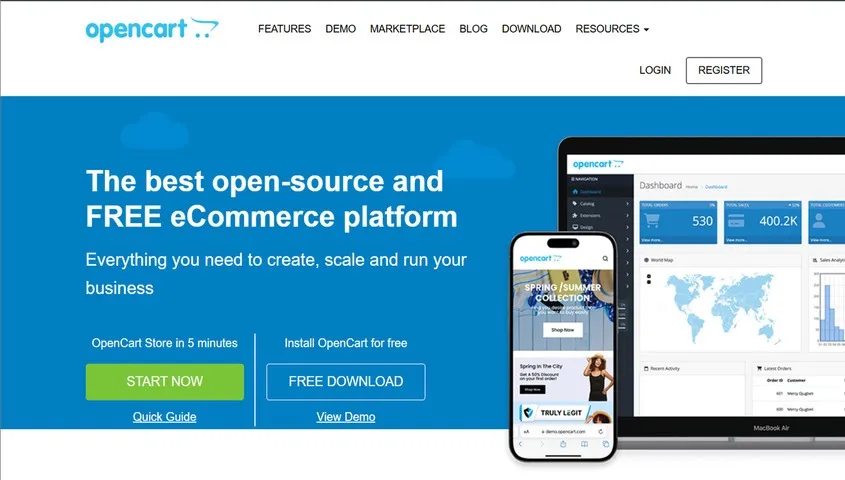
Open-source, self-hosted, and completely free to use. With OpenCart, you have complete control over everything, from the look and feel to the hosting and security. It also provides the facility to manage multiple stores, which is very hard to find in free shopping carts.
The extension store is very good, and the community is very active. But this is a developer's platform. If you are not comfortable with coding and server stuff, the flexibility comes with an extremely high learning curve.
10. Square Online
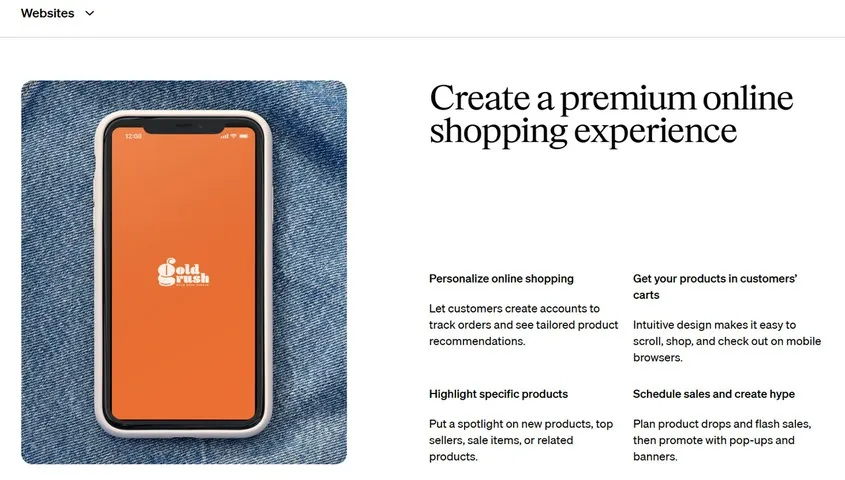
Square started in physical retail, then moved to online retail through the Square Online platform, which connects them to the digital retail space. If you are an existing Square POS user, this online store can be synced to your account, and the free plan is functional, with paid options available for $29/month (Plus) and $79/month (Premium).
They charge 2.9% + 30¢/transaction, and this is applicable to all plans. The editor is easy to use and minimalist, though less customizable compared to Squarespace and Wix.
Top E-commerce Platforms Comparison
Here’s how the ten platforms stack up side by side on the factors that matter most.
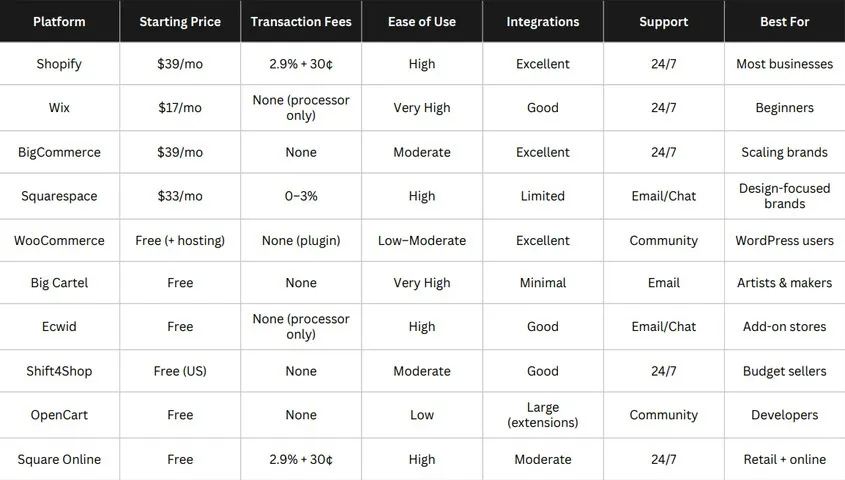
A few notes: "None" for transaction fees means it's not a charge imposed by this platform, but your payment processor will still take its cut. Prices reflect basic plans as of early 2026 and may vary by region.
How to Choose the Best E-commerce Site
Ten platforms are a lot of options. Here’s how to narrow it down without overthinking it.
First off, there are different requirements for different product types. If you plan to start a print-on-demand business with Tapstitch, you need a platform with strong third-party E-commerce integrations. This brings us to three platforms right off the bat: Shopify, WooCommerce, and BigCommerce.
Be honest about your technical level.
If you have no coding experience at all, working with WooCommerce and OpenCart would be frustrating for you. If you find drag-and-drop editors too restrictive, Shopify's Liquid or WooCommerce's PHP would be a better fit.
Think about where you’re headed, not just where you are.
The best e-commerce platform for you is not always the cheapest one available today; it is the one that does not require a painful upgrade in eighteen months. If your goal is to build a long-term brand, choose an eCommerce platform that can grow alongside your business.
Factor in the total cost, not just the subscription.
However, the monthly fees are only the beginning. Add transaction fees, premium themes, paid apps, hosting costs (for self-hosted platforms), payment processor fees, etc. A ‘free’ platform can end up costing more than a ‘paid’ one, depending on the stack.
And don’t forget about the ecosystem.
Some of the best e-commerce sites in 2026 will be distinguished by how well they integrate with the tools you already use, such as email marketing, social selling, fulfillment services, etc. A good platform is only as good as what it connects to.
FAQs
Quick answers to the questions that come up most when choosing a platform.
What is an e-commerce platform?
It’s the software behind an online store. At the very least, an e-commerce platform allows you to list products, track inventory, make payments, and deliver orders. More advanced platforms include features like tax calculation, shipping, multichannel sales, customer management, and marketing tools. Think of an e-commerce solution as the operating system of your online business – everything else runs on top of it.
How to launch an e-commerce clothing brand?
Start with a clear brand identity, choose an eCommerce platform, and connect a print-on-demand provider like Tapstitch. Focus on a few well-designed products, create strong product listings, and promote them through social media and advertising.
Which platform is the best for a beginner?
Either Wix or Shopify, depending on how serious you are about the idea. Wix is the easiest and quickest to use for getting started. Shopify is a bit harder to get a grasp on, but it also holds a lot more potential for scaling upwards. If you are testing an idea, use Wix for the least friction. If you are building a brand that you are serious about scaling, use Shopify and learn as you go.
Should small businesses invest in platforms?
Yes—if they mean to invest in terms of selecting a platform that meets their financial criteria and plans for expansion, rather than over-investing in an enterprise solution they don't need. A free account on Square Online or Big Cartel may be all they need to get going. Once they start to get more orders, upgrading to a paid account on Shopify or BigCommerce is an obvious next step.
The issue is that they stay on a platform that is not scalable because the cost of switching is too high. Launch on something scalable, even if it means launching on the lowest tier.
Final Verdict on Top E-commerce Platforms
There's no one-size-fits-all answer—but there is a best choice for what you're building. For most independent brands, Shopify is the safest starting point: deepest ecosystem, most integrations, clearest path to scale. If design trumps everything, go Squarespace. If you want full control, WooCommerce. Zero budget, Big Cartel, or Square Online.
If you're building print-on-demand, Tapstitch already integrates with six platforms on this list—Shopify, WooCommerce, Wix, Squarespace, BigCommerce, and Etsy. The product side is covered wherever you land.






.webp)
.webp)


.webp)

%20(1).webp)
.webp)
.webp)

.webp)
.webp)
.webp)
.webp)
.webp)
.webp)


%20(3).webp)



.webp)

.webp)
.webp)
.webp)
.webp)
.webp)
.webp)








.webp)





.webp)

.webp)














.webp)



.webp)

.webp)
.webp)


.webp)

.webp)





.webp)
.webp)
.webp)
.webp)

%20(1).webp)


.webp)

.webp)