






10 Best Enterprise E-commerce Platforms: B2B & B2C Solutions



Choosing the right enterprise e-commerce platform is a key decision for any scaling fashion brand. While a basic e-commerce platform may work in the early stages, growth demands infrastructure that can support higher traffic, wholesale and DTC sales, and operational complexity without friction. This guide compares the best enterprise platforms for brands seeking stability, flexibility, and long-term scalability.

Different Types of Enterprise E-commerce Solutions
Not all enterprise software is built with the same philosophy. Before comparing specific names, you must understand the architecture that will house your brand.
Software as a Service (SaaS)
Software as a Service (SaaS) is today's standard. The idea behind these platforms (like Shopify Plus) is that they host your store on their own servers. In exchange for this benefit, you won't be responsible for Server Maintenance or Security Patches. For fashion brands that want to focus on design and community, SaaS is typically the best fit because it removes technical barriers, typically at a service fee.
Headless Commerce
Headless Commerce empowers design-first entrepreneurs to fully control the frontend look and feel by decoupling the 'head' (front-end) from the 'body' (back-end checkout and inventory functionality). Headless Commerce also enables you to leverage web technologies to build a fast, customizable website on top of the enterprise-level e-commerce platform.
Open-source
The open-source model provides the most flexibility; however, it also has extremely high technical requirements. Since the brand is also responsible for programming, security, and server space, it typically requires a software development team to ensure the system runs smoothly. For most fashion brands, managing such a system may hinder the development and launch of new products.
Top 10 Enterprise E-commerce Platforms for Your Business
The following list identifies the leading solutions for 2026, evaluated against scalability, brand control, and high-volume performance.
1. Shopify Plus
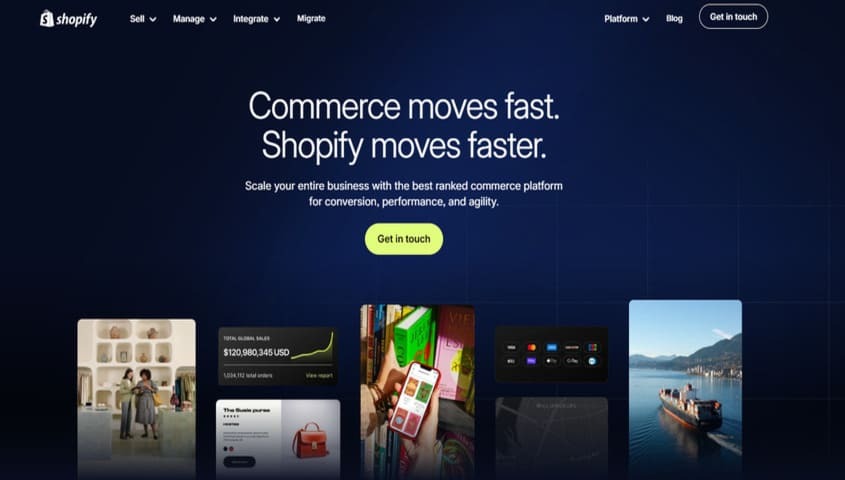
Shopify Plus is the leading enterprise e-commerce platform, combining high performance and ease of use. Designed for multi-million-dollar brands needing a robust e-commerce website that can process thousands of orders per minute (e.g., 10,000) during a limited-time sale or "drop," Shopify provides the reliability and scalability major brands need.
In addition to supporting multiple sales channels (DTC, wholesale, B2B, social media), Shopify provides a single user interface to manage them all. Moreover, Shopify has developed its own tools (such as Shopify Flow for workflows and Launchpad for product launches), which make Shopify a very attractive enterprise e-commerce solution for entrepreneurs who value fast action. In addition, Tapstitch integrates with Shopify’s native API, which helps push new collections into your Shopify Plus store easily.
2. BigCommerce Enterprise
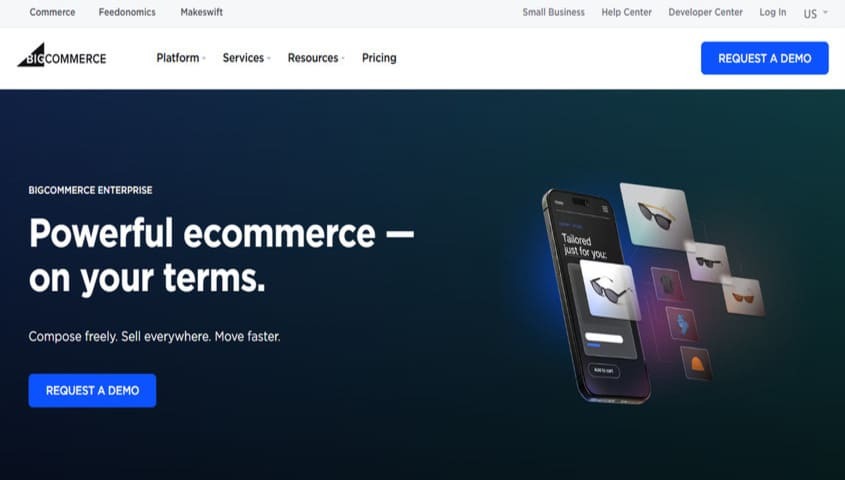
BigCommerce is also frequently cited as a leading alternative to Shopify for those seeking a platform with more built-in capabilities without relying on third-party apps. The 'open saas' philosophy of BigCommerce means there can be more flexibility when calling APIs in BigCommerce, making it an excellent option for headless builds.
Besides offering a great solution to many B2B businesses, BigCommerce also has strong native features, including customer-based pricing and quoting. For instance, if you have a large, complex wholesale business alongside your online retail business, BigCommerce will likely be one of the most suitable options.
3. Adobe Commerce (Magento)
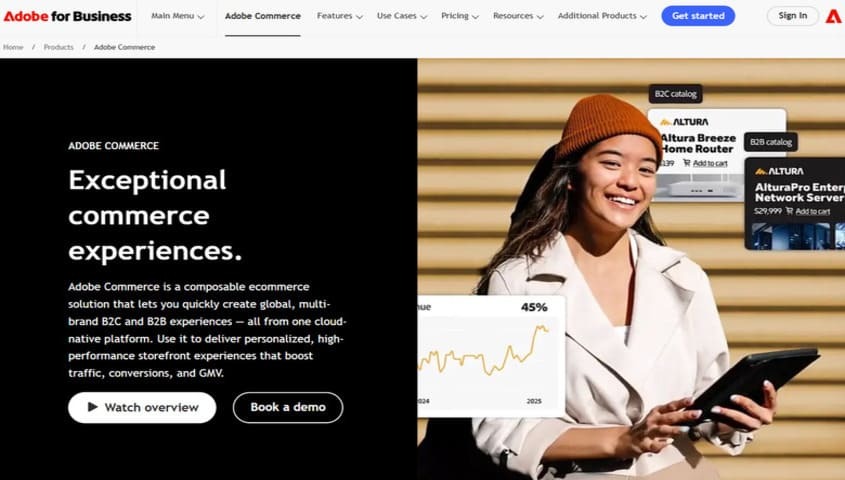
Adobe Commerce, formerly Magento, is generally preferred by large global companies that require detailed, granular customizations. If you plan to create a customized checkout process for your company or have unique experience requirements across 20+ international markets (e.g., localization), Adobe Commerce provides the tools you need.
However, owing to the costs that come with using this platform, such as licensing and the need to hire specialized personnel to develop this platform, this platform requires a considerable investment of initial budget outlay for supporting infrastructure.
4. Salesforce Commerce Cloud
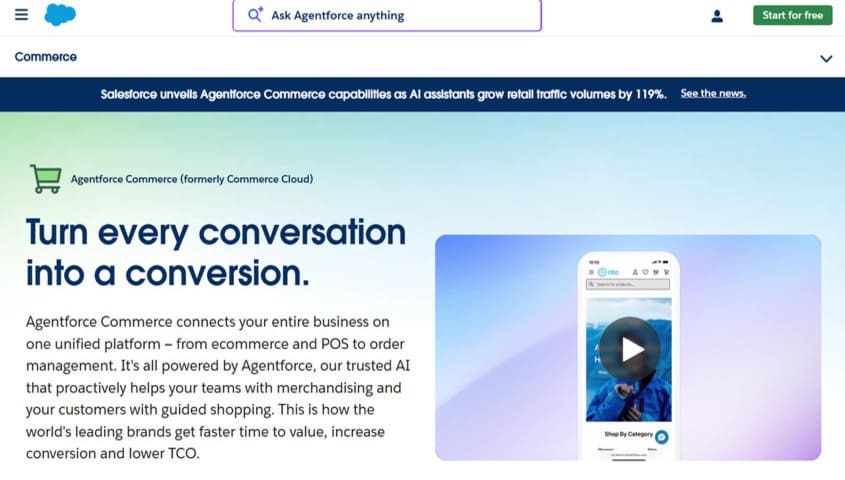
Salesforce is more of a 'system' rather than a platform, which is based on the concept of the 'Agentic Enterprise', in this case, using AI and large amounts of data to create personalized experiences for customers at an individual level.
It is a powerful enterprise e-commerce platform for luxury fashion brands, which will provide the same quality experience for online customers as they would in a physical boutique, and also help to bridge the gap between the two by allowing them to have a complete picture of each customer through the integration of the Salesforce CRM system.
5. WooCommerce Enterprise
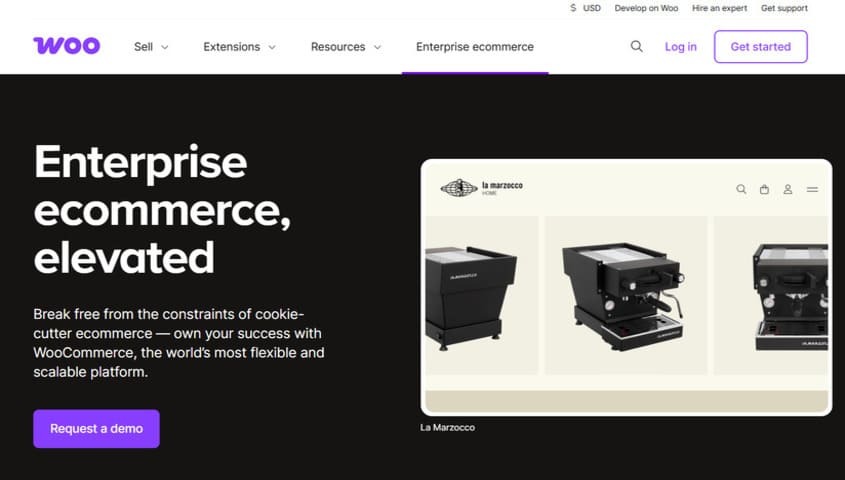
Many people see WooCommerce as a small-business tool; however, it also offers an enterprise version that is highly effective when paired with high-performance hosting such as WP Engine. Since WooCommerce is based on WordPress, your commerce-to-content game can be seamless.
Additionally, WooCommerce provides a world-class CMS solution for brands focused on storytelling and blogging, as well as e-commerce websites. Tapstitch also integrates with WooCommerce, enabling you to offer your editorial stories alongside high-quality physical products.
6. commercetools
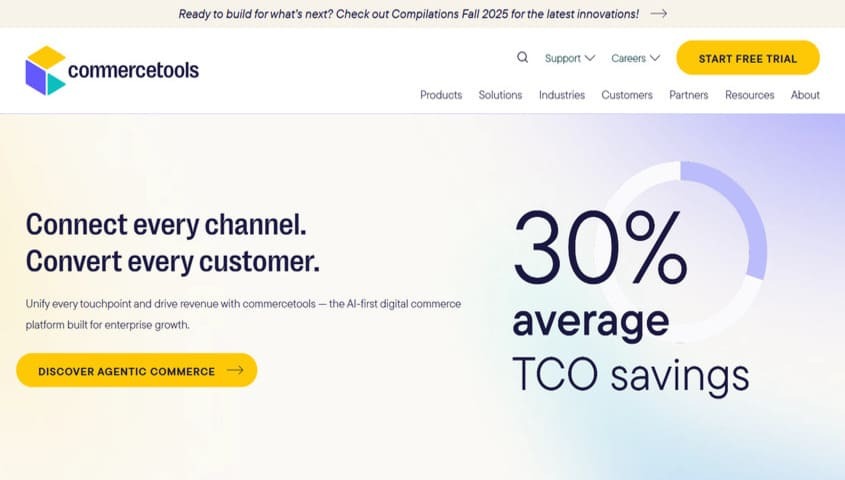
As a completely ‘headless’ solution, commercetools is the pioneer within its category, having incorporated MACH (Microservices, API-first, Cloud-native, and Headless) technology.
This is for the developer-minded founder who seeks to offer the market a truly unique customer experience, such as the ability to do virtual try-on via their site or other IoT-based shopping experience. This is for the enterprise-level, performance-based e-commerce platform that sees your site as a series of APIs.
7. Wix Enterprise
Wix has evolved into more than a site-hosting platform for portfolio pages. Today, its enterprise version offers customer support, enterprise security, and more to suit the growing business needs of organizations.
This version will work perfectly for anyone creating content who requires a highly visual, drag-and-drop-friendly design experience but needs a robust backend that can handle high traffic volumes. Wix is already integrated with Tapstitch and thus suits fashion-forward start-ups that want a high-end look without an in-house development or programming team.
8. SAP Commerce Cloud
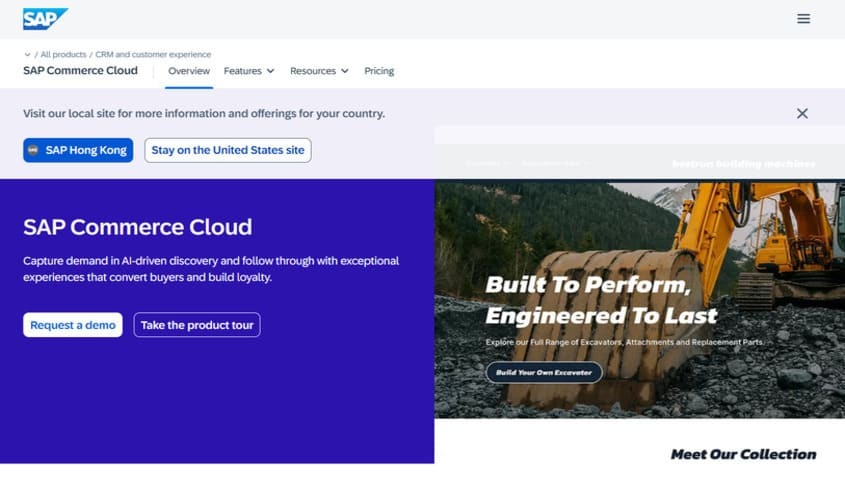
SAP is the name most individuals identify with global logistics. Their commerce cloud is an enterprise product, suited for large, complex companies and designed to meet their inventory and supply chain needs.
This is an "enterprise" or "heavy" solution for brands that are large corporations with many SKUs that need to be synced across multiple warehouse locations and/or international shipping zones.
9. Oracle Commerce
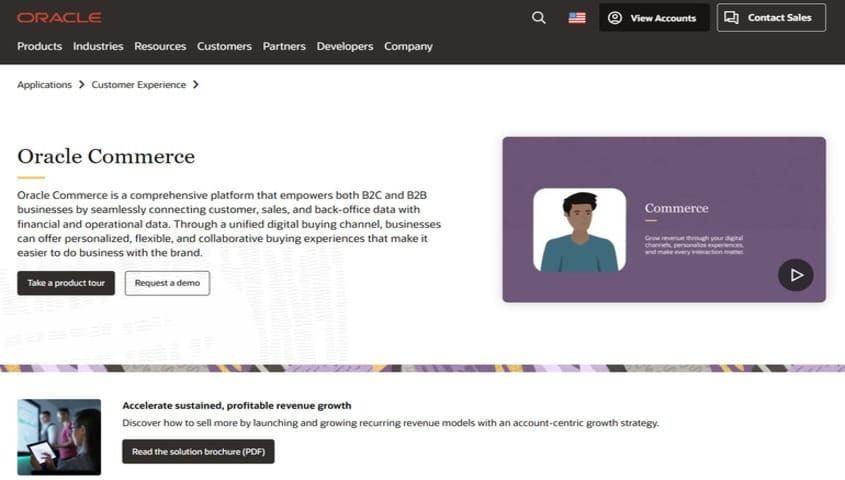
Oracle offers a scalable, cloud-native platform focused on high-conversion-rate search and merchandising. It was designed to handle the complexity of B2B and B2C models in one place.
By using Oracle as an enterprise e-commerce solution alongside Oracle ERP or financial software for back-office operations, companies can leverage their existing investment by using the same data set across all platforms.
10. Etsy (Pattern)
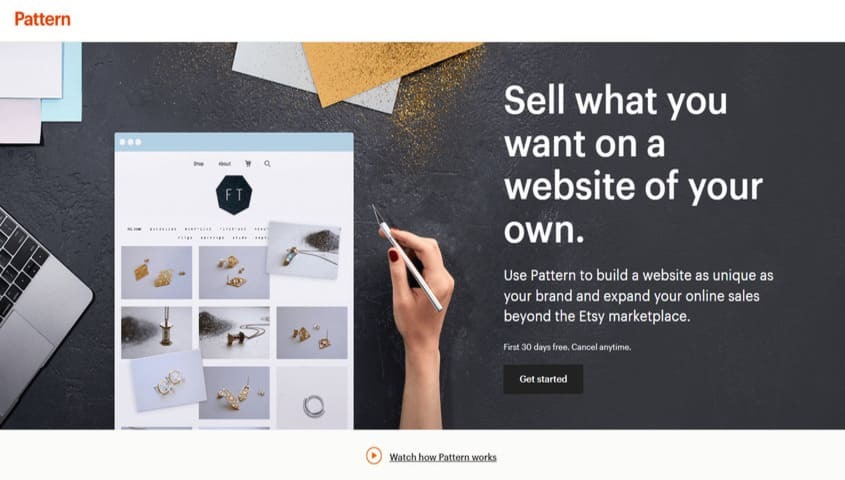
Although Etsy functions as a marketplace, it does so through its 'pattern' product, which enables sellers to build a fully independent e-commerce website that runs on Etsy's backend technology. At the larger end of the spectrum, this becomes more about how the platform can be integrated than about the platform itself.
At scale, some sellers rely on Etsy for most of their sales, while maintaining a separate professional website for their business. Tapstitch connects with Etsy so that you can fill orders from marketplaces as well as from your own website with the same quality.
Costs of Enterprise E-commerce Platforms
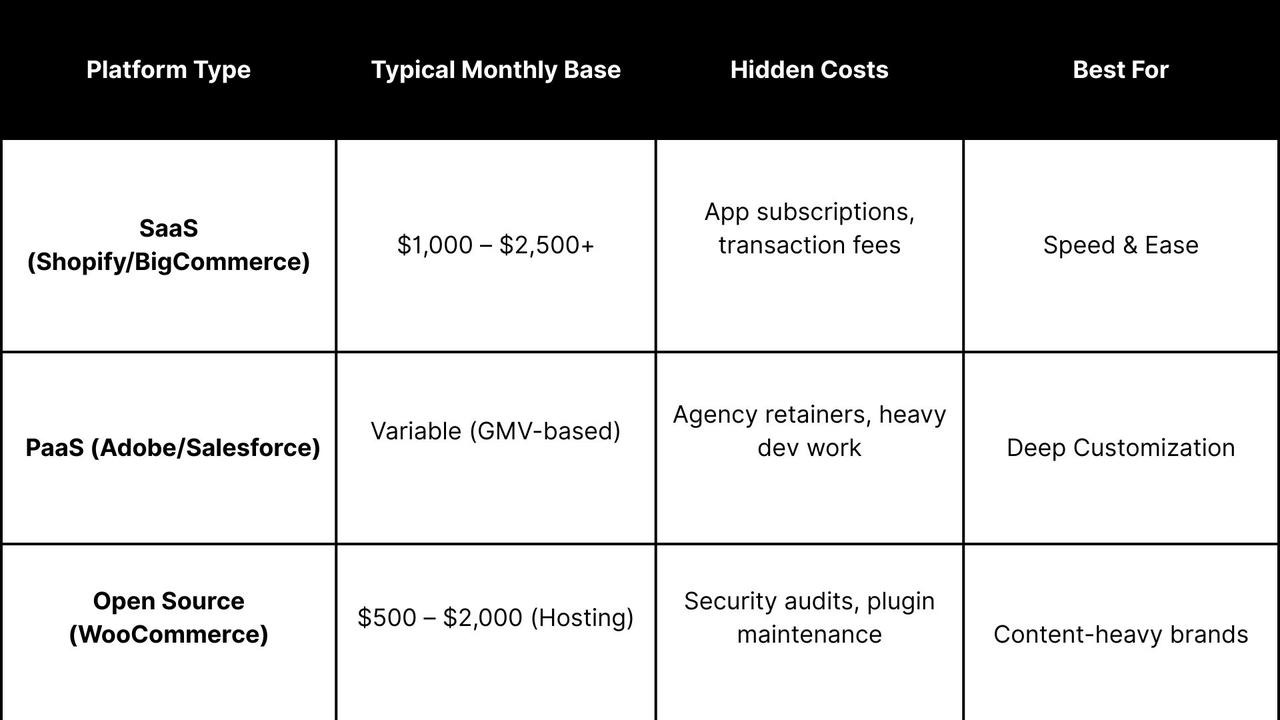
Moving to the enterprise space means moving away from all the $29 monthly plans. When you move to enterprise space, you are no longer purchasing a tool; you are purchasing uptime guarantees and a partner to grow your business.
The licensing fee is one of the most obvious costs associated with platforms such as Shopify Plus. That said, licensing fees for a platform like Shopify Plus start at approximately $2,500 per month. Licensing fees for Adobe Commerce and Salesforce also scale with the gross merchandise value (GMV) of your business. Therefore, the more you sell, the more the platform will earn.
How to Choose the Right Enterprise E-commerce Platform
What's the best option? The answer is up to you. What will be the path of your company? What will be its destination? To determine which route to take, you really only need to consider three different factors.
Technical capability vs. creative freedom.
If you have a small development team or no development team at all, choose an SaaS based platform for technical capabilities. If you have a large development team and an idea to create a non-traditional website, use a headless enterprise e-commerce solution.
B2B and B2C synergy.
If wholesale is part of your 3-year business plan, select a platform with these features built in so you don't have to redesign and rebuild when you're ready to add wholesale to your product offerings.
International scalability.
Selling in the U.S. is one thing, and selling in the EU, Japan, and the UK is a different undertaking. Your platform should handle local currencies, duties, and language localization natively to provide your customers with a seamless experience, regardless of their location.
Connect the Enterprise E-commerce Platforms with Tapstitch's Integration
You can't build a first-rate storefront if you don't have a first-rate product. This is where the infrastructure of your enterprise e-commerce platform meets the realities of what you're selling.
A world-class storefront is useless without a world-class product. This is where the infrastructure of your enterprise e-commerce platform meets production realities.
Tapstitch is built to integrate seamlessly with your existing enterprise systems.
- Shopify & Shopify Plus
- BigCommerce
- WooCommerce
- Wix
- Etsy
- Squarespace & eBay
- TikTok Shop
Our platform enables real-time integration of your designs into premium blank options, whether you operate on an e-commerce platform (Shopify Plus) or a custom-built platform (Wix Enterprise).
Tapstitch provides the designer-quality base that large enterprise brands demand, rather than generic low-GSM product offerings. Our products include modern shapes and heavyweight fabrics that can stand in the ring with any modern streetwear brand. While your e-commerce platform will handle site traffic, Tapstitch will ensure the quality of each product's craftsmanship and the logistics of fulfilling your orders.
FAQs
What defines an "enterprise" ecommerce platform?
An enterprise platform is characterized by its ability to handle high transaction volumes, provide advanced security (PCI DSS Level 1), offer 24/7 dedicated support, and integrate deeply with other business systems, such as ERPs and CRMs.
Can I easily move from a basic plan to an enterprise plan?
On SaaS platforms like Shopify or BigCommerce, the transition is relatively smooth. For open-source or custom builds, moving to an enterprise tier often requires a significant data migration.
Do I need a developer to manage an enterprise e-commerce solution?
While SaaS platforms are user-friendly, most enterprise brands still rely on developers or agencies to manage custom integrations, API connections, and advanced front-end design.
Final Verdict: Enterprise E-commerce Platforms
You can’t build a solid brand without a solid foundation. Your platform is the foundation your brand stands on while you. If the platform is weak, it won’t matter how beautiful or well-designed your product is—your entire brand can collapse under its own weight as it grows.
Not only should you evaluate these platforms based on what features currently exist (and how those features support your brand), you also need to consider them in terms of how each one allows you to grow. You need a partner that does not interfere with your vision for growth. You need a production partner like Tapstitch that understands a physical product must be at least as great as your digital ambitions. Tools exist; now it’s time to build the brand.
.jpg)

%20(1).jpg)
.jpg)
.jpg)
.webp)

.jpg)
.jpg)
.jpg)
.png)
.jpg)
.jpg)


%20(3).jpg)



.png)

.jpg)
.jpg)
.jpg)
.jpg)
.jpg)
.jpg)






.png)




.png)

.jpg)














.jpg)



.jpg)

.png)
.jpg)


.jpg)

.jpg)




.jpg)
.jpg)
.jpg)
.jpg)
.jpg)

%20(1).jpg)


.png)

.png)



%20(1)%20(1).jpg)