Real-life Examples: Fit and Stitching of 4×4 & 2×6 Clothing Labels
September 16, 2025 · Updated
Why this guide?
The 4×4 clothing label has specific stitching and fit characteristics that may affect how it looks on different products. This article shares real-life examples so you can better understand its appearance and decide if it’s the right choice for your design. We also include a reference for 2×6 labels, as they are another common option that can provide a cleaner finish in some scenarios.
Common scenarios with 4×4 labels
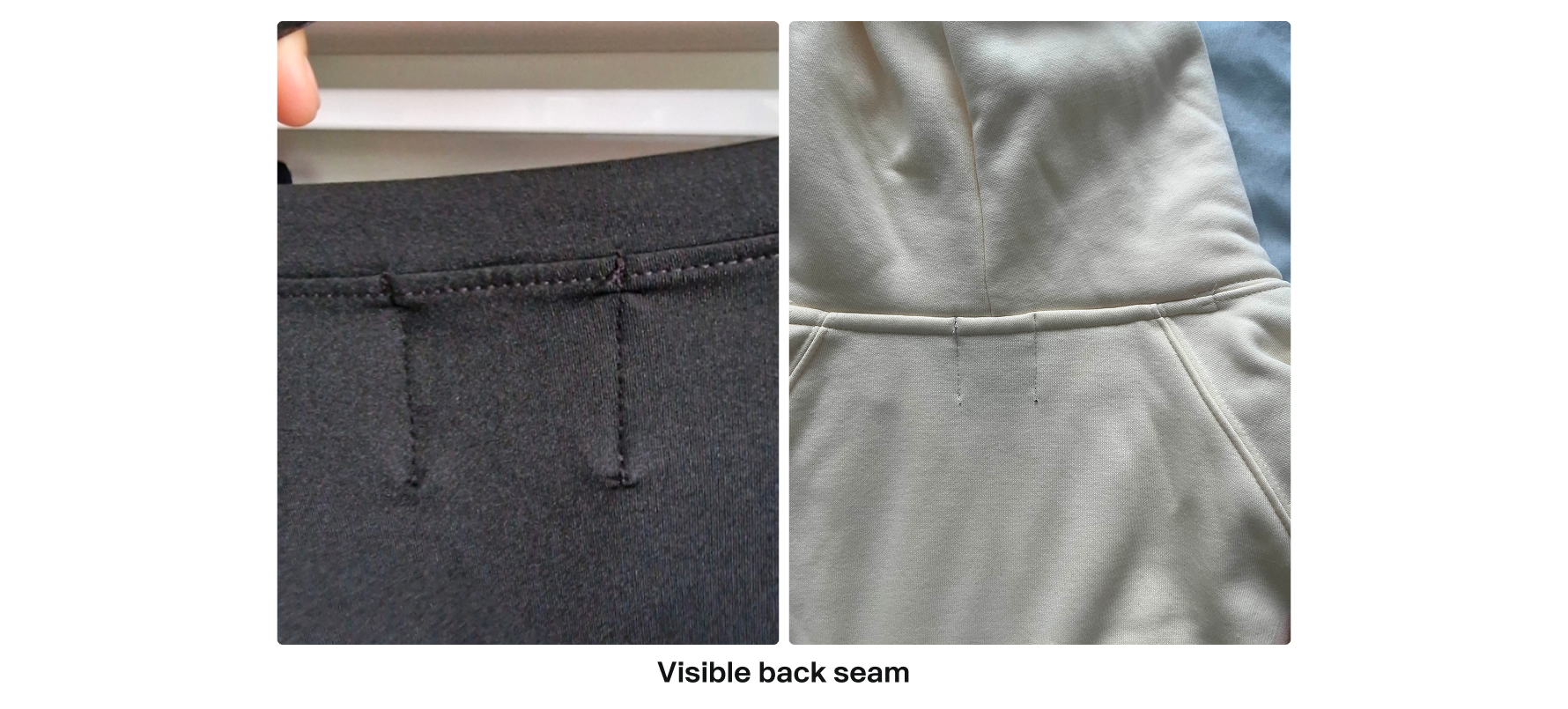
- Visible back seam
- What this means: When stitched on the back neck, the seam may look more noticeable.
- Impact: This can make the stitching more visible on the inside of the garment.
👉 Example image:
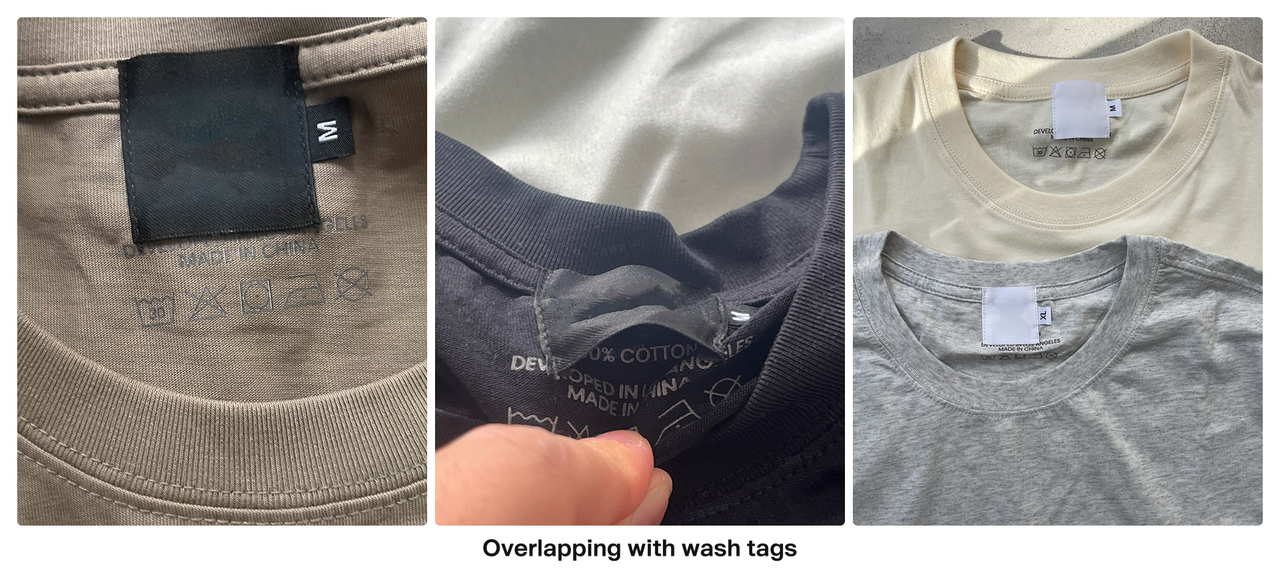
- Overlapping with wash tags
- What this means: If your product already has a printed wash tag, adding a 4×4 label on top can make the area look crowded.
- Impact: The overall look may appear less clean or polished.
👉 Example image:
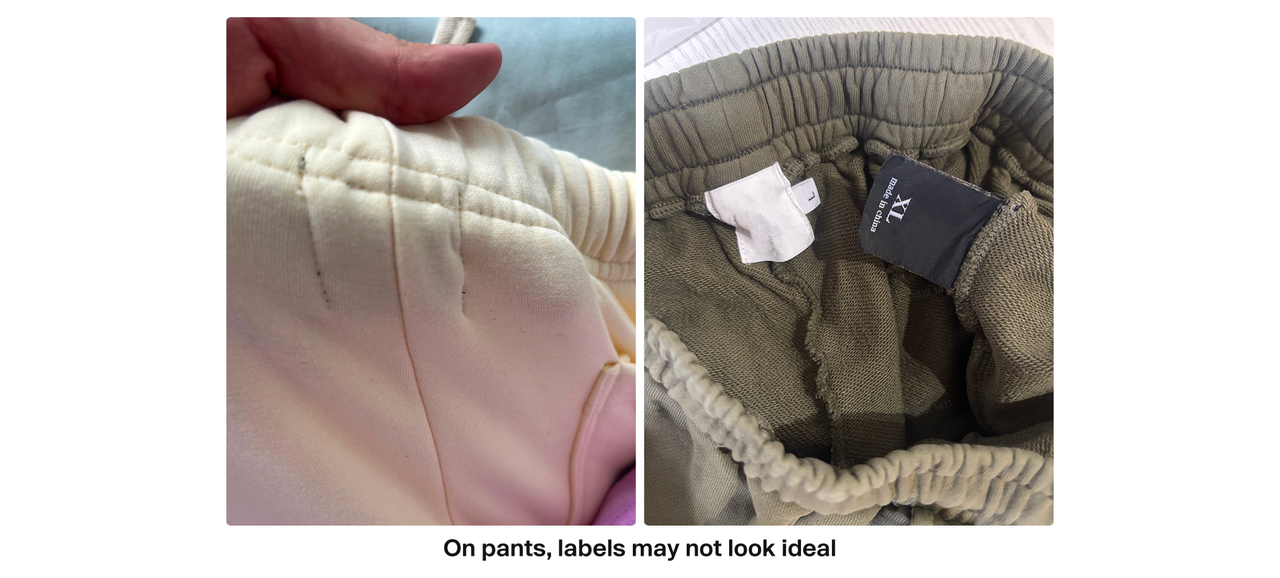
- On pants, labels may not look ideal
- What this means: A 4×4 label stitched on pants can wrinkle or appear bulky.
- Impact: The result may be less flattering compared to other label types.
👉 Example image:
A note on 2×6 labels
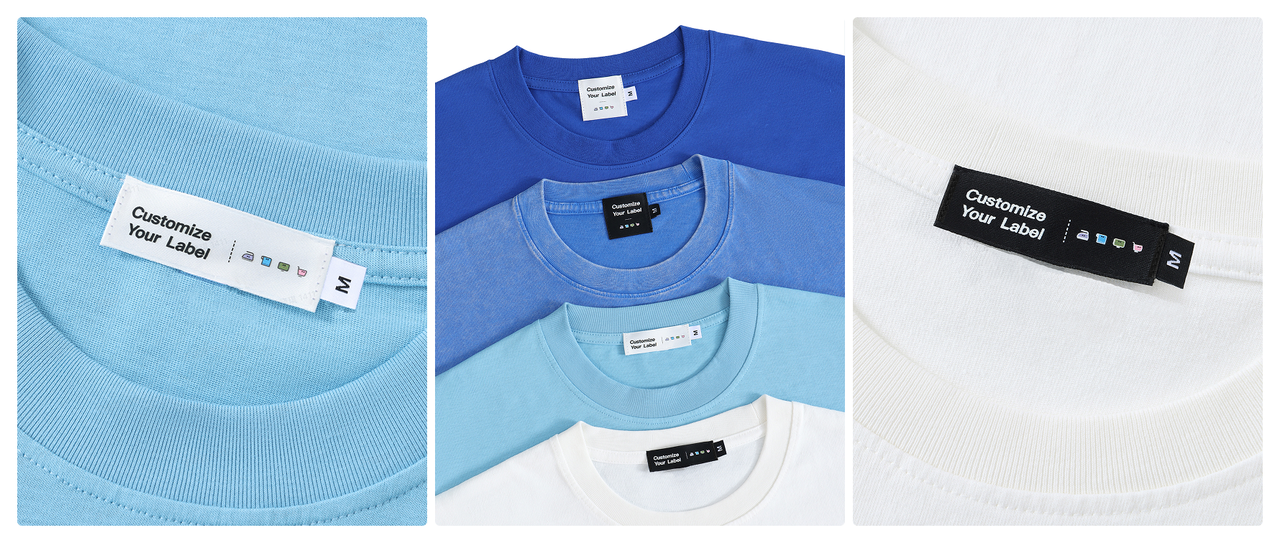
For a cleaner finish, especially around the neck seam, the 2×6 rectangular label is often preferred. Its longer shape allows it to sit more naturally along the seam, and it tends to look tidier when paired with wash tags compared to 4×4 labels.
👉 Example image:
Why these outcomes occur
- Production limits: 4×4 labels currently have only one stitching method, which can make the seam more noticeable.
- Fit limits: The square shape is less flexible for pants or for areas where wash tags are already printed.
- Alternative format: Rectangular labels such as 2×6 cm have narrower edges, so even with the same stitching method, the seams appear less noticeable and the overall finish looks cleaner.
Recommendations before ordering
✅ Best fit:
- 4×4 → Square logos or bold designs on T-shirts, hoodies, or similar tops.
- 2×6 → More versatile for neck seams and often integrates better when wash tags are present.
❌ Not recommended:
- 4×4 → Pants, sensitive back seams, or crowded areas with printed wash tags.
🔄 Alternative option: If you want a more subtle or adaptable look, consider using a 2×6 label.
Key takeaway
- 4×4 labels can work well for certain designs, especially square logos, but they may not always deliver the best results in every scenario.
- 2×6 labels offer a cleaner, more versatile solution, particularly around neck seams or when wash tags are already in place.
Was this article helpful?
375 found this helpful